Address
Work Hours
Monday to Friday: 7AM - 7PM
Weekend: 10AM - 5PM

Address
Work Hours
Monday to Friday: 7AM - 7PM
Weekend: 10AM - 5PM


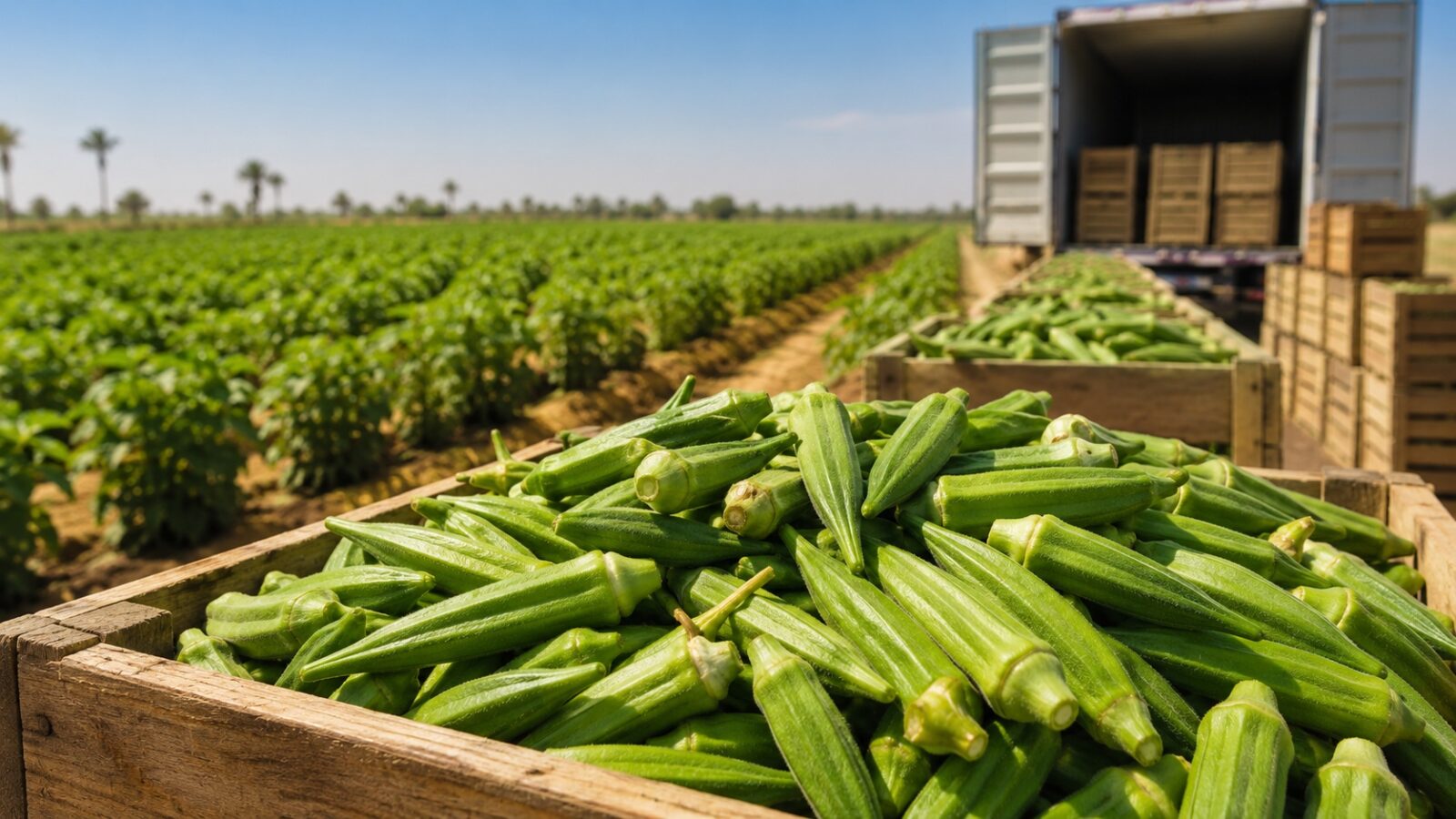
The UAE is a major Gulf consumer and re-export hub for Egyptian fresh okra (HS 0709.99). Okra — bamia — is popular across the Emirates’ diverse population, and Dubai distributors re-export onward across the GCC. Egypt supplies tender, small-calibre fresh okra with fast air and reefer links into Jebel Ali. This guide covers grades, cold-chain logistics, UAE/ESMA requirements, seasonality and pricing for importers.
The UAE is a top Gulf market and re-export hub for Egyptian fresh okra (bamia, HS 0709.99). Buyers prize baby/fine okra. Grades by calibre: baby, fine, medium. Ships by air (1–2 days) or fast reefer sea (4–6 days) at 7–10°C. Imports need a phytosanitary certificate, ESMA/GSO labelling, MRL compliance and Halal handling.
The UAE has minimal domestic okra and a large population that cooks bamia year-round. Egypt supplies the tender fine and baby grades the market wants, and the Emirates’ role as a regional trade platform means much of the volume is repacked at Jebel Ali and re-exported across the GCC. Fast air and reefer links keep the highly perishable pods in prime condition on arrival.
| Market snapshot | Detail |
|---|---|
| Role | Top Gulf consumer + re-export hub |
| HS code | 0709.99 (other fresh vegetables — okra) |
| Preferred grade | Baby / fine (small, tender) |
| Routes | Air (1–2 days); reefer sea to Jebel Ali (4–6 days) |
| Cold chain | 7–10°C, 90–95% RH |
| Peak window | Broad supply; summer main crop |
Baby okra: premium, very small pods (<4 cm), tender and uniform. Fine okra: small (4–6 cm), mainstream retail size. Medium okra: larger pods for value/foodservice and re-export. Fruit is bright green, firm, blemish-free and non-woody. Packed in ventilated cartons (3–5 kg) or punnets, pre-cooled and kept cold to protect shelf life through repacking and onward shipping.
Fresh okra is perishable and chilling-sensitive, so premium baby grade moves by air from Cairo (1–2 days), and volume moves by fast reefer sea to Jebel Ali (4–6 days). It is held at 7–10°C at 90–95% RH — not colder — to prevent chilling injury. Jebel Ali’s free-zone cold facilities support fast repacking and onward GCC re-export while maintaining the cold chain.
UAE imports require a phytosanitary certificate from Egyptian plant quarantine, a certificate of origin, and compliance with ESMA/GSO food-safety and labelling standards (Arabic + English: product, origin, packer, net weight, lot). Pesticide residues must meet GSO MRLs — a key okra control — checked at port. Halal-compliant handling applies. Organised buyers require GLOBALG.A.P at farm level and full lot traceability.
| Period | Availability |
|---|---|
| May–October | Peak — open-field summer main crop |
| November–April | Protected-cultivation & southern supply |
Egypt’s summer main crop plus protected and southern cultivation give UAE importers and re-exporters fresh okra across much of the year.
Source & data: Egyptian fresh-okra wholesale ~US$1.08/kg (Dec 2025); Gulf states are the primary fresh-okra market. Source: Tridge fresh-okra market overview, 2025–26. HS code 0709.99 (other fresh vegetables, incl. okra). Country-level volumes vary seasonally and are confirmed at contracting.
PEI Trade — New Cairo, Egypt. Request a quote or okra spec sheet →