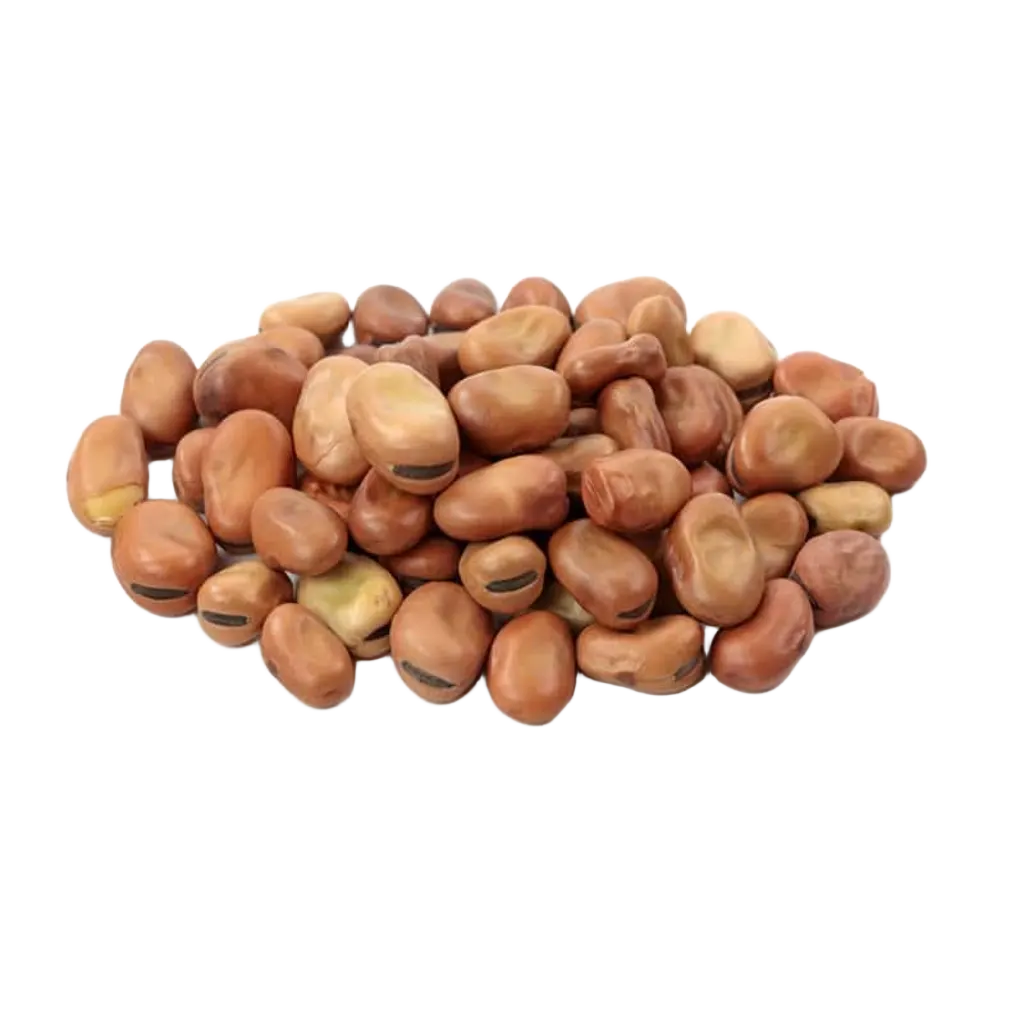
Fava Beans

Egyptian Fava Beans – Staple Export Crop with Global Demand

Egyptian fava beans are among the most established legumes in international trade, valued for their rich flavor, dense texture, and consistent quality.

With strong demand in retail, wholesale, and food processing industries, Egyptian fava beans remain a top choice for importers seeking volume, reliability, and competitive pricing.


    Premium Egyptian Fava Beans – High-Quality Fava Beans for Export

    Egypt is renowned for its export-quality fava beans, celebrated for their dense nutrition, buttery texture, and earthy flavor. At PEI Trade, we offer premium Egyptian fava beans cultivated in fertile Nile Delta soil using advanced agricultural techniques. Egypt’s ideal climate supports year-round cultivation and consistent export supply, making it a top source for global buyers seeking reliable, bulk-quality pulses.

    Why Choose Egyptian Fava Beans?

    ✔ Uniform size, excellent taste, and creamy texture
    ✔ Grown under strict food safety and quality regulations
    ✔ Certified for international markets with full traceability
    ✔ Custom packaging solutions for wholesale and retail buyers
    ✔ Efficient export logistics and year-round availability

    Why Source Fava Beans from PEI Trade?

    Premium Quality Control: Beans are carefully cleaned, sorted, and graded for export standards
    Flexible Supply Options: Bulk volumes available for wholesale, retail, or industrial processing
    Certified & Reliable: Full compliance with international trade, traceability, and phytosanitary standards
    Efficient Shipping: Durable export-ready packaging with global delivery
    Competitive Advantage: Strong supply chain ensuring consistent volumes at market-driven prices

    Importing Egyptian Fava Beans – Fast and Professional

    PEI Trade ensures your orders are fulfilled with fast processing, tailored packaging, and full compliance with international standards. We manage phytosanitary certification, customs documentation, and shipping logistics to ensure seamless and efficient importation.

    Identity & Commercial

    ● HS Code:
    071350
    ● Country of Origin:
    Egypt
    ● Seasonality:
    Dry field crop; exportable year-round (new crop typically Q4-Q1).
    ● Size / Count:
    Calibrated by grain size (small / medium / large) as specified.
    ● Lead Time:
    7-10 working days from order confirmation and receipt of advance / LC to prepare, inspect and load containers.
    ● Minimum Order:
    One full 40' container per product (mixed loads may be possible subject to confirmation).
    ● Grade:
    Export quality, Class I / Class II, with sizing and visual quality agreed with the buyer before packing.
    ● Payment Terms:
    LC at sight; or TT 30% advance and 70% against scanned shipping documents (balance before release of originals).
    ● Price Basis & Validity:
    Indicative prices only; final price to be confirmed daily according to market, packing specification and destination, and fixed only in the formal offer/proforma invoice.
    ● Post-Harvest Treatments:
    Multiple stages of cleaning, grading, color sorting and metal detection before packing.

    Packaging & Logistics

    ● Unit Net Mass:
    Typical options: 25 kg or 50 kg net per PP bag.
    ● Estimated Net Weight per Container:
    Approx. 24-26 MT net per 40' dry container (floor-loaded or palletized).
    ● Primary Packaging:
    New polypropylene (PP) woven bags, typically 25 kg or 50 kg net, palletized or floor-loaded.
    ● Unit Gross Mass:
    Net weight plus approx. 0.8-1.2 kg for carton/bag and packing materials (varies by configuration).
    ● Pre-Cooling:
    Not required - loaded as dry ambient cargo with suitable ventilation.
    ● Ports of Loading (POL):
    Main Egyptian export ports: Alexandria, Damietta, Port Said and Sokhna (port selection depends on schedule and destination).

    Quality & Docs

    ● Grade Basis:
    Based on size, color, cleanliness and external appearance; internal quality and sugar/starch levels checked according to product and market.
    ● Defect Tolerances:
    Final tolerances to be agreed per contract; typically max 5-8% minor defects, 0% decay/rot and 0% foreign matter in packed product.
    ● MRL Compliance
    Produce sourced to comply with EU and GCC MRL requirements; recent residue analyses and farm/packhouse documentation available on request.
    ● Traceability:
    Full traceability from farm through packhouse to container, using lot numbers and carton/bag coding.
    ● Certifications:
    Official Phytosanitary Certificate and quality/health inspection as standard; additional private certifications (GlobalG.A.P., ISO, HACCP, BRC etc.) available depending on supplier and lot.
    ● Shipping Marks:
    As per buyer artwork and instructions (brand, product, size, crop year, origin, packing date, barcodes and handling marks).
    ● Shipping Documents:
    Commercial Invoice, Packing List, Phytosanitary Certificate, Certificate of Origin and Bill of Lading; any additional documents required by the destination can be arranged by prior agreement.