Address
Work Hours
Monday to Friday: 7AM - 7PM
Weekend: 10AM - 5PM

Address
Work Hours
Monday to Friday: 7AM - 7PM
Weekend: 10AM - 5PM


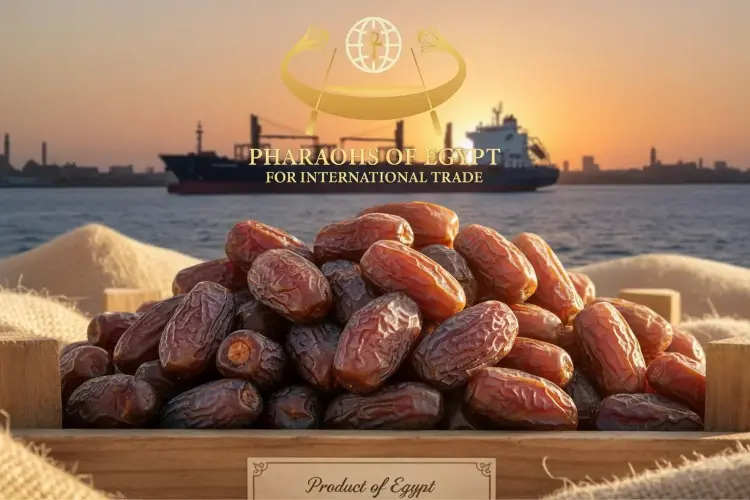
 ByMagy
The Gulf is the largest date-consuming region in the world, and Gulf importers have historically bought local and regional fruit. Egyptian dates now sit alongside those origins, and for a buyer the practical questions are narrow: which type of date, harvested when, stored how, and landed at what specification.
This page covers Medjool supply into Saudi Arabia, the UAE, Qatar, Kuwait, Bahrain and Oman: the harvest and storage cycle, what to specify, the pack formats, and the documents that travel with the container.
| Variety | Type | Harvest | Typical channel | Storage behaviour |
|---|---|---|---|---|
| Medjool | Soft | August to October | Retail, gifting, food service | Chilled or frozen storage for year-round supply |
| Siwi | Semi-dry | August to October | Retail and processing | Holds well once cured; ships through the year |
| Zaghloul | Fresh | August to October | Regional fresh market | Short window; not a long-storage date |
| Dry and semi-dry types | Dry | August to October | Processing and bulk | Ship year-round once cured |
Medjool is the variety Gulf retail and gifting demand centres on, because size and appearance carry the sale. If your requirement is a processing input rather than a shelf product, a semi-dry or dry type is usually the better purchase and a cheaper one.
Egyptian Medjool comes principally from the Siwa oasis and the New Valley. Both are desert oasis environments with very low humidity at ripening, which is the condition a soft date needs: high humidity at the wrong moment is what causes skin splitting and fermentation in the bunch.
Egyptian Medjool has also built volume outside the region, which is a useful reference point when qualifying the origin: see Egyptian Medjool date export growth in Germany, Indonesia and Turkey.
Dates are harvested once a year, from August into October. Everything shipped outside that window comes out of storage, and that is the single most important thing to understand about buying dates.
The practical rule: a buyer who wants large-count Medjool for Ramadan should be contracting in the autumn, not in the weeks before.
We contract to your figures on each of these rather than to a general grade name, and the lot detail is confirmed before the fruit is drawn. The full variety and specification picture is in the complete Egyptian dates export guide.
| Format | Suits | Notes |
|---|---|---|
| Bulk carton | Distributors and wholesalers | Carton size built to your handling and storage |
| Vacuum or sealed pack | Long transit and extended shelf life | Protects texture on soft dates in particular |
| Retail pack | Supermarket shelf and gifting | Private label and market-specific labelling available |
| Pitted, bulk | Food manufacturing and processing | Specified by moisture and defect tolerance rather than appearance |
| Market | What we supply into it |
|---|---|
| Saudi Arabia | Bulk Medjool for distributors and food manufacturers |
| United Arab Emirates | Bulk and retail packs for wholesalers and food service |
| Qatar and Kuwait | Bulk whole and pitted dates for distributors and manufacturers |
| Bahrain and Oman | Bulk Medjool for distributors and large-scale buyers |
The short lane is the origin’s structural advantage into the Gulf. On a soft date it matters more than it does on a hard commodity, because fewer days at sea means less time for texture to move.
Certificate numbers, issuing bodies and validity dates go to buyers on request rather than being published here. Which Egyptian authority signs off which document is set out in Egypt’s export control bodies.
Dates are the one category in the Gulf produce trade where the demand peak is fixed by the calendar rather than the weather, and it moves earlier each year. That has two consequences for a buyer.
Private-label development for retail chains and seasonal pack programmes are both things we do, and both need to start in the autumn for the following Ramadan.
Once a year, from August into October, across Medjool, Siwi and Zaghloul. Anything shipped outside that window comes out of storage, which is why crop year should be stated on the contract rather than assumed.
Yes, from stored crop. Medjool is a soft date held in chilled or frozen storage, so it ships through the year, but the size range narrows as the season goes on because the best grades are allocated first.
Size grade, moisture, whole or pitted, defect tolerance, crop year, and the transport temperature. Size grade is the main price driver; moisture is what decides whether the date stays soft on the shelf.
Principally the Siwa oasis and the New Valley. Both are very low-humidity desert environments at ripening, which is what a soft date needs to avoid skin splitting and fermentation in the bunch.
Gulf destinations run roughly 5 to 10 days from Egyptian ports, with the actual transit confirmed per booking. On a soft date the short lane matters, because fewer days at sea means less time for texture to move.
In the autumn, with the new crop. Large-count Medjool for gifting is allocated months ahead, and retail or private-label artwork has its own lead time on top of the fruit.
Phytosanitary certificate, certificate of origin, commercial invoice, packing list and bill of lading, with lot-level traceability to the growing area and crop year. Any additional certificate a destination market requires is arranged on request.
Yes, for food manufacturing and processing. Pitted product is specified by moisture and defect tolerance rather than appearance, which usually makes it a different and cheaper purchase from retail whole fruit.
Send the destination port, the variety and size grade, whole or pitted, the tonnage, the pack format and the months you need. We will quote against the current crop and storage position and say what is still uncommitted.