Address
Work Hours
Monday to Friday: 7AM - 7PM
Weekend: 10AM - 5PM
Address
Work Hours
Monday to Friday: 7AM - 7PM
Weekend: 10AM - 5PM


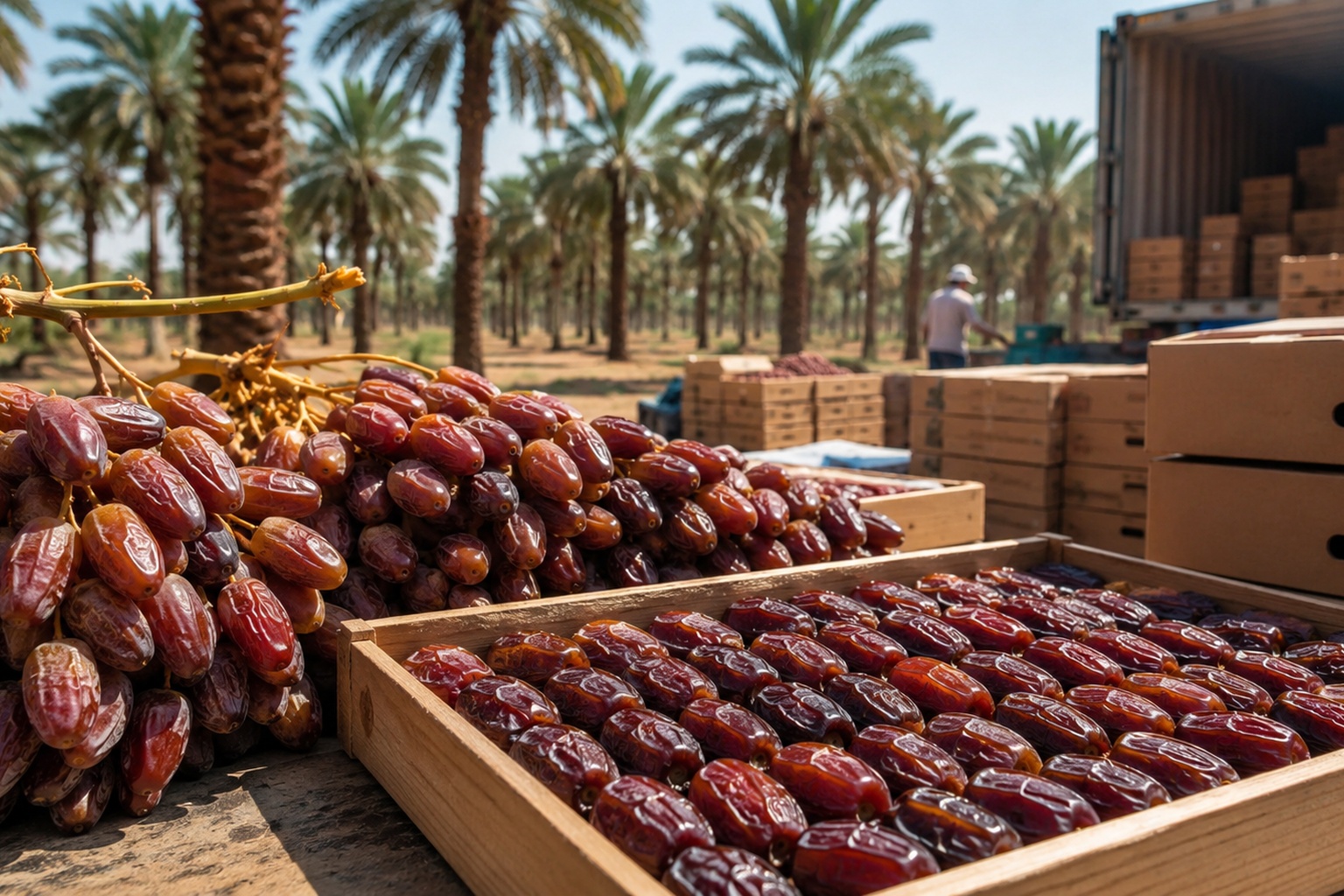
Egypt is the world’s largest producer of dates, with a vast palm population spread across the Nile Valley, the Western Desert oases and fast-growing reclaimed-desert projects. From soft Zaghloul to dry Siwi and premium Medjool, Egyptian dates supply the Gulf, South and Southeast Asia, Morocco, Europe and beyond — fresh, semi-dry and dry, in bulk and retail packs. This guide is the hub for importers: what Egypt grows, when it ships, the markets it serves, the specifications buyers ask for and the compliance behind every consignment.
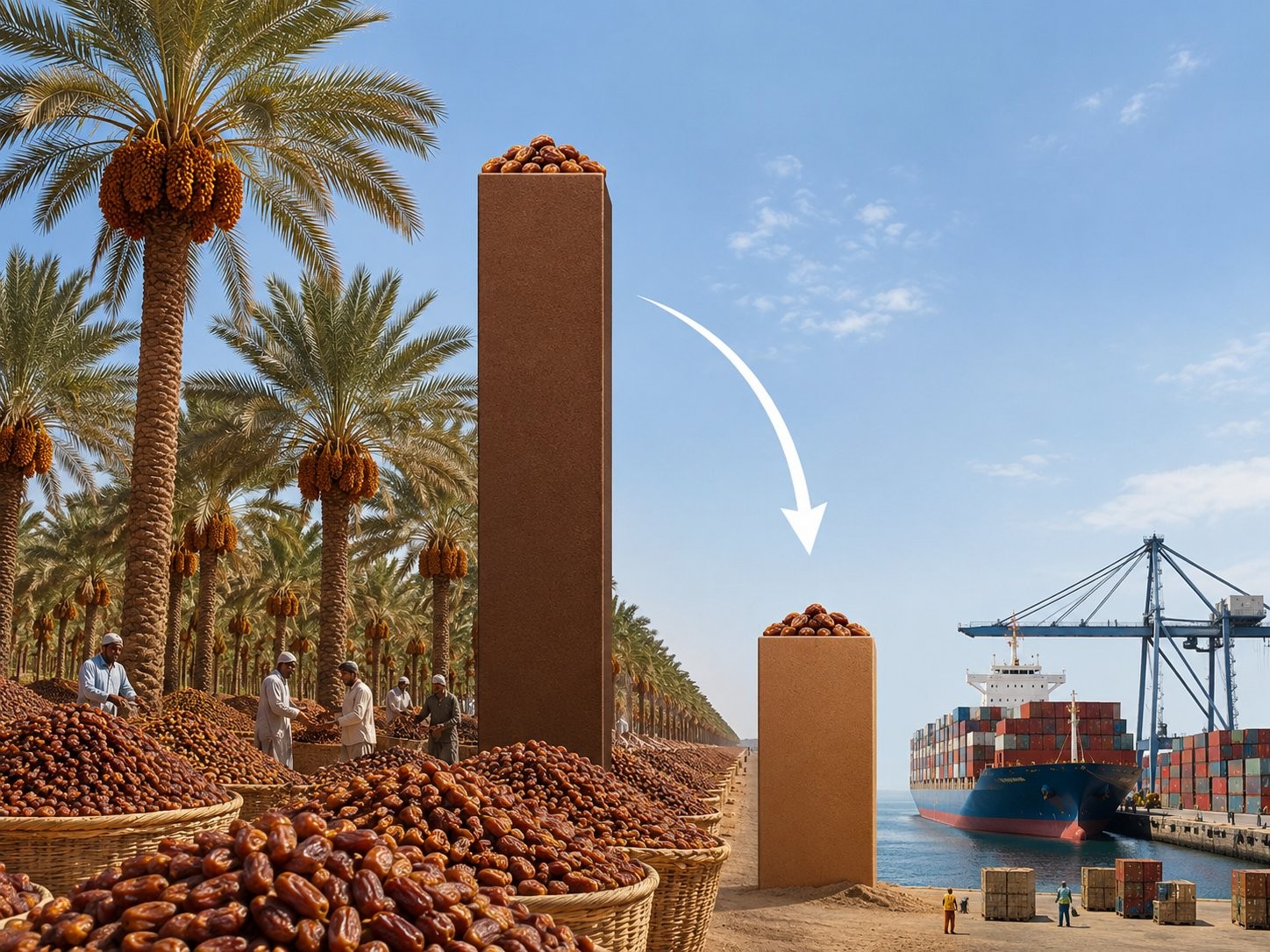
Quick answer: Egypt is the world’s largest producer of dates — around 1.86 million tonnes a year (FAO, 2023), roughly 19–21% of global production — grown on one of the world’s largest date-palm populations. Yet it exports only about 35,000–40,000 tonnes, so its export share is far smaller than its production lead. The main exported dry date is Siwi (from Siwa); premium Medjool is expanding fast in reclaimed projects; soft varieties such as Zaghloul and Hayany serve fresh and regional markets. Harvest runs about August to November, and dry dates ship year-round from storage. Dates trade under HS code 0804.10. Main markets: the Gulf, Indonesia, Malaysia, Bangladesh and India, Morocco and the EU. (Sources: FAO, 2023; ITC Trade Map, 2025.)
Egyptian dates fall into three moisture classes, plus the premium imported-genetics segment:
| Type | Examples | Use / market |
|---|---|---|
| Soft (wet / rutab) | Zaghloul, Hayany, Samani | Fresh eating; regional & Gulf (needs cold chain) |
| Semi-dry | Saidy (Saidi), Amhat, Bartamuda | Versatile; storage & export |
| Dry | Siwi (Siwa), Sakkoti, Malakabi, Gondaila | Long shelf life; main export to S/SE Asia & Morocco |
| Premium | Medjool, Barhi | Premium retail; EU, Gulf, global |
Egyptian dates are exported as fresh (rutab), semi-dry and dry whole dates, pitted dates, date paste and other processed products (syrup, diced, date bars). Dry dates and paste are shelf-stable; fresh rutab needs a cold chain.
The Egyptian date harvest runs from about August to November: soft Zaghloul peaks around September–October, with semi-dry and dry varieties following. Dry dates store and ship year-round, and demand concentrates strongly around Ramadan. Growing spans the Nile Valley and Delta (soft and semi-dry), the oases and Upper Egypt — Siwa, the New Valley and Aswan (dry dates) — and reclaimed desert (Medjool and barhi).
Note: Egypt leads the world in date production (~1.86 million tonnes) but exports only around 35,000–40,000 tonnes — a small fraction of its output — so it holds a far smaller share of global export value than its production lead suggests. Premium-variety (Medjool, barhi) and processing investment is steadily closing that gap.

Dates are traded under HS code 0804.10.
Dates require a phytosanitary certificate, compliance with destination MRLs, and control of storage pests — chiefly the carob / date moth (Ectomyelois ceratoniae) and stored-product beetles — managed by cleaning, freezing, controlled atmosphere or approved fumigation. Packed and processed dates need food-safety management (HACCP, and for many buyers ISO 22000 / FSSC 22000 or BRCGS). Halal certification is commonly required for Gulf and Muslim-market buyers. Egyptian dates are not on the EU’s enhanced official-controls list (Regulation (EU) 2019/1793), so they are not subject to increased EU border checks — standard MRL and phytosanitary rules apply.
Yes – Egypt is the world’s largest producer of dates by volume, growing around 1.86 million tonnes a year (FAO, 2023), about 19-21% of global production. Its exports, however, are far smaller at roughly 35,000-40,000 tonnes.
The dry variety Siwi (from Siwa) is the main export date to South and Southeast Asia and Morocco; premium Medjool is a fast-growing export segment.
Roughly August to November, with soft Zaghloul peaking around September-October; dry dates then ship year-round from storage.
Dry dates go to Morocco, Indonesia, Malaysia, Bangladesh and India; premium Medjool to the EU and Gulf; soft and fresh dates to Gulf and regional markets.
A phytosanitary certificate, MRL compliance, storage-pest control (freezing, controlled atmosphere or approved fumigation), food-safety certification for packed/processed dates, and halal certification for many markets.
How to cite this page. Reusing a figure from this guide? Please cite it and link to this page as the source.
PEI Trade. “Egyptian Dates Export: The Complete Guide.” peitrade.com, 2026. https://peitrade.com/egyptian-dates-export-guide/
Source Egyptian dates with PEI Trade. We supply dry (Siwi), semi-dry, soft and premium (Medjool) dates — whole, pitted or paste — to Gulf, Asian, North African and EU buyers, with phytosanitary documentation, pest treatment, food-safety and halal certification. Contact: [email protected] · WhatsApp +20 109 911 1918 · www.peitrade.com