Address
Work Hours
Monday to Friday: 7AM - 7PM
Weekend: 10AM - 5PM

Address
Work Hours
Monday to Friday: 7AM - 7PM
Weekend: 10AM - 5PM


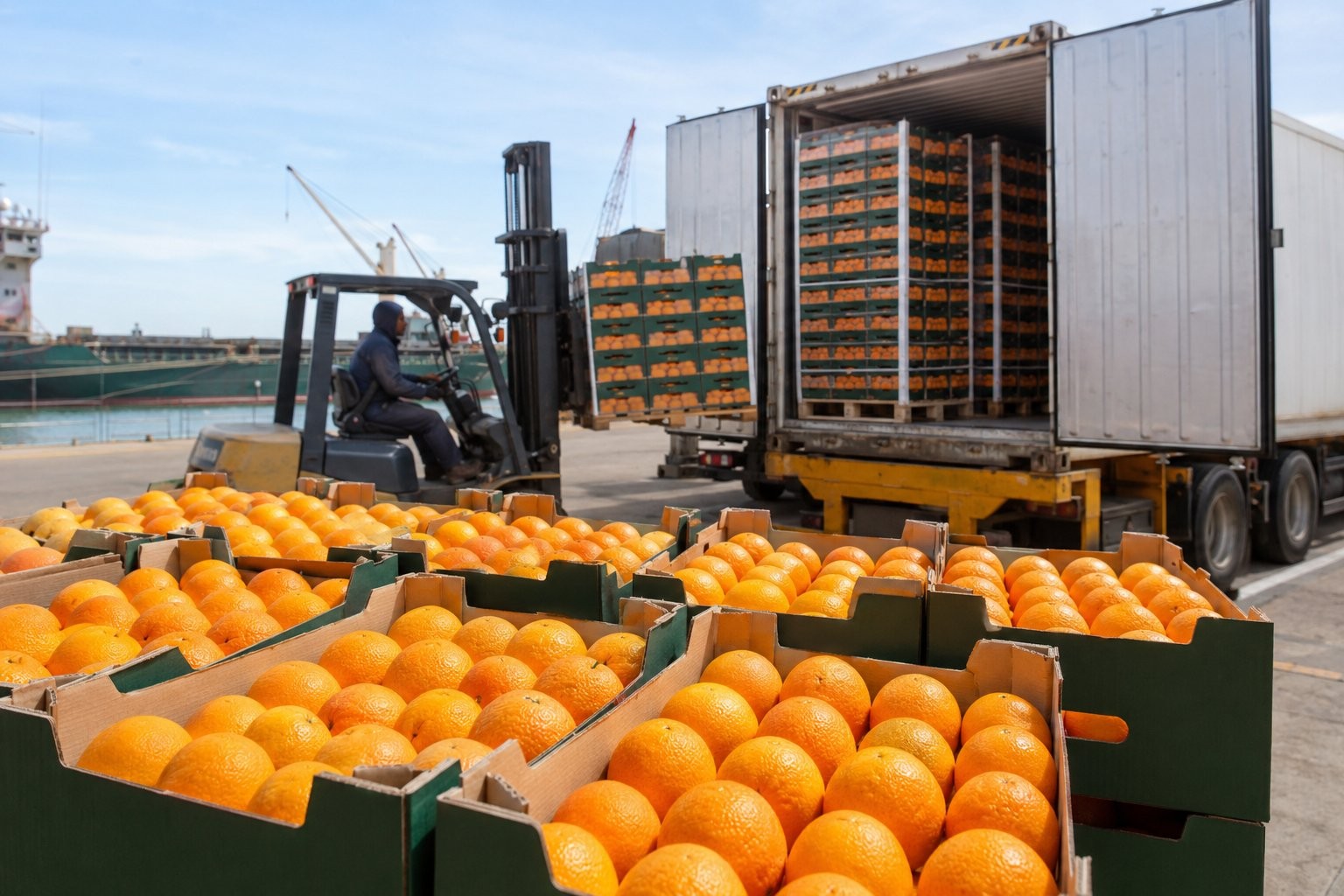
Spain is Europe’s citrus leader — and still a meaningful buyer of Egyptian oranges, worth about US$51.3 million in 2024, one of Egypt’s top-five orange destinations. The reason is complementary supply: Egyptian Valencia oranges feed Spain’s large juice and processing industry and cover gaps around the Spanish season. This guide covers the best varieties for Spain, shipping logistics, market requirements, the season calendar, and how to open a supply program. HS code 0805.10.
It might seem counter-intuitive to ship oranges to Spain, Europe’s largest citrus producer. But Spain is also a major juice and processing hub, and Egyptian Valencia — juicy, deep-coloured and competitively priced — is well suited to that industry. Egyptian fruit also helps Spanish traders and processors cover supply gaps and manage cost, especially in a season where local volumes or prices don’t line up with demand.
The trade is real and sizeable: Spain was among the top-five destinations for Egyptian oranges in 2024 at about US$51.3 million. As the world’s leading orange exporter by volume (around 1.66 million tonnes in 2024/25), Egypt offers the scale and price competitiveness that a processing market values.
| Variety | Window | Profile | Spain fit |
|---|---|---|---|
| Valencia | Feb–May | Juicy, deep colour, high yield, good acidity | ★★★ Juice & processing workhorse |
| Navel | Dec–Feb | Seedless, easy-peel, sweet | ★★ Early fresh window |
| Baladi / Salustiana | Jan–Mar | Juicy mid-season | ★★ Processing/blend option |
For full variety detail see the Egyptian Valencia orange guide and the Egyptian Navel orange guide, or the Egyptian orange export pillar.
| Month | Available varieties | Spain notes |
|---|---|---|
| Dec–Jan | Navel (early) | Early fresh window opens |
| Feb–Mar | Navel (late), Valencia begins, Baladi | Transition to Valencia; processing demand builds |
| Apr–May | Valencia (peak) | Peak juice/processing volume |
Spain is Europe’s largest citrus producer but also a major juice and processing hub. Egyptian Valencia oranges are juicy, deep-coloured and competitively priced, suiting Spain’s processing industry and covering seasonal supply and price gaps. Spain was a top-five Egyptian orange market in 2024 at about US$51.3 million.
Valencia is the workhorse for juice and processing (February–May), while Navel serves the early fresh window (December–February).
By reefer sea freight from Alexandria or Damietta to Valencia and Algeciras, carried at about 5–7 °C in telescopic cartons or bulk bins for processing.
A phytosanitary certificate meeting EU plant-health rules, EU MRL compliance, UNECE FFV-14 grading, certificate of origin, commercial invoice, packing list, cold-chain logs, and farm/packhouse food-safety certification.
Building a Spain orange program? PEI Trade supplies Valencia and Navel oranges for fresh and processing use, with calibre selection, EU-compliant grading and documentation, and cold-chain management from packhouse to Valencia and Algeciras. Tell us your target volumes, variety, calibre and delivery window for a compliant offer.
PEI Trade. “Egyptian Orange Exports to Spain: Valencia Supply & Market Guide.” peitrade.com, 2026, https://peitrade.com/egyptian-orange-exports-to-spain/
Sources: OEC Egypt oranges bilateral trade 2024 (Spain ~US$51.3M; top destinations); FreshPlaza “Egypt exported 1.66 million tonnes of oranges in 2024/25”; UNECE FFV-14 citrus standard. HS code 0805.10.
PEI Trade · New Cairo, Egypt · [email protected] · WhatsApp +20 109 911 1918 · www.peitrade.com · Brand: nile-prime.com · Ports: Alexandria, Damietta, Sokhna, Port Said (Incoterms 2020)