Address
Work Hours
Monday to Friday: 7AM - 7PM
Weekend: 10AM - 5PM

Address
Work Hours
Monday to Friday: 7AM - 7PM
Weekend: 10AM - 5PM


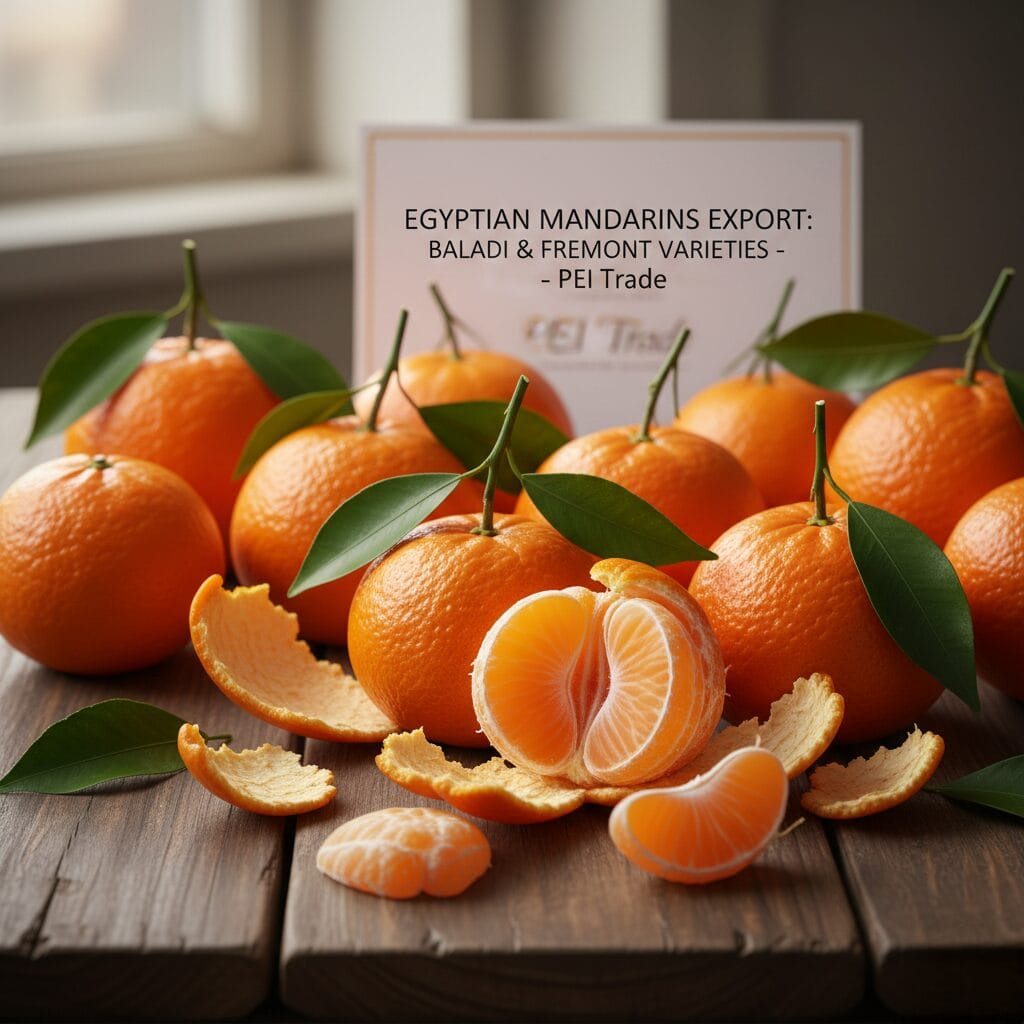
The UAE is a major Gulf consumer and re-export hub for Egyptian mandarins. Easy-peel citrus is popular across the Emirates’ diverse population and gifting culture, and Dubai distributors re-export onward across the GCC. Egyptian mandarins (HS 0805.20) land through the winter season with short transit and competitive FOB. This guide covers varieties, logistics, UAE/ESMA requirements, seasonality and pricing for importers.
The UAE is a top Gulf market and re-export hub for Egyptian mandarins. Peak supply is November–March. Main varieties: Fremont (seedless), Baladi (aromatic) and Murcott (late, sweet). Transit is 5–9 days by reefer to Jebel Ali. Imports need a phytosanitary certificate, ESMA/GSO-compliant labelling, Halal handling and MRL conformity.
The UAE grows no citrus and imports all its easy-peelers for a population that consumes mandarins heavily in winter and during gifting seasons. Egyptian fruit suits the market on price, easy-peel quality and calendar, and the Emirates’ role as a regional trade platform means much of the volume is re-exported through Jebel Ali across the GCC. Egypt competes with Turkey and Spain here, winning on freight cost and delivery speed.
| Market snapshot | Detail |
|---|---|
| Role | Top Gulf consumer + re-export hub |
| HS code | 0805.20 (mandarins & easy-peelers) |
| Main entry port | Jebel Ali (Dubai) |
| Transit time | 5–9 days by sea |
| Peak window | November–March |
| Key varieties | Fremont, Baladi, Murcott |
Fremont: near-seedless, deep-orange, uniform — strong retail and re-export appeal. Baladi: aromatic, traditional, early-season. Murcott: late, very sweet, extends supply into spring. Graded by calibre (sizes 1-XXX to 10), packed in 10 kg cushioned cartons or retail packs. Grade A serves retail; Grade B serves wholesale and onward re-export.
Shipments sail from Egyptian ports via the Red Sea/Suez to Jebel Ali in roughly 5–9 days. Mandarins travel in reefer containers at 4–6°C at 90–95% RH with careful rind protection. Fruit is pre-cooled, waxed and cushioned. Jebel Ali’s free-zone facilities support fast repacking and onward GCC re-export, so cold-chain continuity is essential.
UAE imports require a phytosanitary certificate from Egyptian plant quarantine, a certificate of origin, and compliance with ESMA/GSO food-safety and labelling standards (Arabic + English: product, origin, packer, net weight, lot). Pesticide residues must meet GSO MRLs, checked at port. Halal-compliant handling applies. Organised buyers require GLOBALG.A.P at farm level and full lot traceability.
| Period | Availability |
|---|---|
| October–November | Early Baladi mandarins |
| December–February | Peak — Fremont & main crop |
| February–March | Late Murcott — season extension |
The Egyptian mandarin season covers the Gulf winter, giving UAE importers and re-exporters continuous easy-peel supply from early Baladi to late Murcott.
Source & data: Egypt is the EU’s top non-EU citrus supplier; mandarin exports rising sharply (EU volumes nearly tripled to 71,457 t in 2025/26). Source: FreshPlaza, 2026. HS code 0805.20 (mandarins). Figures are Egypt-market trade data; per-shipment specifications are confirmed at contracting.
PEI Trade — New Cairo, Egypt. Request a quote or mandarin spec sheet →