Address
Work Hours
Monday to Friday: 7AM - 7PM
Weekend: 10AM - 5PM

Address
Work Hours
Monday to Friday: 7AM - 7PM
Weekend: 10AM - 5PM


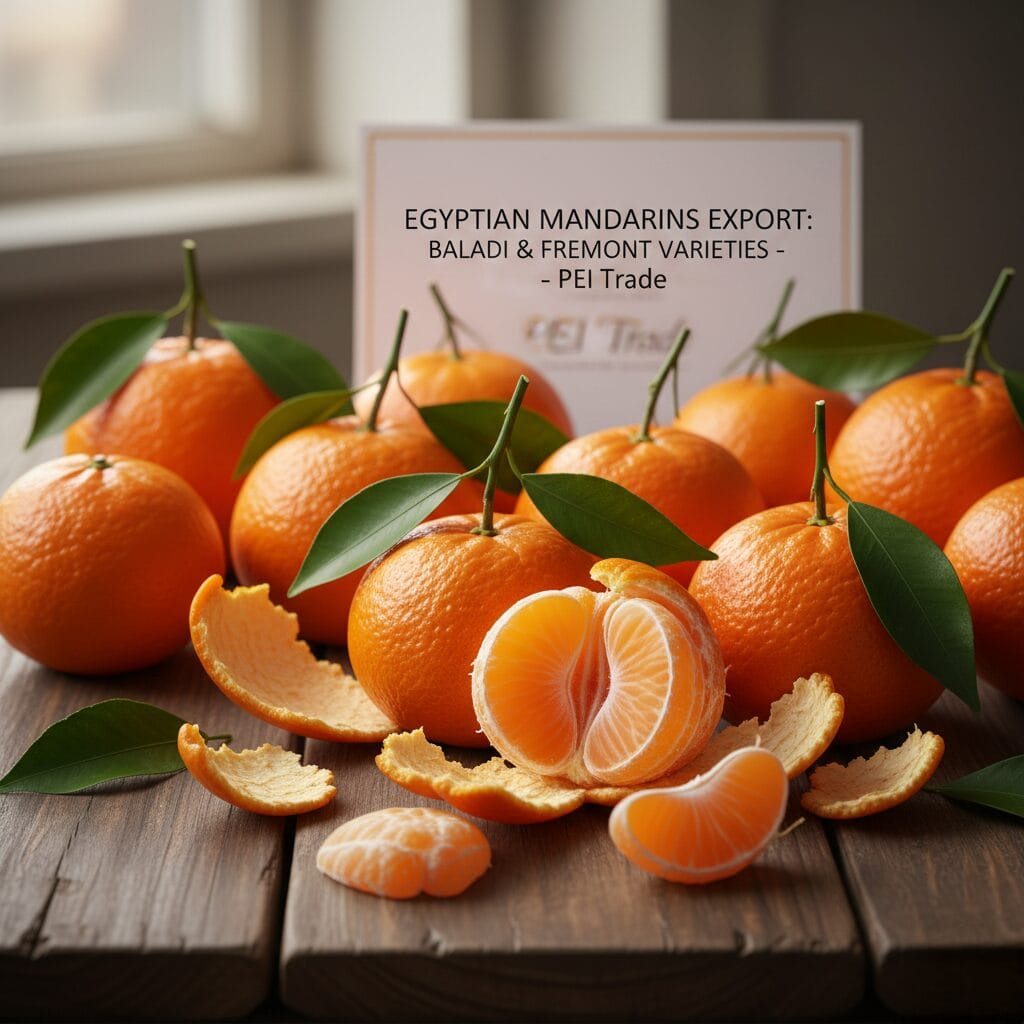
Russia is a major winter market for Egyptian mandarins, where easy-peel citrus is a staple of the New Year and winter season. Egyptian mandarins (HS 0805.20) reach Russia through the Black Sea just as demand peaks, offering competitive FOB and reliable volume. This guide covers varieties, cold-chain logistics, EAEU/Rosselkhoznadzor requirements, seasonality and pricing for Russian importers and retail chains.
Russia is a major winter mandarin market, peaking around New Year. Egyptian supply runs November–March. Main varieties: Baladi, Fremont (seedless) and Murcott (late, sweet). Transit is 7–12 days by reefer to Novorossiysk/St Petersburg. Imports need a phytosanitary certificate and EAEU TR CU 021/2011 compliance, verified by Rosselkhoznadzor.
Mandarins are the iconic Russian winter fruit, with demand spiking sharply around the New Year holidays. Russia grows no citrus of its own and relies on imports; Egypt’s season lands precisely in this window with easy-peel fruit at competitive prices. Established Egypt–Russia trade channels and direct Black Sea freight make Egypt a dependable supplier alongside Turkey and Morocco.
| Market snapshot | Detail |
|---|---|
| Market profile | Major winter / New-Year market |
| HS code | 0805.20 (mandarins & easy-peelers) |
| Main entry ports | Novorossiysk, St Petersburg |
| Transit time | 7–12 days by sea |
| Peak window | November–March (New-Year spike) |
| Key varieties | Baladi, Fremont, Murcott |
Baladi: aromatic, traditional, early-season. Fremont: near-seedless, deep-orange, strong retail appeal — well suited to Russian supermarkets. Murcott: late, very sweet, extends supply into spring. Graded by calibre (sizes 1-XXX to 10), packed in 10 kg cushioned cartons. Grade A is colour-uniform and blemish-free; Grade B routes to wholesale/markets.
Shipments sail from Alexandria or Damietta to Novorossiysk (Black Sea) and St Petersburg (Baltic) in roughly 7–12 days. Mandarins travel in reefer containers at 4–6°C at 90–95% RH with careful handling to protect the rind. Fruit is pre-cooled, waxed and cushioned. Timing shipments for late-November/December arrival captures the New-Year demand peak.
Russian imports require a phytosanitary certificate and compliance with EAEU technical regulation TR CU 021/2011, plus a certificate of origin. Pesticide residues must meet EAEU MRLs, verified by Rosselkhoznadzor sampling. Labelling is in Russian (product, origin, packer, net weight, lot). Organised buyers require GLOBALG.A.P at farm level and full lot traceability.
| Period | Availability |
|---|---|
| October–November | Early Baladi — build-up to New Year |
| December–February | Peak — Fremont & main crop |
| February–March | Late Murcott — season extension |
Egypt’s mandarin calendar covers the whole Russian winter demand curve, from the pre-holiday build-up through the late-season Murcott.
Source & data: Egypt is the EU’s top non-EU citrus supplier; mandarin exports rising sharply (EU volumes nearly tripled to 71,457 t in 2025/26). Source: FreshPlaza, 2026. HS code 0805.20 (mandarins). Figures are Egypt-market trade data; per-shipment specifications are confirmed at contracting.
PEI Trade — New Cairo, Egypt. Request a quote or mandarin spec sheet →