Address
Work Hours
Monday to Friday: 7AM - 7PM
Weekend: 10AM - 5PM

Address
Work Hours
Monday to Friday: 7AM - 7PM
Weekend: 10AM - 5PM


Indicative sailing times from Alexandria, Damietta and Sokhna to the EU, UK, GCC, Russia and Asia in 2026/2027, plus the transhipment, rolling and berth delays that turn a quoted transit into a longer one.
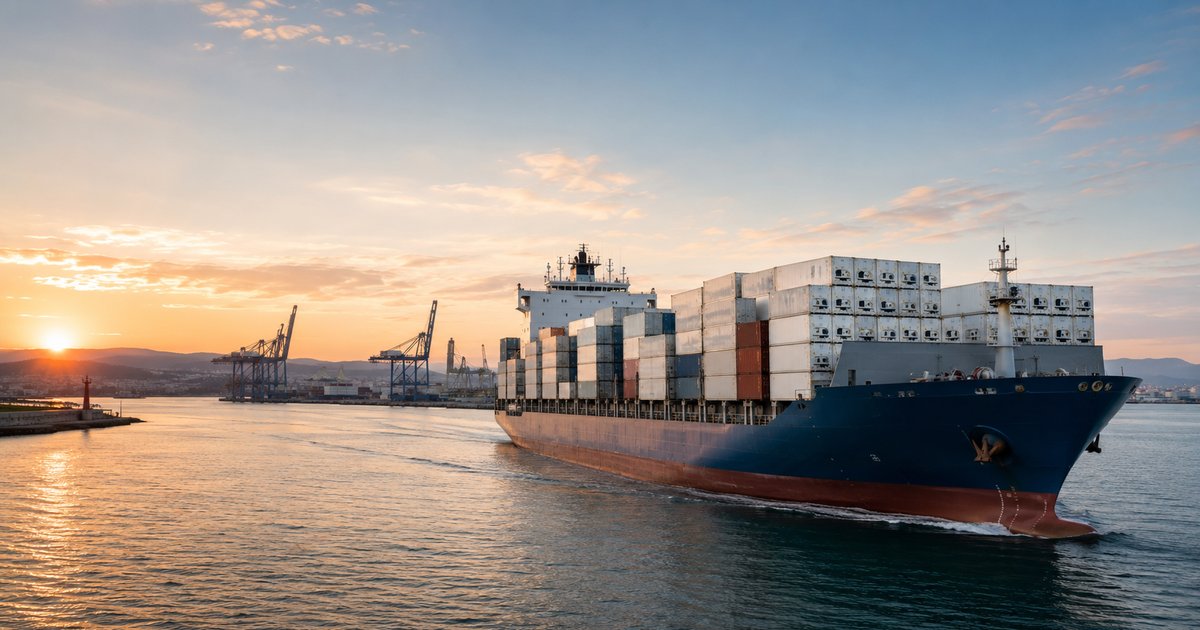
Transit time decides more than arrival date. It sets how many selling days are left in the fruit, whether a promotion can be committed to, and how much free time gets consumed before the box is unpacked. Carriers quote a port to port figure. Buyers plan against a door to door one. The gap between those two numbers is where most disappointment lives.
The figures below are port to port and assume a direct service or a single transhipment. They are working averages for 2026/2027, not a guarantee, and they move with the service string a carrier happens to be running that month.
From Alexandria and Damietta into the Western Mediterranean, that is Italy, Spain and southern France, count 5 to 8 days. Into North European base ports such as Rotterdam, Antwerp and Hamburg, count 12 to 16 days. To UK ports, 13 to 18 days, with Felixstowe and London Gateway at the shorter end and regional ports adding feeder legs. To Russian Black Sea discharge via Novorossiysk, 8 to 12 days. To Constanta, Koper and other Adriatic and Black Sea ports, 7 to 11 days.
From Sokhna, which sits on the Red Sea side, Jebel Ali runs 6 to 9 days, Jeddah 4 to 6 days, Doha and Kuwait 8 to 12 days with transhipment. Indian ports at Nhava Sheva and Mundra run 10 to 14 days. Southeast Asia into Port Klang and Singapore is 16 to 21 days, and Chinese base ports 24 to 32 days.
Transhipment is the single largest variable. A box that changes vessel at Algeciras, Malta, Jeddah or Jebel Ali is exposed to whether the connecting vessel has reefer plugs free. When it does not, the container waits for the next sailing, which on a weekly string means seven days added in one step.
Rolling is the second. In peak weeks reefer slots on the strongest strings sell out, and a booking that is confirmed but not yet gated in can be rolled to the following vessel. A load that was going to arrive with 18 selling days left arrives with 11.
Berth congestion, weather routing and Suez or Bab el-Mandeb routing decisions account for the rest. Vessels that divert around the Cape of Good Hope on Asia and Europe strings add substantially to the voyage, and any quotation for those lanes should be read with the routing named rather than assumed.
Three habits keep this manageable. First, ask for the vessel name, the voyage number and whether the service is direct or transhipped before you accept a transit figure, because a lane quoted at 14 days direct and 14 days via transhipment are not the same risk. Second, build the buffer into shelf life rather than into the arrival date, using the crop’s real remaining life and not the theoretical maximum. Third, agree in advance what happens commercially if the box rolls, since that conversation is far easier before the cargo is loaded than after.
Free time at destination starts on discharge, not on the date you expected discharge, which is why a delayed voyage and a demurrage problem so often arrive together. Our note on demurrage and detention sets out who carries that cost, and the piece on booking a reefer covers the deadlines that decide whether your box makes the intended sailing at all.
If you are weighing up a destination for the 2026/2027 season and want the current sailing options on that lane, with routing and transhipment named, send the discharge port and the loading month to the export desk on WhatsApp at +20 10 9911 1918 and we will come back with what is actually running.
