Address
Work Hours
Monday to Friday: 7AM - 7PM
Weekend: 10AM - 5PM

Address
Work Hours
Monday to Friday: 7AM - 7PM
Weekend: 10AM - 5PM


The working timeline behind an Egyptian reefer booking: space request, VGM and gate-in cut-offs, documentation deadlines, and where a day lost costs a sailing.
Most shipment delays that buyers experience are not harvest problems. They are missed cut-offs. A booking that looks confirmed on Monday can still roll to the following week because a document arrived four hours late or the container reached the terminal after gate-in closed. This is the timeline our shipping desk works backwards from, and the points on it where a day genuinely matters.
Reefer space out of Alexandria, Damietta and Sokhna is requested with the carrier ten to fourteen days ahead in normal weeks, and three weeks ahead in the citrus peak from December to February. The request carries the vessel and voyage, the port pair, the equipment type, the commodity and the requested set point. Carriers allocate reefer plugs by commodity, so a request that does not name the crop can be accepted and then reassigned.
Peak weeks are the ones that catch buyers out. When plugs are short the carrier prioritises contracted volume, and a spot booking made ten days out can simply be refused. Programme buyers do not have this problem, which is one of the practical arguments for contracting rather than buying week to week.
The confirmed booking carries the booking number, the equipment release reference and, importantly, the three cut-off times. Those are the documentation cut-off, the VGM cut-off and the physical gate-in or terminal cut-off. They are not the same time and they are not always the same day. Documentation frequently closes 24 to 48 hours before the vessel, while gate-in can be as tight as 12 hours.
The container is picked up from the depot, pre-tripped and pre-cooled before it reaches the packhouse. A reefer that arrives at the loading bay warm has to be cooled empty, which costs two to four hours and, on a tight schedule, the sailing.
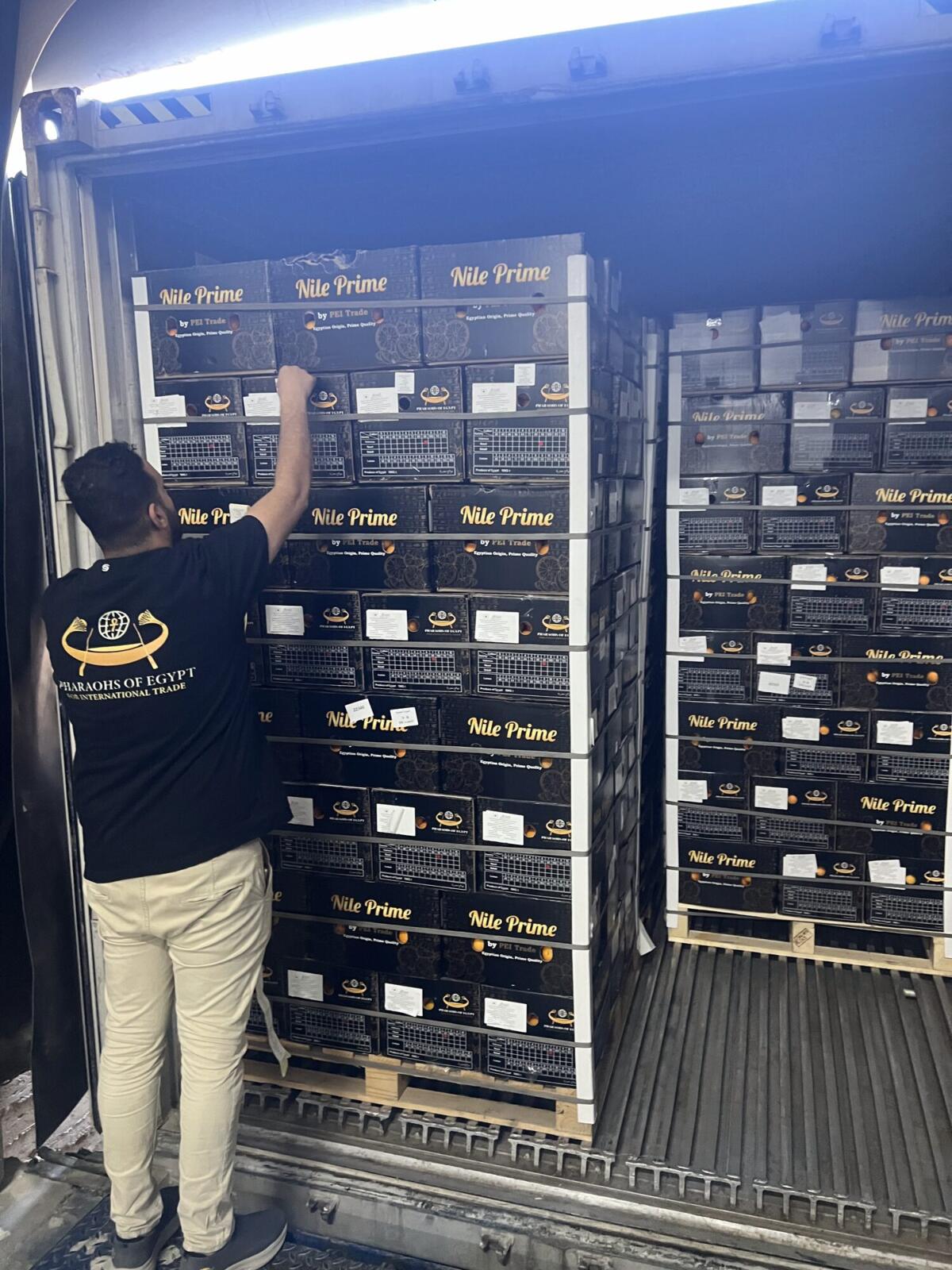
Loading, sealing and the loading record happen here. The verified gross mass is filed after loading and before the VGM cut-off, and a container without a filed VGM will not be loaded even if it is standing on the terminal. Payload limits and the road weight rules that constrain the drive to port are covered separately in the note on container weight and VGM on Egyptian produce exports.
The shipping instructions, the commercial invoice and packing list, the phytosanitary certificate, the certificate of origin and any market-specific certificates must be with the carrier and the authorities by this point. The phytosanitary certificate is the usual bottleneck because it is issued against a physical inspection, and inspection slots are finite in peak weeks. The full set is listed in the guide to export documentation for Egyptian produce.
Where the buyer is working under a letter of credit, the document deadline is effectively earlier than the carrier’s, because the presentation period and the exact wording required by the credit have to be checked before anything is issued. Discrepancies found after issue take days to correct.
The container reaches the terminal, is plugged in and monitored until loading. Terminal plug capacity is finite, so an early gate-in is preferable to a late one. After sailing, the bill of lading is released once freight and documentation conditions are met, and the original set travels ahead of the vessel by courier or moves as a telex release.
Four failures account for most rolled containers. A phytosanitary inspection slot missed in a peak week. A VGM filed after cut-off. A truck delayed on the road to port during a public holiday. And a payment or document condition unresolved on the buyer’s side, which stops the exporter releasing the container. None of these are dramatic and all of them are avoidable with a booking made a week earlier than feels necessary.
Tell us the delivery week you need at destination and we will count backwards to the booking date, the documentation deadline and the harvest week that supports it. WhatsApp +20 10 9911 1918 or send the request through the site.
