Address
Work Hours
Monday to Friday: 7AM - 7PM
Weekend: 10AM - 5PM

Address
Work Hours
Monday to Friday: 7AM - 7PM
Weekend: 10AM - 5PM


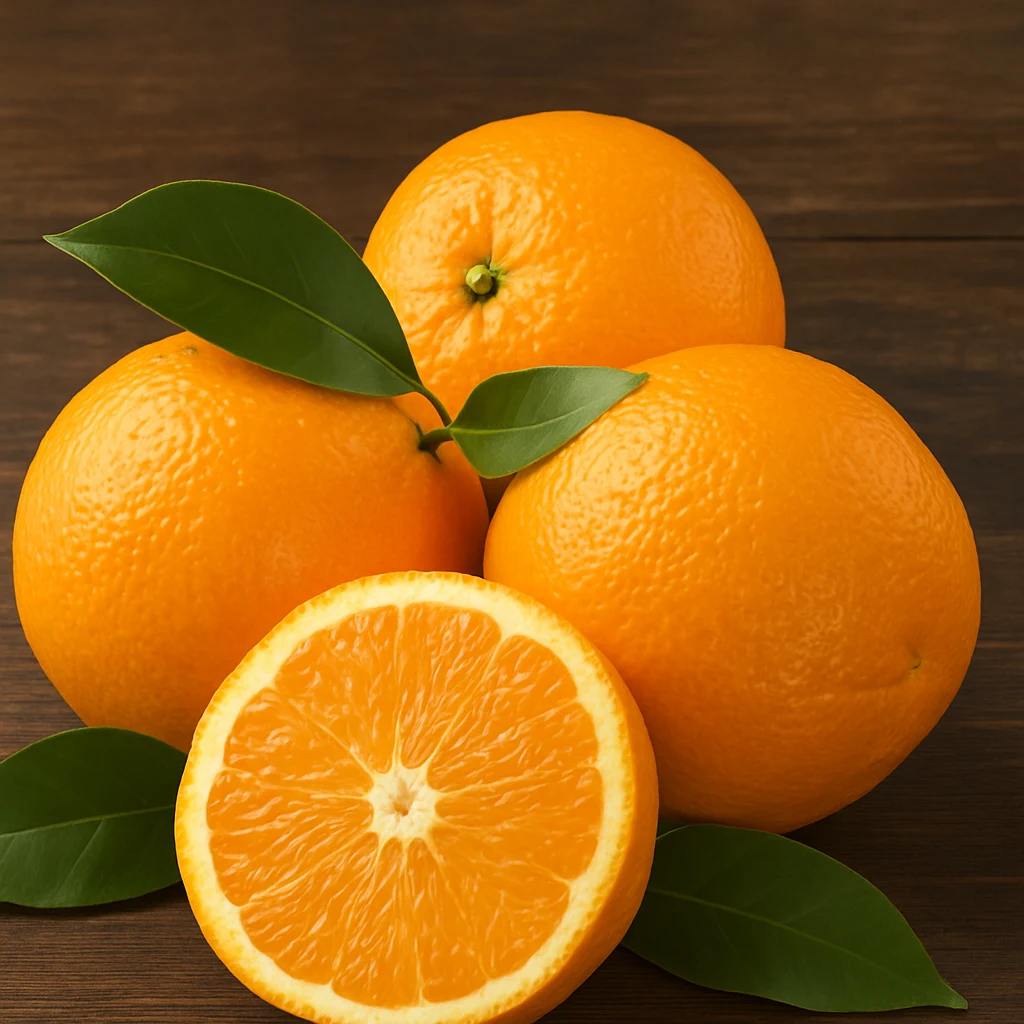
As the Egypt orange season 2025/2026 begins, Egyptian oranges are once again at the center of the global citrus conversation. Importers in Europe, the Gulf, and Asia increasingly rely on Egypt as a strategic origin for their Egyptian oranges export programs thanks to its large production base, competitive prices, and long marketing window.
For buyers who want to look directly at product specifications and packing options, PEI Trade’s dedicated product page for oranges is available here:
Import oranges now
Recent forecasts from the USDA Foreign Agricultural Service indicate that orange production in Egypt is around 3.7 million metric tons in marketing year 2024/2025, after a weather-related drop of about 12% compared with the previous season. You can find the underlying USDA reports at:
USDA
Even with this decline, Egypt remains among the world’s largest orange producers and enters the 2025/2026 season with a solid supply base.
At the same time, official figures for 2023/2024 showed Egyptian citrus exports breaking the 2-million-ton barrier for the first time, with around 1.93 million tons of fresh oranges shipped. In the more recent 2024/2025 season, citrus exports reached roughly 2.1 million tons, including about 1.66 million tons of oranges, as more fruit was diverted to juice and concentrate factories inside Egypt. Despite this shift, Egypt is still one of the top suppliers of fresh oranges worldwide.
Trade statistics from the World Bank’s WITS database show that in 2023 Egypt was the second-largest exporter of fresh oranges by value, shipping more than 718,000 tons with an export value close to USD 800 million:
World Bank
Spain ranked first, while South Africa and the United States followed behind Egypt. This position reflects years of investment in orchards, modern packing houses, and cold-chain logistics.
Other international analyses estimate that Egypt accounts for roughly 40–45% of global fresh orange shipments, confirming the country’s role as a price-setter in many destinations rather than just a follower. For supermarket chains, wholesalers, and trading companies, Egyptian oranges are therefore not simply an optional origin but often a core part of the annual citrus program.
Importers continue to favor Egypt as an orange origin for several practical reasons:
These advantages explain why demand for oranges sourced from Egypt remains resilient even in seasons when total volumes fluctuate. Many buyers now see Egypt as a must-have origin in their citrus portfolios rather than a one-off alternative.
Full technical specifications, packing options, and photos of export-grade fruit can be found on PEI Trade’s product page:
Egyptian oranges
The performance of the orange sector is not only a story of farms and exporters; it also reflects deliberate government support.
Recent statements from Egypt’s Ministry of Agriculture and cabinet highlight that citrus is now the country’s number-one agricultural export, exceeding 1.9 million tons in 2025 alone. Citrus has consistently topped the agricultural export list in recent years, ahead of potatoes, onions, beans, and other key crops.
This focus is backed by several measures:
In parallel, Egypt is working on a revamped national commodity exchange to organize trade in key crops and stabilize prices. This policy framework adds another layer of predictability for international buyers who depend on long-term supply plans.
Looking ahead, analysts expect the 2025/2026 season to be characterized by solid but more balanced export volumes. With a growing share of the crop being processed into juice and concentrate, export supply of fresh fruit may be slightly tighter than in previous record years, but quality is expected to be high. For importers, this means that securing programs early in the season could be especially important.
The global orange market is also dealing with weather-related production challenges in several competing origins, which may support prices and keep demand for Egyptian oranges strong. Retailers are increasingly looking for reliable partners who can offer consistent loading schedules, transparent quality specifications, and flexible packaging formats.
PEI Trade specializes in connecting international buyers with trusted growers and packing houses across Egypt. For orange programs, the company can structure shipments on FOB, CIF, CFR, or DAP terms depending on the destination and the buyer’s preferences. Regular weekly or monthly loading schedules, combined with clear quality parameters, help importers plan promotions and secure shelf space in advance.
Importers who want to discuss season allocations, carton designs, or private-label requirements can start the conversation directly from the company’s product page:
Egyptian oranges
From there, PEI Trade can provide tailored quotations based on volume, packing style, and port of discharge, acting as a long-term Egyptian orange supplier rather than just a spot trader.
The 2025/2026 season confirms Egypt’s status as one of the world’s most important origins for fresh oranges. Large production, a strong share of global exports, active government support, and modern logistics all combine to create a compelling proposition for importers.
For companies looking to secure reliable citrus supply, build long-term Egyptian oranges export programs, and capture profitable opportunities in their home markets, Egyptian oranges should remain high on the sourcing list.