Address
Work Hours
Monday to Friday: 7AM - 7PM
Weekend: 10AM - 5PM

Address
Work Hours
Monday to Friday: 7AM - 7PM
Weekend: 10AM - 5PM


 ByHager
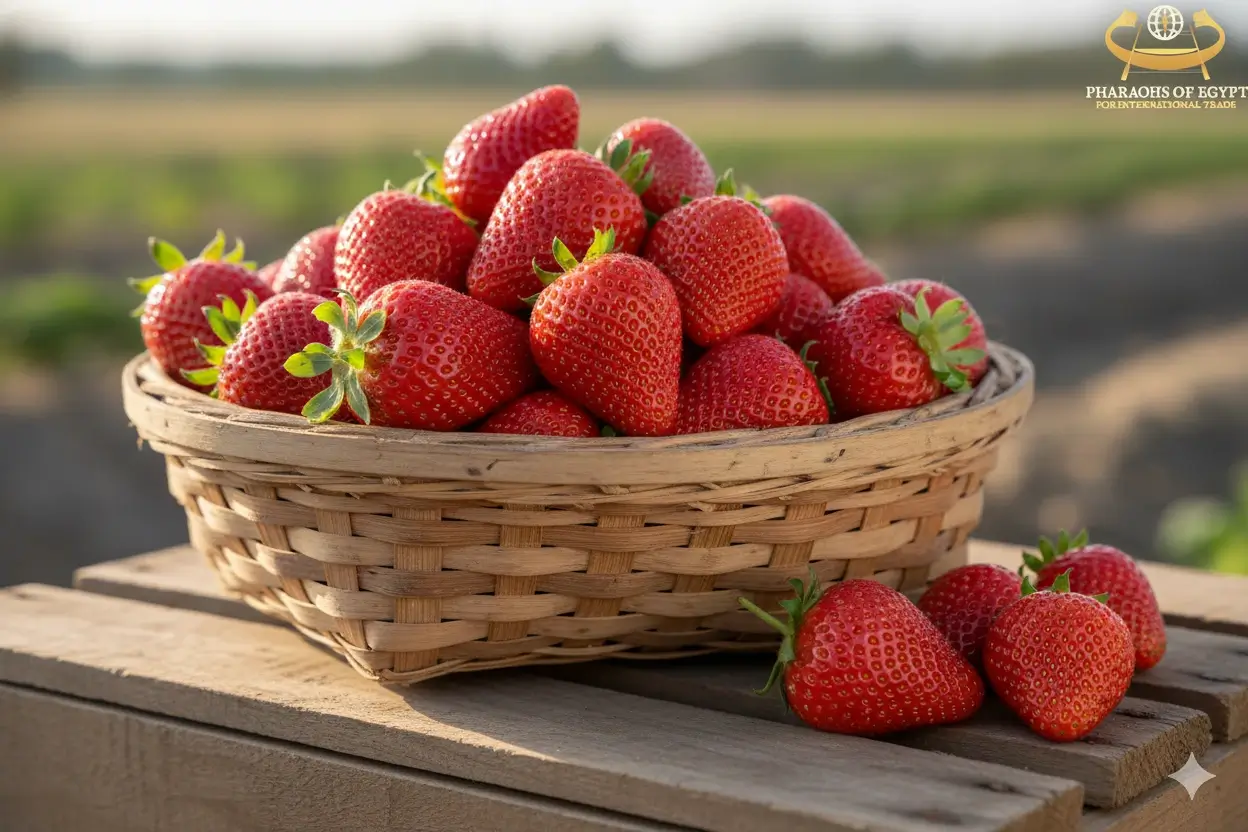
Egypt’s strawberry trade has done something unusual in the last five years: it has taken share in two markets a long way from the Mediterranean, one of them across the Atlantic. For a buyer, the interesting part is not the growth itself but what it shows about whether Egyptian supply can hold a specification over a long voyage, because Brazil and Malaysia are the two hardest tests the origin has passed.
Published trade reporting put Egypt’s strawberry exports at 74.4 million US dollars in the first quarter of 2025, alongside the expansion into Brazil and a record season into Malaysia. This page reads those two markets from a sourcing point of view.

Brazil is a frozen story, not a fresh one. Egypt has become the dominant origin in Brazil’s frozen strawberry imports, on the reporting cited above, and it did so against suppliers with a far shorter freight leg.
That is only possible because frozen fruit removes the variable that usually decides a long lane. An IQF consignment does not lose shelf life in transit, so the competition becomes specification and price rather than days at sea. It is also why Egypt reached first place worldwide in frozen strawberry exports.
Malaysia is the harder achievement, because it is a fresh programme into a tropical market. The same reporting records a 1,500-tonne export record into Malaysia, built over several marketing years rather than in one season.
The reason it works is seasonal fit. Egypt picks through the northern winter, which is exactly when Southeast Asian buyers have no local supply and no nearby alternative. A programme that would be marginal in June is straightforward in January.
| Brazil | Malaysia | |
|---|---|---|
| Product | Frozen IQF | Fresh |
| What made it possible | Freezing removes transit-life risk | Counter-seasonal timing against a market with no local crop |
| What the buyer specifies | Grade, cut, sugar level, microbiological limits | Variety, firmness, size, arrival condition |
| Lesson for other lanes | Long freight legs are not a barrier on frozen | On fresh, the window matters more than the distance |
Buyers new to the origin often ask for a strawberry price without saying which product they mean, and the two are not comparable.
Many buyers end up running both: fresh through the window for a retail line, frozen across the year for processing. The Egyptian strawberry varieties guide covers which cultivars suit which of the two.
| Window | Fresh | Frozen |
|---|---|---|
| September to November | Pre-season; contract now | Contracts for the coming spring’s production are negotiated |
| December to April | Fresh season, peaking January to April | IQF production runs at its heaviest |
| May to August | Fresh finished | Ship from the season’s frozen stock |
Two practical points: contract fresh before the season opens rather than during it, because peak capacity is allocated early; and if your requirement is year-round, the frozen contract is the one that needs negotiating in the autumn. Buyers contracting for the coming season should also read the new Egyptian strawberry export instructions for 2026.
PEI Trade supplies both fresh Egyptian strawberries through the season and IQF frozen strawberries across the year, from certified farms with residues managed to the destination market’s limits. Certificate details and lot analyses go to buyers on request rather than being published here.
Fresh, no: the Egyptian fresh season runs December through April. Frozen IQF, yes: fruit frozen in season ships across the whole year, which is how buyers keep a strawberry line running through the northern summer.
Because it is a frozen trade. IQF fruit does not lose shelf life at sea, so a long freight leg stops being the deciding factor and the competition becomes specification and price instead.
Seasonal fit. Egypt picks through the northern winter, when Southeast Asian buyers have no local crop and no nearby alternative. The same programme would be uncompetitive in June.
No. Strawberry pricing moves with the position in the season, the variety, the pack format and freight on the lane, and a figure on a web page misleads a buyer who plans against it. Send the destination, volume, product form and weeks and we will quote against the position on the day.
Fresh is seasonal and condition-critical, decided by variety and cold chain. Frozen is year-round and specification-driven, decided by grade, cut and sugar level. They are different purchases and are not price-comparable.
Ask for a shipping record to your own region, the certificate rather than the claim, residue management for your market with the lot analysis, a named variety, the voyage temperature record, and the class and defect tolerance written on the contract.
Send the destination port, whether you want fresh or frozen, the volume, the variety or grade, the pack format and the weeks. We will quote against the current season position and say plainly what is not available.