Address
Work Hours
Monday to Friday: 7AM - 7PM
Weekend: 10AM - 5PM

Address
Work Hours
Monday to Friday: 7AM - 7PM
Weekend: 10AM - 5PM


 ByMaha
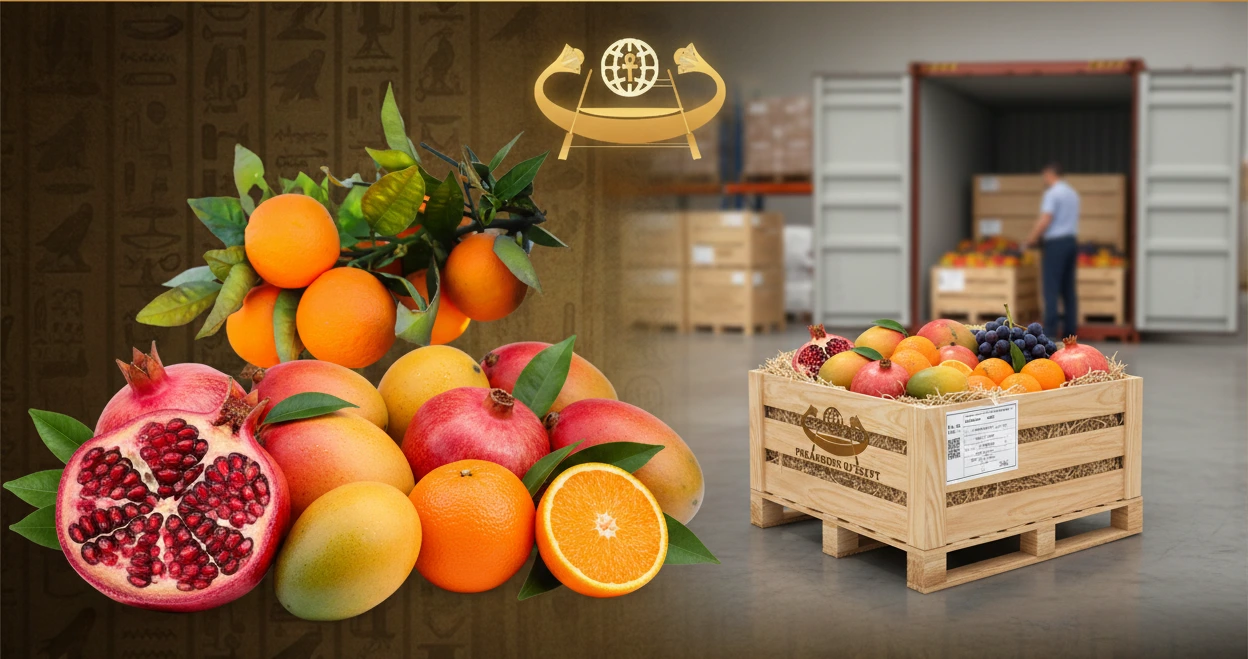
At Alexandria’s cold stores this week, you could spot the usual winter rush of Oranges from Egypt moving into reefer containers. But in the next bay, grapes were being packed for Europe, while pomegranates waited for fast transit, and mango exporters planned their summer programs.
Egypt is still best known for oranges, and the numbers keep proving it. Industry reporting puts orange exports at 1.66 million tonnes in 2024/25, with Russia, Saudi Arabia, and the Netherlands among top destinations. FreshPlaza Yet the bigger story for many importers is what comes next: a growing mix of export-ready fruits that fit different seasons, price points, and buyer needs.
That shift is supported by recent trade momentum. Official updates reported agricultural exports reaching 6.8 million tons in 2025, showing how wide the export basket has become.
For years, citrus set the pace. Oranges from Egypt became a staple for buyers who wanted strong volumes, stable sizing, and workable shipping times.
Now, global demand is pulling Egypt in more directions at once. Retailers want early grapes. Gulf markets want premium mangoes. Many buyers also ask for pomegranates, both fresh and processed.
Government and port moves are also helping. The Damietta–Trieste Ro-Ro line launched in late 2024, aiming to speed up trade with Europe .Ministry of Transport Egypt+1 Route information published by operators lists transit around 68 hours, which can be a big help for fresh fruit shelf life.
There is also fresh momentum on compliance. Egypt’s agriculture ministry said the European Commission reduced extra inspections for Egyptian citrus shipments to 10% in December 2025, following earlier cuts.
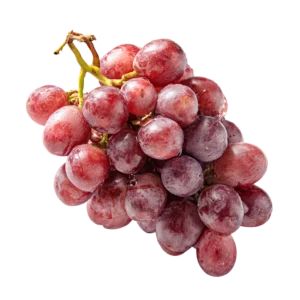
Table grapes are becoming a “second headline” next to oranges in many export plans. They fit a window when some competing origins are not yet at full volume, especially in parts of Europe.
Where Egyptian grapes are moving:
Why grapes compete well:
Main risks buyers still watch:
For importers, grapes are often the easiest “add-on” if they already trust Oranges from Egypt programs and want more SKUs from the same origin.
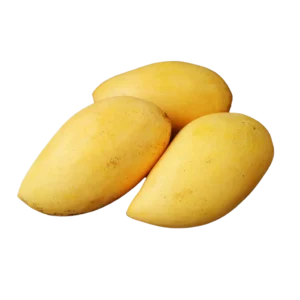
Mango is not a small niche anymore. Exporters describe Egypt shipping mangoes to 50+ countries, with over 60,000 tons exported fresh and over 150,000 tons frozen in a recent season.
Common varieties importers ask about:
Where demand is strongest:
What makes mango exports tricky:
Many mango deals succeed when exporters treat them like a “managed program,” not a last-minute spot shipment.

Pomegranates keep gaining attention because demand is driven by both taste and health positioning. Egypt is benefiting from that trend.
Recent reporting said Egypt’s fresh pomegranate exports reached 52 markets in the first nine months of 2025, with the UAE as the top buyer by value.ArabFinance Egypt also secured approval to export fresh pomegranates to Venezuela in October 2025, expanding market access.
Why pomegranates are a strong export item:
Where value is growing fast:
For some importers, pomegranates are the “next step” after building confidence with Oranges from Egypt shipments.
Across oranges, grapes, mangoes, and pomegranates, the strongest exporters follow the same playbook.
Typical export steps:
Documents buyers often request:
Export growth is not only a trade headline. It affects jobs and rural income.
When official releases point to millions of tons of agricultural exports in 2025, that usually means more work in:
This also supports foreign currency inflows, which matters for a country that imports key inputs like fuel and some farm supplies.
Egypt’s diversification is real, but it is not automatic.
Key hurdles:
Still, the direction is clear. Better routes to Europe, like the Ro-Ro corridor, can help sensitive fruit shipments .Ministry of Transport Egypt+1 And the EU’s recent inspection-rate change for Egyptian citrus signals growing confidence in controls and monitoring.
Oranges from Egypt remain the anchor product in global winter citrus trade. But the stronger long-term story is “beyond oranges.” Grapes are winning early-season shelf space, mangoes are building premium demand, and pomegranates are expanding into more markets and more formats.
For importers, the best results come from planning across seasons, locking specs early, and choosing suppliers who treat exports as a system, not a single shipment.
Explore Now: Navel vs Valencia – Egyptian Orange Import Guide 2026
Because of strong volumes, a long export season, and established demand in markets like Russia and parts of Europe.
Grapes, mangoes, and pomegranates are gaining traction, with more markets opening and more buyers seeking stable supply.
Timing and sweetness help, plus growing demand from major markets such as Russia, the Netherlands, the UK, Germany, and Malaysia.