Address
Work Hours
Monday to Friday: 7AM - 7PM
Weekend: 10AM - 5PM

Address
Work Hours
Monday to Friday: 7AM - 7PM
Weekend: 10AM - 5PM


 ByMaha
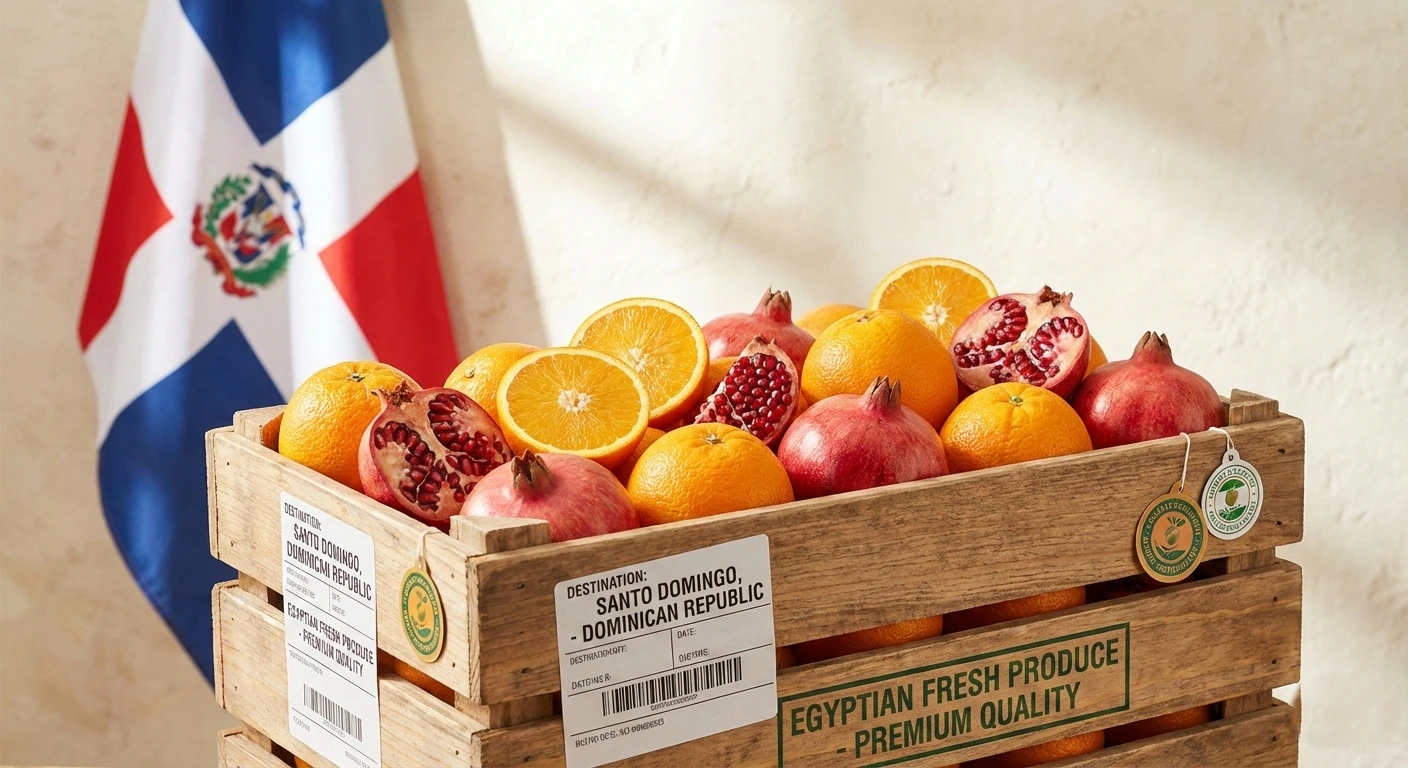
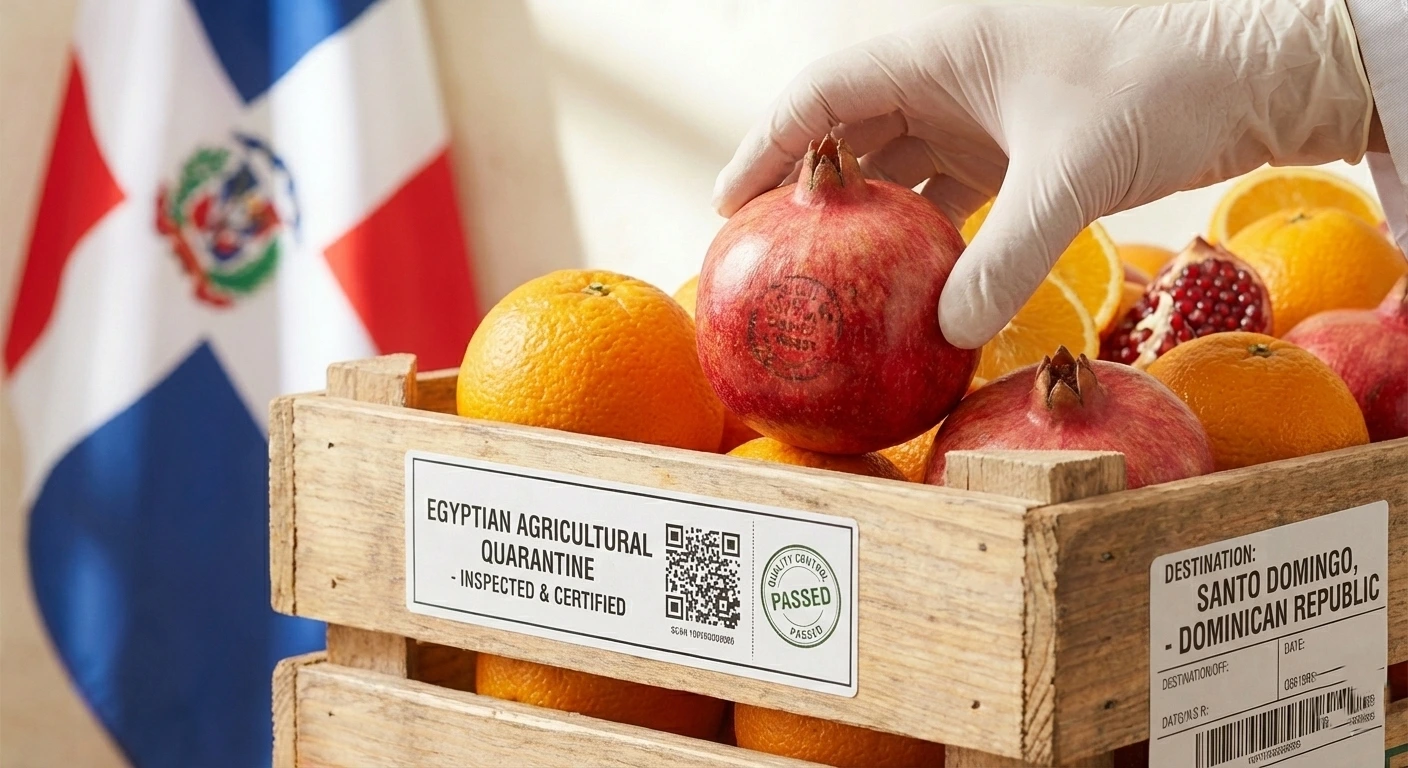
Egypt gained market access to the Dominican Republic for fresh citrus and pomegranate, with exports opening on 1 January 2026. The agreement covers four products: fresh oranges, grapefruit, tangerines and pomegranates. For a buyer in the Caribbean, it means Egyptian fruit is now a legally available option where it previously was not.
This page records how the access was established, what a consignment into the Dominican Republic has to satisfy, and what the opening means commercially. Last updated: September 2026.
| Products approved | Fresh oranges, grapefruit, tangerines, pomegranates |
|---|---|
| Exports opened | 1 January 2026 |
| Authorities | Egypt’s Central Administration for Agricultural Quarantine and its Dominican counterpart |
| Basis | A signed bilateral work plan covering all four products |
| Preceded by | A Dominican technical delegation’s inspection visit to Egypt |
Market access for a fresh commodity is not granted on request. It follows a sequence, and this case ran through it in the normal order.
The second step is the one worth noting. The delegation inspected the traceability and coding system rather than the fruit, because that system is what lets the importing authority isolate a problem to a consignment instead of suspending an origin. Traceability is the thing market access is actually granted against, which is covered in traceability and lot coding.
Which Egyptian body issues which of these is set out in Egypt’s export control bodies.
The opening also sits in a wider pattern of Egyptian agricultural export growth: frozen strawberry is the clearest example, where Egypt reached first place worldwide in frozen strawberry exports.
The four approved products do not all run at once, and a Caribbean programme has to be built around that:
| Product | Egyptian window | Note for this lane |
|---|---|---|
| Oranges | Winter into summer across Navel and Valencia | The anchor product; see the citrus export guide |
| Tangerines and mandarins | From November, with the citrus ramp | Early in the citrus year |
| Grapefruit | Follows the mandarin and early Navel ramp | Narrower window than oranges |
| Pomegranate | Second half of September into early December | Covers the months before citrus is at volume |
For a buyer in a market Egypt does not yet serve, the useful takeaway is the mechanism rather than the destination. Access was granted after an inspection of systems, not after a sales effort, and it took a negotiation, a visit and a signed work plan before a single container could move.
That is worth knowing in both directions: if your market already has access, the paperwork exists and can be used; if it does not, no supplier can create it inside a season, whatever they say. How the main markets compare is in citrus export regulations by country.
Exports opened on 1 January 2026, after technical evaluation and the signing of a bilateral work plan between the Egyptian and Dominican agricultural authorities.
Four: fresh oranges, grapefruit, tangerines and pomegranates. Each consignment requires phytosanitary certification from the Egyptian agricultural quarantine authority and traceability under the approved coding system.
Through negotiation between the two plant protection authorities, a Dominican technical delegation’s inspection visit to Egypt in November, and a signed work plan covering all four products. The delegation examined the quality control and traceability systems rather than the fruit itself.
Its hospitality sector needs steady fresh fruit supply, consumption does not fall away seasonally in a tropical market, local citrus production is limited, and it diversifies away from crowded European lanes.
Earlier than the harvest window suggests, because the transatlantic leg has to be added when working back from a required arrival date. Pomegranate runs from the second half of September, and citrus ramps from November.
No. Market access requires negotiation between plant protection authorities, a technical evaluation and a signed protocol, which cannot be created inside a season by any exporter. If the access exists, the paperwork can be used; if it does not, it has to be built first.
Send the destination port, the product and volume, the count or size grade and the arrival weeks you need. We will quote against the current season position and confirm the document set for that lane.