Address
Work Hours
Monday to Friday: 7AM - 7PM
Weekend: 10AM - 5PM
Address
Work Hours
Monday to Friday: 7AM - 7PM
Weekend: 10AM - 5PM


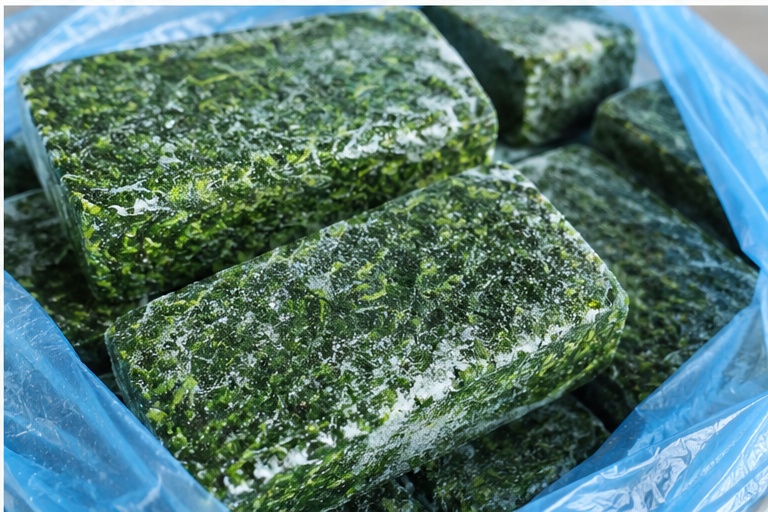
Germany is a growing EU market for Egypt’s frozen molokhia (jute mallow), driven by its large Egyptian, Arab and wider MENA communities. Molokhia is a comfort-food staple, and frozen molokhia — which Egypt dominates globally — brings it to German ethnic-food retail and foodservice year-round. This is the frozen trade under HS 0710.80 (frozen vegetables, including molokhia), held at −18 °C. This guide covers formats, logistics, EU market requirements, seasonal availability, and how to open a supply program.
Germany hosts large Egyptian, Arab and wider MENA communities for whom molokhia is a cherished dish, sold through ethnic-food retail, halal markets and Middle-Eastern restaurants. It isn’t grown in Germany, so supply is imported — and Egypt, the dominant global origin, is the authentic source. Frozen molokhia delivers the dish ready-prepped and year-round, in the minced cut most home cooks expect.
For German importers and ethnic-food distributors, an Egyptian program offers authentic, consistent, EU-compliant frozen molokhia with reliable year-round availability.
| Format | Profile | Typical German use |
|---|---|---|
| Minced (fine) | Classic finely-chopped leaf, frozen | ★★★ Traditional molokhia stew |
| Whole-leaf | Whole young leaves, frozen | ★★ Levantine-style & restaurant |
| Block vs IQF | Block (bricks) or free-flowing IQF | Retail bricks; foodservice IQF |
Specifications are set per buyer: cut, blanching, colour, foreign-material and micro limits, residue compliance. For product background see the Egyptian molokhia export guide and the Egyptian Frozen & IQF Export Report.
| Period | Activity | Germany notes |
|---|---|---|
| May–Oct | Molokhia harvest & freezing | New-crop freezing; contract for the season |
| Year-round | Shipping from cold storage | Continuous supply for German ethnic retail & foodservice |
Minced (classic fine cut) and whole-leaf frozen molokhia, in block bricks or free-flowing IQF, at −18 °C under HS 0710.80.
Germany hosts large Egyptian, Arab and MENA communities for whom molokhia is a cherished dish, sold through ethnic retail and restaurants. It isn’t grown in Germany, and Egypt is the authentic, dominant origin.
By reefer sea freight from Alexandria or Damietta to Hamburg and Bremerhaven, held at −18 °C throughout, in retail bricks/bags or 10 kg cartons on pallets.
EU MRL and contaminant compliance with full traceability, a health/phytosanitary certificate, EU labeling, cold-chain logs, and farm/processing food-safety certification (GLOBALG.A.P, HACCP/ISO 22000; IFS often requested).
Building a Germany frozen-molokhia program? PEI Trade supplies minced and whole-leaf frozen molokhia (block or IQF) to your spec, with EU-compliant documentation, −18 °C cold-chain management and reefer delivery to Hamburg and Bremerhaven. Tell us your format, packing and delivery window for a compliant offer.
PEI Trade. “Egyptian Frozen Molokhia Exports to Germany: IQF Market Guide.” peitrade.com, 2026, https://peitrade.com/egyptian-frozen-molokhia-exports-to-germany/
Sources: PEI Trade Egyptian Molokhia & Spinach Export Guide and Frozen & IQF Export Report (Egypt the dominant global origin of frozen molokhia; EU a growing market); trade under HS 0710.80. Country-level molokhia volume qualitative. HS code 0710.80.
PEI Trade · New Cairo, Egypt · [email protected] · WhatsApp +20 109 911 1918 · www.peitrade.com · Brand: nile-prime.com · Ports: Alexandria, Damietta, Sokhna, Port Said (Incoterms 2020)