Address
Work Hours
Monday to Friday: 7AM - 7PM
Weekend: 10AM - 5PM

Address
Work Hours
Monday to Friday: 7AM - 7PM
Weekend: 10AM - 5PM


Variety, internal colour, size counts, carton formats, pallet configuration and shipping windows for Egyptian grapefruit and pomelo in the 2026/2027 citrus season.
Grapefruit is the quiet part of the Egyptian citrus book. Volumes are far below orange and mandarin, the buyer list is narrower, and the fruit demands more from the packhouse than an orange does. For importers supplying juice bars, hotel groups, Gulf retail and the Eastern European wholesale trade, it is a useful line to hold through winter. Here is what the fruit actually looks like against a specification.
Star Ruby is the reference red variety in Egyptian plantings and the one most buyers mean when they ask for red grapefruit. It carries deep red flesh, a smooth thin rind and a red blush on the skin when the season has given it cool nights. Ruby Red and Rio Red appear in older blocks and give a lighter pink flesh with a heavier rind. Marsh, the white seedless type, still moves to processing and to markets that prefer a less pigmented fruit.
Internal colour is the specification line that matters most and the one most often left vague. Ask for it in words the packhouse can act on: deep red, pink or white, judged on a cut sample rather than on skin appearance. Skin blush and flesh colour are only loosely related, and a pale skin can hide strong red flesh.
Egyptian pomelo remains a small planting, mostly for the local premium trade and occasional Gulf shipments. Treat it as an on-request item rather than a programme line.
Grapefruit is traded by count per carton. The standard export range runs from count 23 down to count 60, with 27, 32, 36 and 40 covering most orders. Larger fruit at 23 to 32 suits food service and juicing. Retail packs in Europe and the Gulf sit at 36 to 45. Counts below 50 are generally sold to processing or to markets buying by weight rather than piece.
A single order rarely arrives as one count. The tree produces a curve, and a packhouse that promises a pure count on volume is usually about to substitute. Specify a primary count with a permitted adjacent count and a percentage split, in the same way you would for orange. Our citrus season calendar shows how the variety handover runs across the season.
The common export carton is a telescopic 15 kilo net corrugated box, single layer or two layer depending on count, with a moulded or pulp tray for larger fruit. A 10 kilo carton exists for retail programmes. Wax is standard on grapefruit destined for long transits and is declared on the carton where the market requires it.
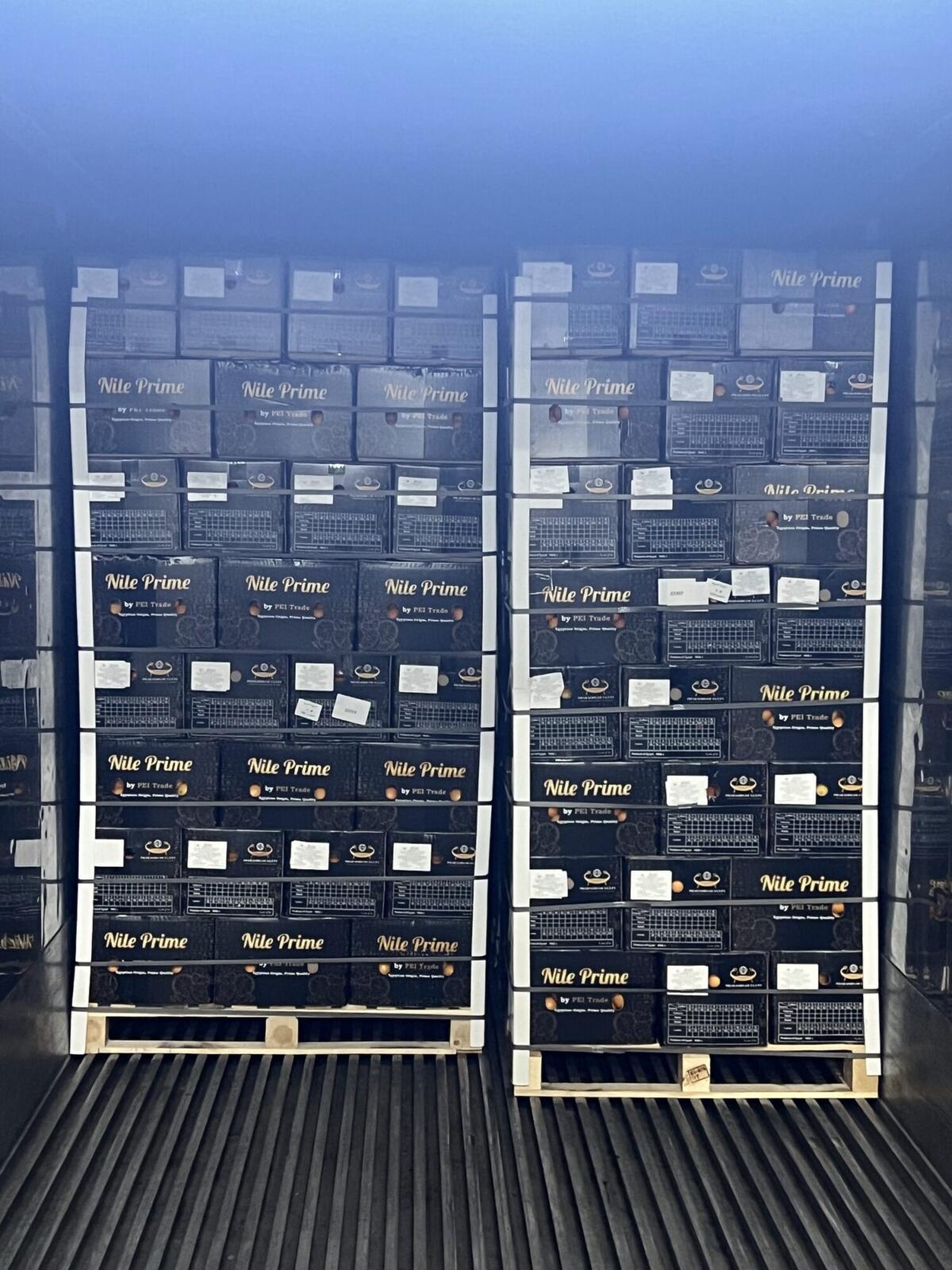
On a standard 100 by 120 centimetre pallet, 15 kilo cartons stack 8 per layer and 9 layers high for 72 cartons, giving roughly 1,080 kilos net per pallet. A 40 foot high cube reefer carries 20 of these pallets. Confirm the figure against the actual carton dimensions before you calculate a landed cost.
Egyptian grapefruit harvest opens in December and runs to April, with the best internal colour arriving from January. Carry temperature is 10 to 12 degrees Celsius, higher than orange, because grapefruit is more sensitive to chilling injury and will pit at set points that a Valencia tolerates. Transit to Northern Europe runs 11 to 14 days, to Jebel Ali 7 to 9 days.
Grapefruit also loads well alongside lemon on a mixed citrus container. See our specification note on Egyptian lemon and lime exports for the matching figures.
For grapefruit availability, counts and a quotation for the coming window, message the PEI Trade export desk on WhatsApp at +20 10 9911 1918.
