Address
Work Hours
Monday to Friday: 7AM - 7PM
Weekend: 10AM - 5PM

Address
Work Hours
Monday to Friday: 7AM - 7PM
Weekend: 10AM - 5PM


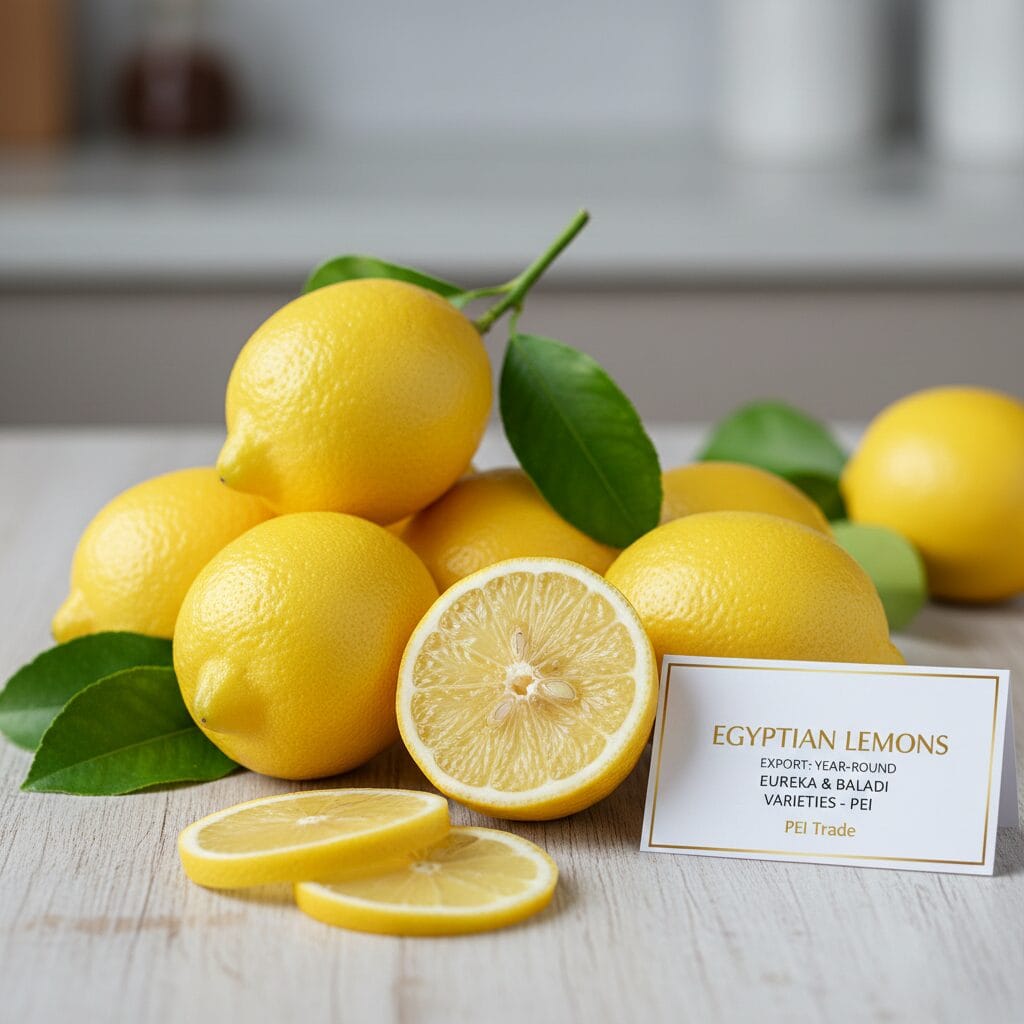
Iraq is a growing destination for Egyptian lemons, driven by a large population, heavy use of lemon in Iraqi cuisine and limited domestic citrus. Egyptian fruit (HS 0805.50) reaches Iraq by sea via Umm Qasr and overland through the regional land bridge, offering competitive FOB and reliable year-round supply. This guide covers varieties, logistics, Iraqi import requirements, seasonality and pricing for importers and wholesalers.
Iraq is a growing, price-sensitive lemon market with strong culinary demand. Main varieties: Baladi (round, high-juice — favoured for Iraqi cooking) and Eureka (Adalia, retail). Supply is effectively year-round. Route: sea to Umm Qasr (10–14 days) or overland reefer via the land bridge. Imports require a phytosanitary certificate, certificate of origin and Halal-compliant handling; MRLs apply.
Lemon is a staple in Iraqi cooking, and domestic production cannot meet demand. Egypt is a competitive supplier on price and volume, with a supply calendar that keeps the market stocked year-round. Egyptian Baladi in particular matches Iraqi taste for a juicy, aromatic lemon, while Eureka serves the organised retail channel. Both sea and overland routes give importers flexibility on cost and speed.
| Market snapshot | Detail |
|---|---|
| Market profile | Growing, price-sensitive, culinary demand |
| HS code | 0805.50 (lemons & limes) |
| Main routes | Umm Qasr (sea); land bridge (overland) |
| Transit time | 10–14 days sea / faster overland |
| Peak window | October–April (year-round backup) |
| Key varieties | Baladi, Eureka (Adalia) |
Baladi: the round, thin-skinned, high-juice Egyptian lemon — the preferred type for Iraqi households and foodservice. Eureka (Adalia): elongated, thick-skinned, good shelf life — for organised retail and longer transit. Graded by calibre (counts 80–150), packed in 15 kg or 10 kg cartons. Grade A serves retail; Grade B serves the wholesale/juice trade at lower FOB.
Sea shipments run from Egyptian ports through the Red Sea/Gulf to Umm Qasr in roughly 10–14 days; overland reefer via the regional land bridge is faster for time-critical orders. Lemons travel at 10–13°C — warmer than oranges to avoid chilling injury — at 85–90% RH. Fruit is pre-cooled, waxed and treated within permitted limits before dispatch.
Iraqi imports require a phytosanitary certificate from Egyptian plant quarantine, a certificate of origin and a health/food-safety certificate. Consignments follow Halal-compliant handling and Arabic labelling (product, origin, packer, net weight, lot). Pesticide residues must meet applicable MRLs. Iraqi importers increasingly ask for GLOBALG.A.P at farm level and clear lot traceability on cartons.
| Period | Availability |
|---|---|
| October–April | Peak — Baladi & Eureka main crop |
| May–July | Summer Eureka (Adalia) crop |
| August–September | Cold-store & late fruit — continuity supply |
Year-round Egyptian supply lets Iraqi importers keep lemon on the shelf continuously, including through the summer months when regional alternatives are limited.
Source & data: Egyptian lemon exports ~100,000 tonnes (2023); Egypt among the fastest-growing lemon exporters. Source: FreshPlaza, 2024. HS code 0805.50 (lemons & limes). Figures are Egypt-market trade data; per-shipment specifications are confirmed at contracting.
PEI Trade — New Cairo, Egypt. Request a quote or lemon spec sheet →