Address
Work Hours
Monday to Friday: 7AM - 7PM
Weekend: 10AM - 5PM
Address
Work Hours
Monday to Friday: 7AM - 7PM
Weekend: 10AM - 5PM


Russia is one of the most reliable destinations for Egyptian mangoes. The match is a good one: Egypt’s late-season Keitt mango lands from August through December — exactly when Russian demand for firm, well-traveling fruit is strong — and the Black Sea reefer route from Egypt’s Mediterranean ports to Novorossiysk is short enough to protect quality. This guide covers the varieties that suit the Russian market, the shipping logistics, market requirements, the variety-by-window calendar, and how to open a supply program.
Three things make Egypt a natural mango origin for Russian importers. First, timing: Egypt’s export season runs from summer into autumn, and its premium late variety, Keitt, extends the window into December — a period when supply from many competing origins thins out. Second, variety fit: Russian buyers favor firm, robust mangoes that ship and store well, and Keitt, Kent, and Naomi are exactly that profile. Industry reporting has put the majority of Egypt’s harvested Keitt as Russia-bound in peak weeks, most of it moving through the Port of Novorossiysk.
Third, logistics and price: the Black Sea reefer route from Egypt’s Mediterranean ports is short by intercontinental standards, which protects a chilling-sensitive fruit, and Egyptian fruit competes strongly on price against origins that must air-freight or sail much further. Russia consistently ranks among the most active markets for Egyptian mango each season, alongside the Gulf and Eastern Europe.
| Variety | Profile | Shipping suitability | Russia fit |
|---|---|---|---|
| Keitt | Large, firm, stays green-skinned when ripe; mild-sweet, low fiber | Excellent — thick skin, long shelf life | ★★★ The primary Russia variety |
| Kent | Rich, sweet, aromatic; premium eating quality | Very good — firm, good transit | ★★★ Premium tier (supply limited) |
| Naomi | Attractive blushed color, firm, balanced | Very good — holds color & form | ★★ Strong secondary |
| Tommy Atkins | Very firm, fibrous, deep red blush | Excellent — longest shelf life | ★★ Value/robust option |
| Osten (Ostin) | High-yield export variety, firm, attractive | Very good — bred for transport | ★★ Volume filler |
Keitt is the anchor. Its firmness and late window make it ideal for the Black Sea reefer route and the Russian preference for Class 1 fruit that holds condition on shelf. For full variety detail see the Egyptian mango export guide.
The workhorse route is reefer sea freight from Egypt’s Mediterranean ports — Alexandria, Damietta, and Port Said — to Novorossiysk on Russia’s Black Sea coast, the main entry point for Egyptian mango. St Petersburg (Baltic) is used for onward distribution to northern and central Russia.
| Month | Available varieties (export) | Russia notes |
|---|---|---|
| Jun–Jul | Early/local varieties; season opening | Mostly domestic/regional; export ramps late July |
| Aug | Keitt begins; Naomi, Osten | Russia program opens — Keitt shipments start |
| Sep | Keitt peak; Kent; Naomi | Peak volume to Novorossiysk |
| Oct | Keitt (late); Kent | Strong Class 1 demand continues |
| Nov–Dec | Keitt (late, cold-stored) | Late window — Russia accepts Class 1 at competitive prices to December |
Keitt is the primary variety for the Russian market — firm, thick-skinned, and available late in the season (August–December). Kent (premium) and Naomi are strong secondary choices, all favored for their shipping durability.
By reefer sea freight from Alexandria, Damietta, or Port Said to Novorossiysk on the Black Sea, carried at about 10–13 °C to protect the chilling-sensitive fruit. St Petersburg is used for onward distribution.
The Russia window runs August to December, driven by late-season Keitt, with peak volume in September. Late fruit continues into November–December from cold storage.
A phytosanitary certificate meeting Rosselkhoznadzor requirements, certificate of origin, commercial invoice and packing list, EAEU-compliant labeling, and cold-chain temperature logs, plus farm/packhouse food-safety certification.
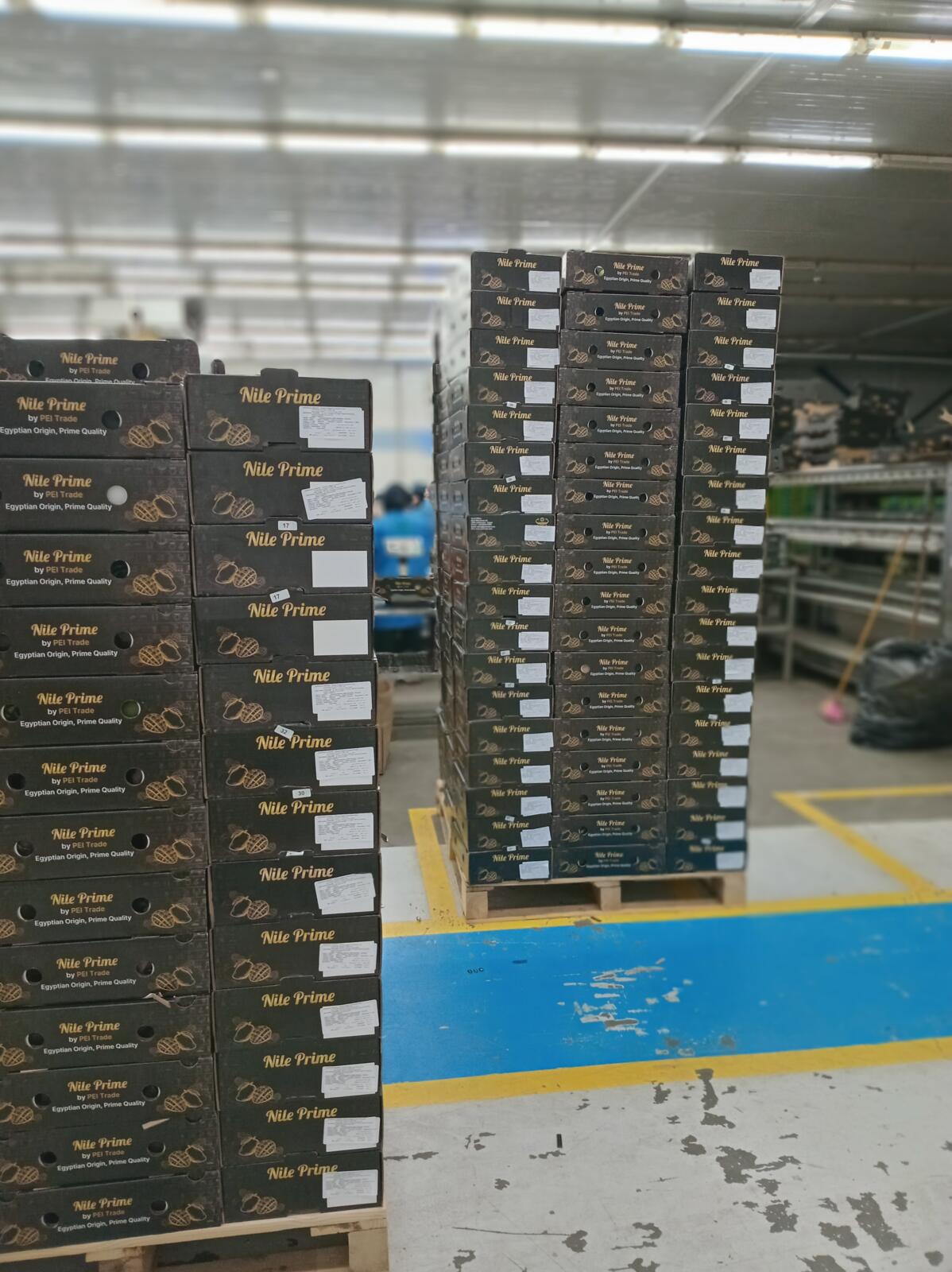
Building a Russia mango program for the coming season? PEI Trade supplies Keitt, Kent, and Naomi to the Russian market with calibre selection, Class 1 grading, EAEU-compliant packing, and cold-chain management from packhouse to Novorossiysk. Tell us your target volumes, calibres, and delivery window, and we’ll structure a compliant, well-timed offer.
PEI Trade. “Egyptian Mango Exports to Russia: Varieties, Logistics & Market Guide.” peitrade.com, 2026, https://peitrade.com/egyptian-mango-exports-to-russia/
Sources: FreshPlaza Egyptian mango season reporting (2024–2025); Tridge mango market guide (varieties, cold-chain); UNECE FFV-45 mango standard; FAO storage-temperature guidance.
[email protected] · WhatsApp +20 109 911 1918 · www.peitrade.com · Brand: nile-prime.com · Ports: Alexandria, Damietta, Sokhna, Port Said (Incoterms 2020)