Address
Work Hours
Monday to Friday: 7AM - 7PM
Weekend: 10AM - 5PM

Address
Work Hours
Monday to Friday: 7AM - 7PM
Weekend: 10AM - 5PM


 ByMaha
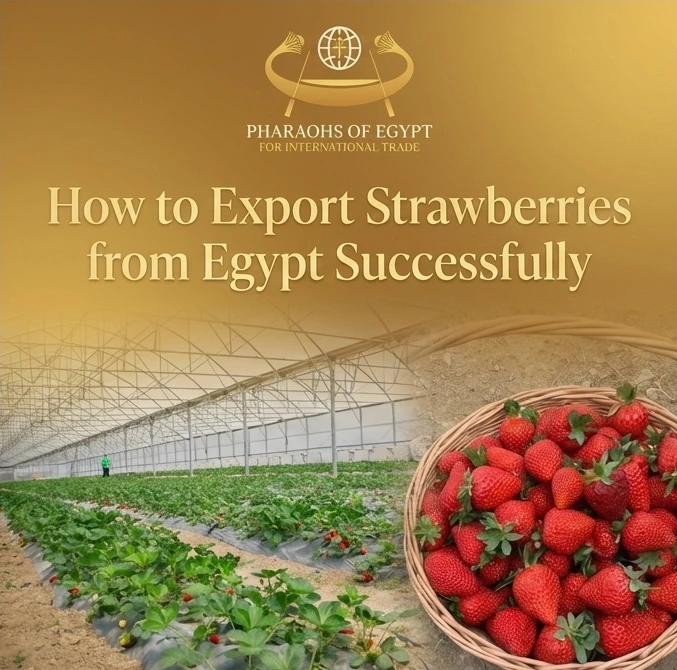
Export strawberries from Egypt is becoming a major driver of the country’s agricultural success, with strawberries from Egypt among the notable fresh produce shipped worldwide. In the latest figures reported by the State Information Service, agricultural exports have reached approximately 8.8 million tons, reflecting strong performance and rising competitiveness in global markets. This includes a significant contribution from fresh strawberries alongside other key crops like citrus and potatoes.
Rising demand in European, Gulf, and Asian markets is driving growth, as importers seek high-quality fresh fruit with competitive pricing. Egyptian strawberries are prized for their vibrant color, firm texture, and freshness—attributes that help them stand out on supermarket shelves around the world.
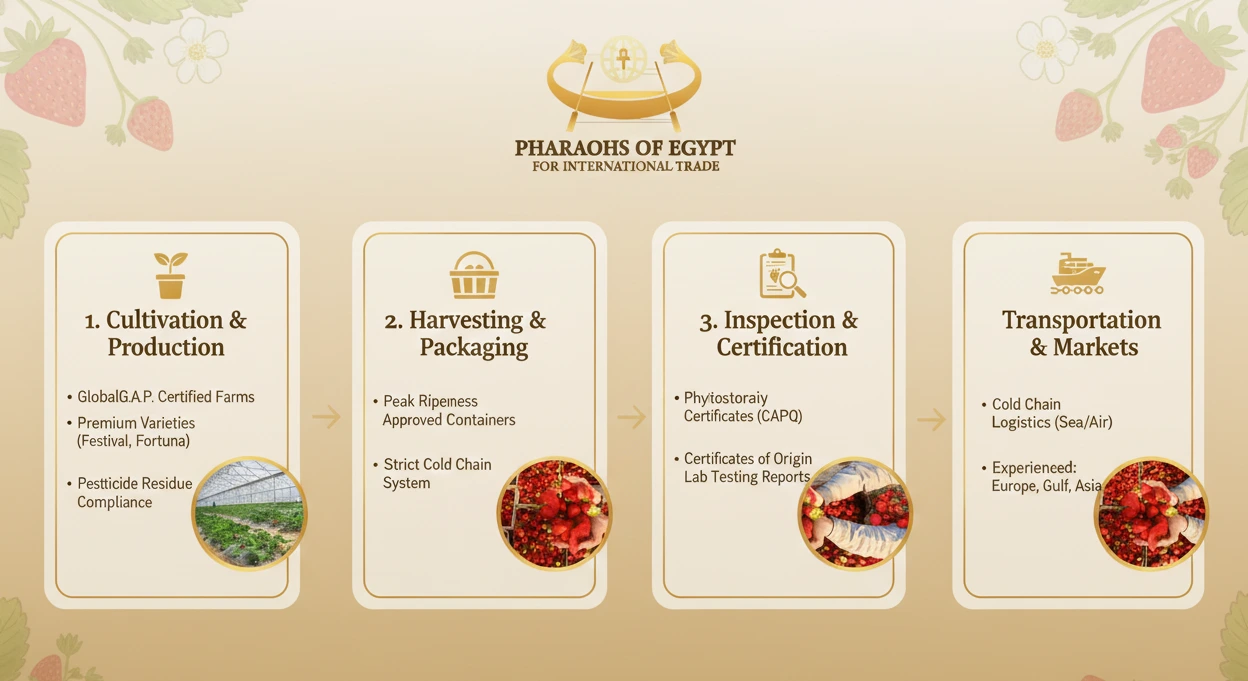
The foundation of successful export begins on the farm. Most strawberries from Egypt destined for export are grown on farms certified with internationally recognized standards such as GlobalG.A.P.—a certification that signals adherence to Good Agricultural Practices and food safety requirements.
Growers often cultivate premium strawberry varieties like Festival and Fortuna, chosen for their firmness and suitability for long-distance transportation. Complying with pesticide residue limits and other food safety protocols is essential to meet regulations in key markets.
Harvesting is performed at peak ripeness using techniques that protect the delicate fruit from damage. To preserve quality through transit, strawberries are packed in approved containers that allow ventilation and minimize bruising.
A strict cold chain system begins in the field and continues through processing and transport to maintain freshness and extend shelf life.
Before export, all strawberries undergo health and phytosanitary inspections. These are conducted by Egypt’s Central Administration of Plant Quarantine (CAPQ)—the national body responsible for plant health inspections and issuing certificates that confirm products are free of pests and disease.
Exporters must obtain a suite of documents, including:
These official certifications are typically required by importing authorities and ensure compliance with destination-specific regulations.
Choosing appropriate logistics solutions is critical for fresh strawberries from Egypt. For nearby markets, sea freight can be cost-effective, whereas air freight is preferred for distant regions where speed is essential. Exporters often work with experienced international carriers who specialize in perishable goods to make sure produce arrives fresh and on time.
Contracts with freight forwarders and logistics experts also help manage customs clearance and document compliance.
Egypt’s strawberry exports are reaching a range of international destinations:
This geographical diversity underscores the global appeal of strawberries cultivated and exported from Egypt.
Despite strong demand, Egyptian exporters face competition from other major berry exporters such as Spain and Morocco. Ensuring advanced cold-chain infrastructure and minimizing post-harvest losses remain ongoing priorities.
At the same time, rising global consumer preference for fresh produce presents opportunities for expanded market access. With improved logistics, branding, and compliance with international food safety standards, strawberries from Egypt can command greater share in premium markets.
Looking ahead, the future of Egyptian strawberry exports appears promising. Continued collaboration between government agencies and private sector stakeholders seeks to build on recent export growth trends and open new markets.
Innovation in packaging, traceability, and marketing will be key success factors as exporters of strawberries from Egypt aim to strengthen their global footprint and meet the evolving demands of international consumers.
For overarching export performance and Egypt’s agricultural export growth, see the State Information Service reports on export volume increases.
Strawberries from Egypt are known for their vibrant color, firm texture, sweet flavor, and freshness. Favorable climate conditions and modern farming practices make them highly competitive in Europe, the Gulf, and Asia.
Premium varieties like Festival and Fortuna are widely exported. They are firm, flavorful, and can withstand long-distance transport while maintaining quality.
Exporters must obtain health and phytosanitary certificates, quality certificates, and comply with GlobalG.A.P. standards. Registration with the Central Administration of Plant Quarantine (CAPQ) is also required.