Address
Work Hours
Monday to Friday: 7AM - 7PM
Weekend: 10AM - 5PM

Address
Work Hours
Monday to Friday: 7AM - 7PM
Weekend: 10AM - 5PM


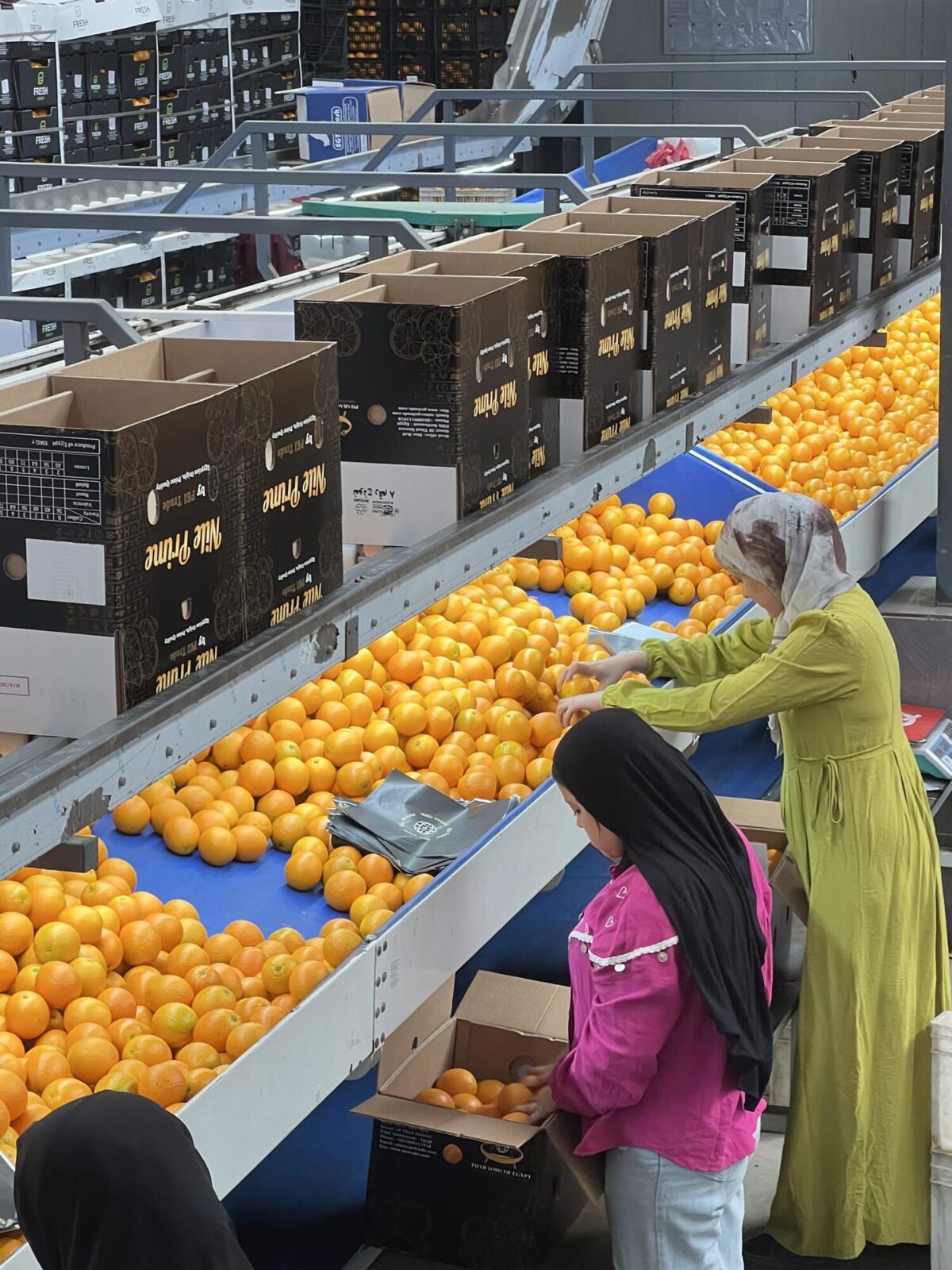
Proper packaging is the difference between citrus arriving in the condition specified and fruit arriving damaged. For Egyptian citrus exports, packaging must protect fruit across thousands of kilometers and weeks of transit while meeting international standards and buyer specifications.
This guide covers complete packaging requirements for Egyptian oranges, mandarins, and lemons—from carton specifications and materials to labeling requirements and retail-ready options. Whether you’re sourcing bulk wholesale or retail-ready packs, understanding these standards helps you specify exactly what you need.
For variety-specific information, see our Complete Egyptian Citrus Export Guide and individual variety pages.
Egyptian citrus exports use standardized carton sizes aligned with international trade practices. The carton weight varies by fruit type to ensure safe stacking and prevent crush damage.
Both Navel and Valencia oranges ship in 15kg net weight cartons:
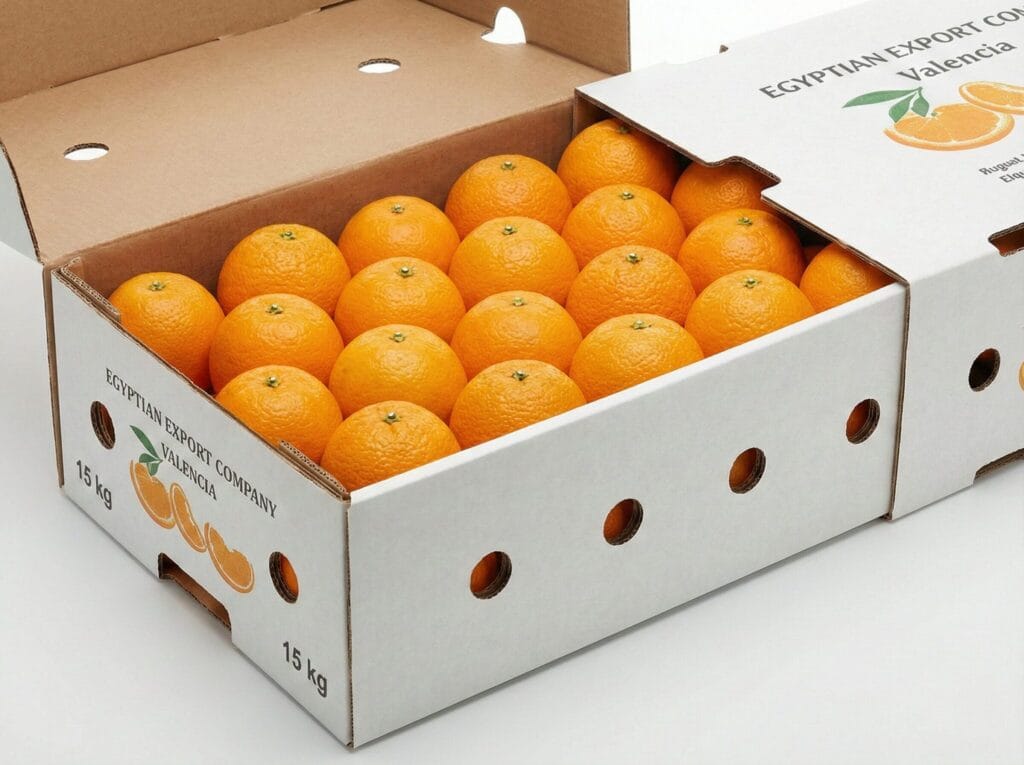
| Specification | Standard |
|---|---|
| Net Weight | 15kg |
| Gross Weight | 16kg (including carton) |
| Dimensions | 40cm x 30cm x 27cm (typical) |
| Construction | Telescopic (lid + base) |
| Material | Corrugated cardboard, double-wall |
| Stacking Strength | Minimum 200kg |
| Ventilation | 4-5% open area (holes/slots) |
The 15kg standard balances handling efficiency with fruit protection. Heavier cartons would increase crush risk on lower layers during pallet stacking and container loading.
Mandarins use smaller 10kg cartons due to their thin, delicate skin: citrus export packaging
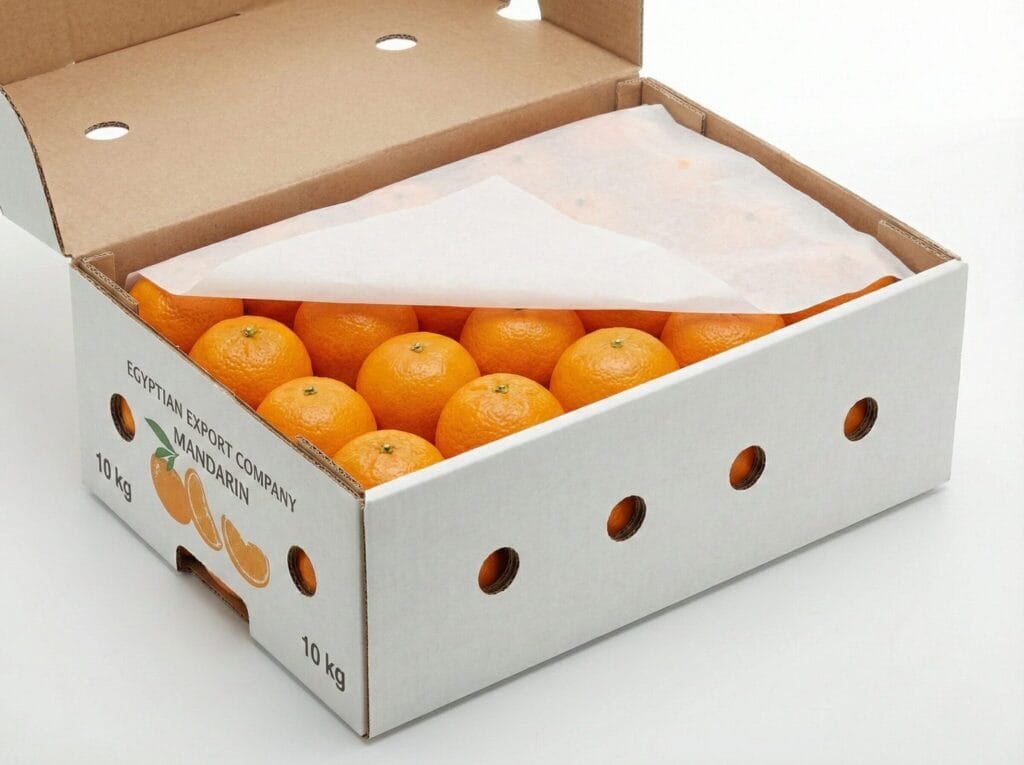
| Specification | Standard |
|---|---|
| Net Weight | 10kg |
| Gross Weight | ~11kg |
| Dimensions | 38cm x 28cm x 25cm (typical) |
| Construction | Telescopic or single-piece |
| Material | Corrugated cardboard |
| Ventilation | 6-8% open area (higher than oranges) |
| Cushioning | Often includes tissue paper between layers |
The reduced weight prevents pressure damage to mandarins’ thin peel. Extra cushioning is common where the grade specified is tighter on bruising.
Lemons ship in either 15kg or 10kg cartons depending on buyer preference:
| Option | 15kg Carton | 10kg Carton |
|---|---|---|
| Best For | Wholesale, processing | Retail distribution |
| Cost Efficiency | Better (less packaging per kg) | Higher cost per kg |
| Handling | Standard | Easier for smaller buyers |
| Availability | Standard | Request required |
Quality packaging starts with proper carton construction citrus export packaging. Export cartons must withstand humidity, temperature changes, and mechanical stress throughout the supply chain.
Wall Construction:
Paper Quality:
Moisture Resistance:
Export citrus cartons use telescopic construction (separate lid and base):
Advantages:
Base Depth: Typically 20-22cm, accommodating 3-4 fruit layers depending on size
Lid Overlap: Minimum 5cm overlap with base for secure fit
Proper ventilation is critical for maintaining fruit temperature and preventing condensation:
| Fruit Type | Ventilation % | Hole Placement |
|---|---|---|
| Oranges | 4-5% | Sides and ends |
| Mandarins | 6-8% | Sides, ends, and bottom |
| Lemons | 4-5% | Sides and ends |
Ventilation Hole Design:
Inside the carton, additional citrus export packaging protects individual fruits and maintains presentation quality.
Tissue Paper:
Foam Netting:
Cardboard Dividers:
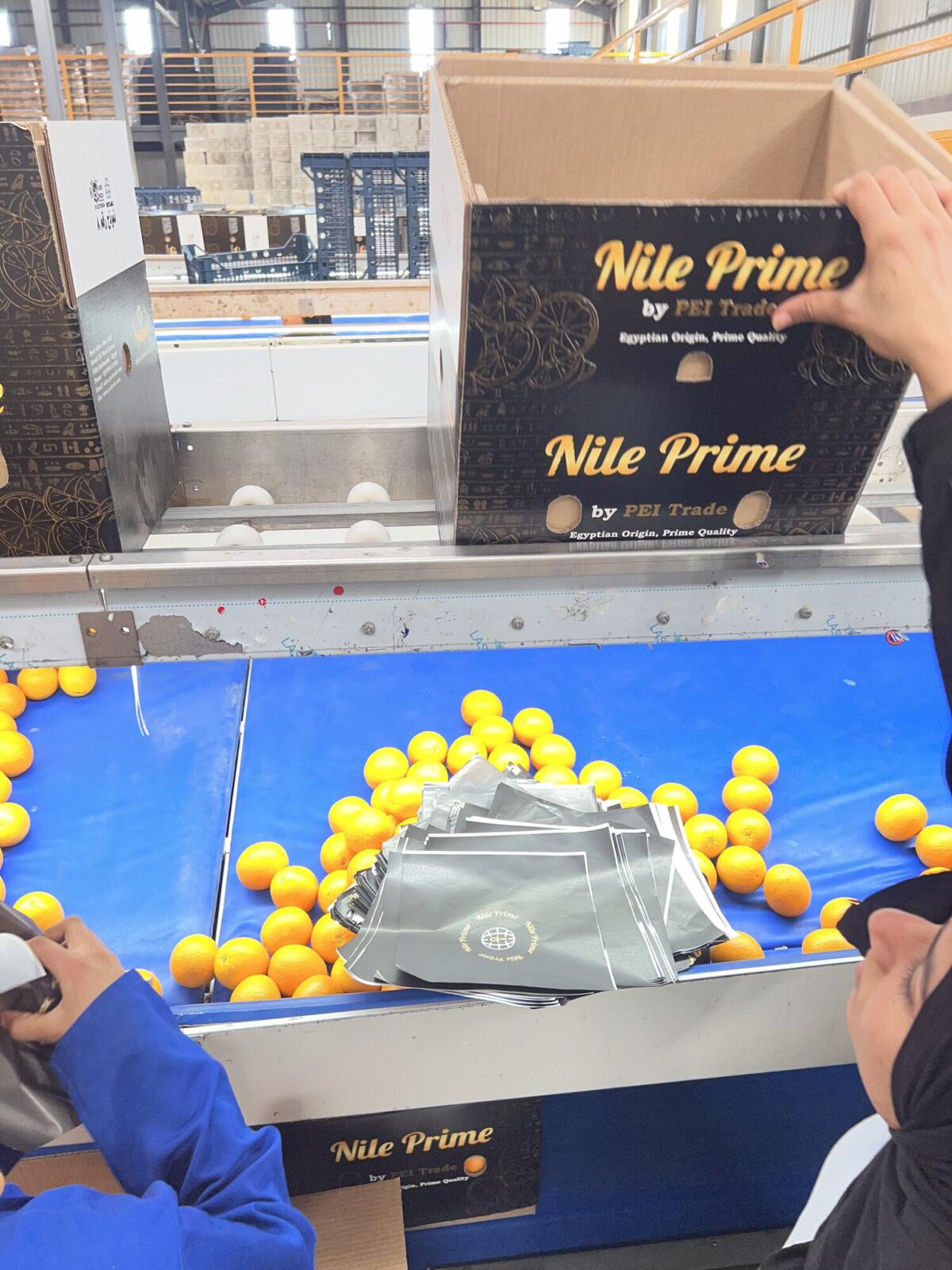
Single-Layer Packing:
Multi-Layer Packing:
Tray Packing:
For processing customers and large-volume buyers, bulk citrus export packaging offers cost efficiency.
Large wooden bins are standard for juice processing customers:
| Specification | Standard |
|---|---|
| Capacity | 400kg net |
| Dimensions | 120cm x 100cm x 75cm (typical) |
| Material | Wood (ISPM-15 heat treated) |
| Handling | Forklift required |
| Best For | Valencia oranges for processing |
ISPM-15 Requirement: All wooden citrus export packaging for international export must be heat-treated and marked according to ISPM-15 standards. This prevents pest transmission across borders. PEI Trade uses only certified ISPM-15 wood citrus export packaging.
Advantages:
Limitations:
Modern retail increasingly demands pre-packed, shelf-ready citrus that minimizes in-store labor.
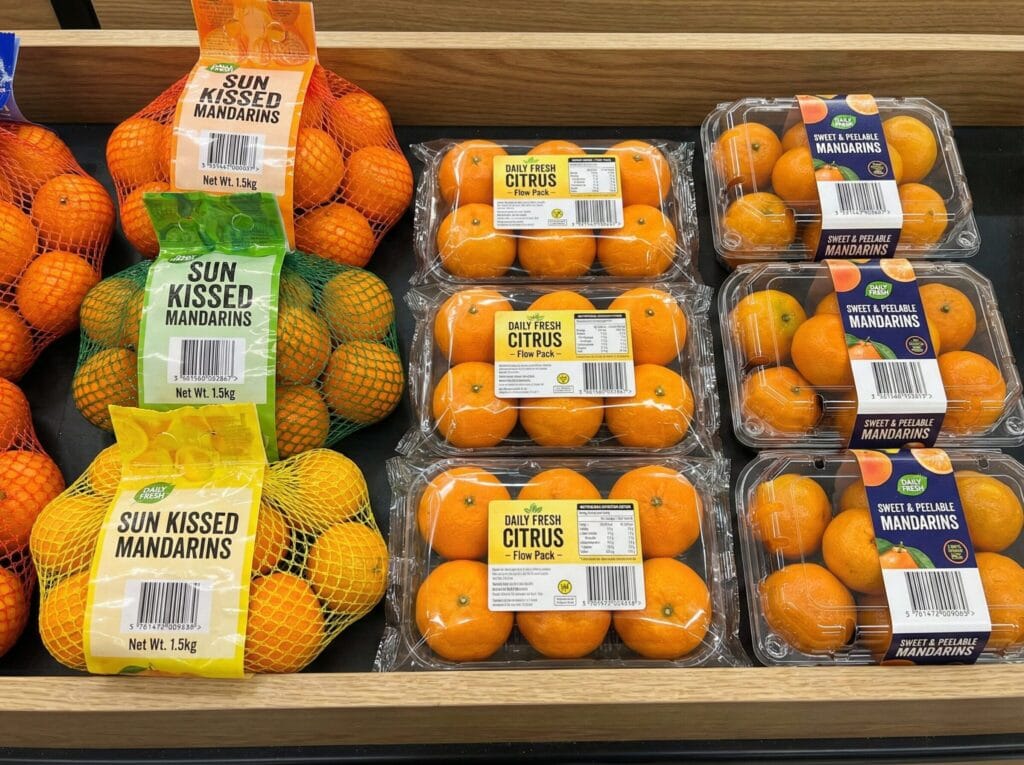
Mesh/Net Bags:
Flow-Wrap Trays:
Clamshell Punnets:
Girsac Bags:
Consumer packs ship in master cartons designed for retail efficiency:
Correct labeling ensures smooth customs clearance and retail compliance. Different markets have specific requirements.
All Egyptian citrus export cartons must display:
| Element | Requirement |
|---|---|
| Product Name | Common name (Oranges, Lemons, etc.) |
| Variety | Navel, Valencia, Baladi, etc. |
| Origin | “Product of Egypt” or “Origin: Egypt” |
| Class/Grade | Class I, Class II, or equivalent |
| Size Code | Count per carton (e.g., “56” or “88”) |
| Net Weight | 15kg, 10kg, etc. |
| Packer/Exporter | Company name and address |
| Lot/Batch Code | Traceability reference |
European Union imports require additional label elements:
Gulf Cooperation Council markets require:
Retail-ready consumer packs add:
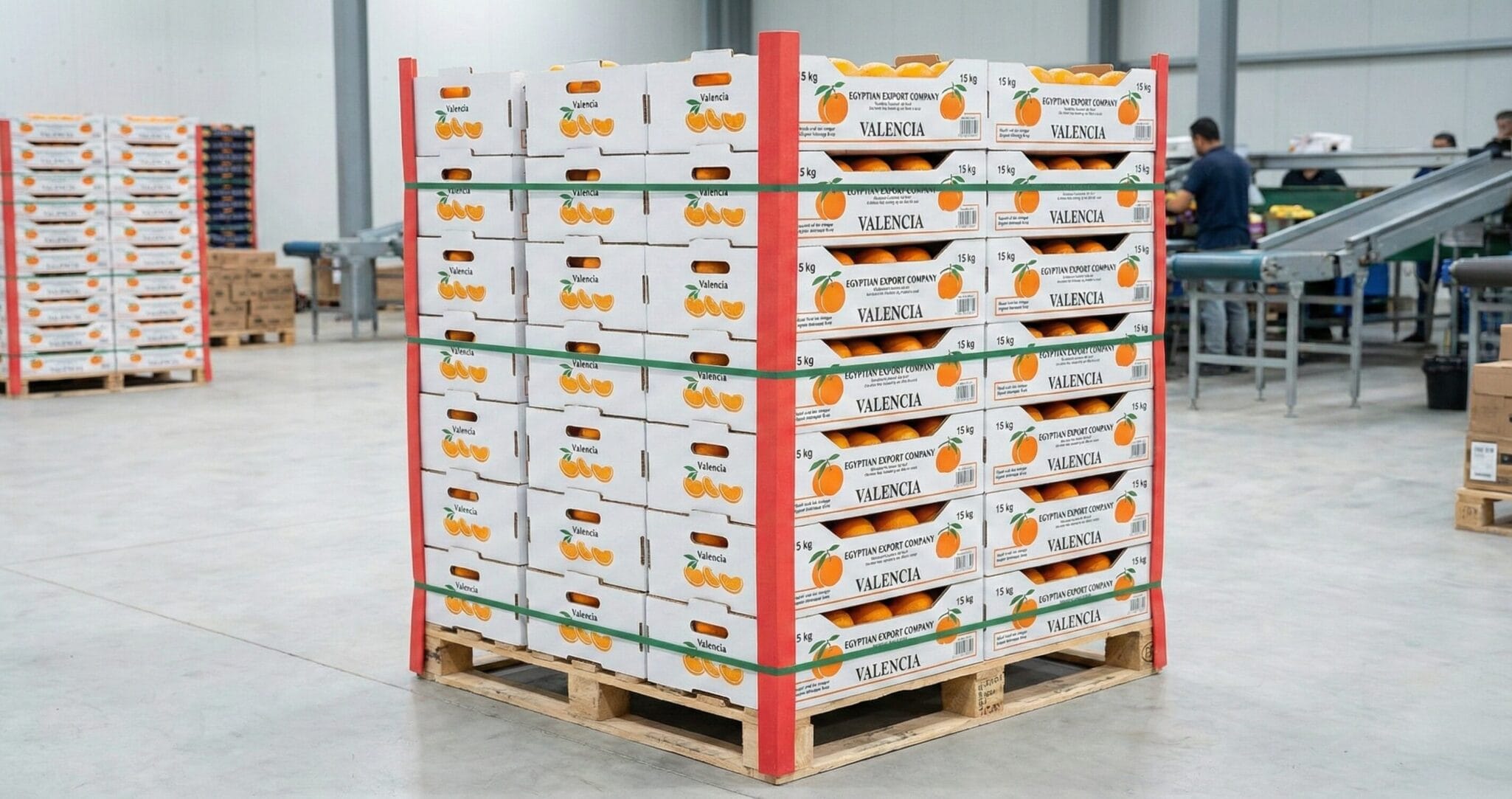
Efficient palletization maximizes container capacity while ensuring carton integrity.
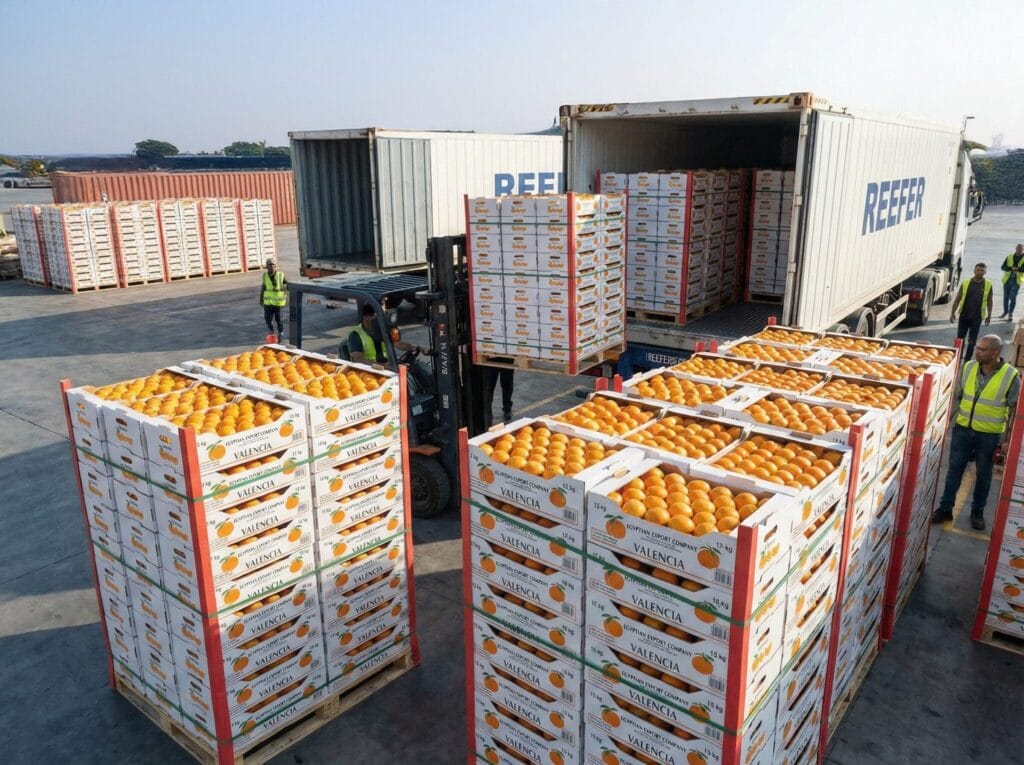
| Pallet Type | Dimensions | Primary Use |
|---|---|---|
| EUR (EPAL) | 120cm x 80cm | European markets |
| Block/GMA | 120cm x 100cm | GCC, Asia, general export |
15kg Orange Cartons — Pallet Builds:
10kg Mandarin Cartons on EUR Pallet:
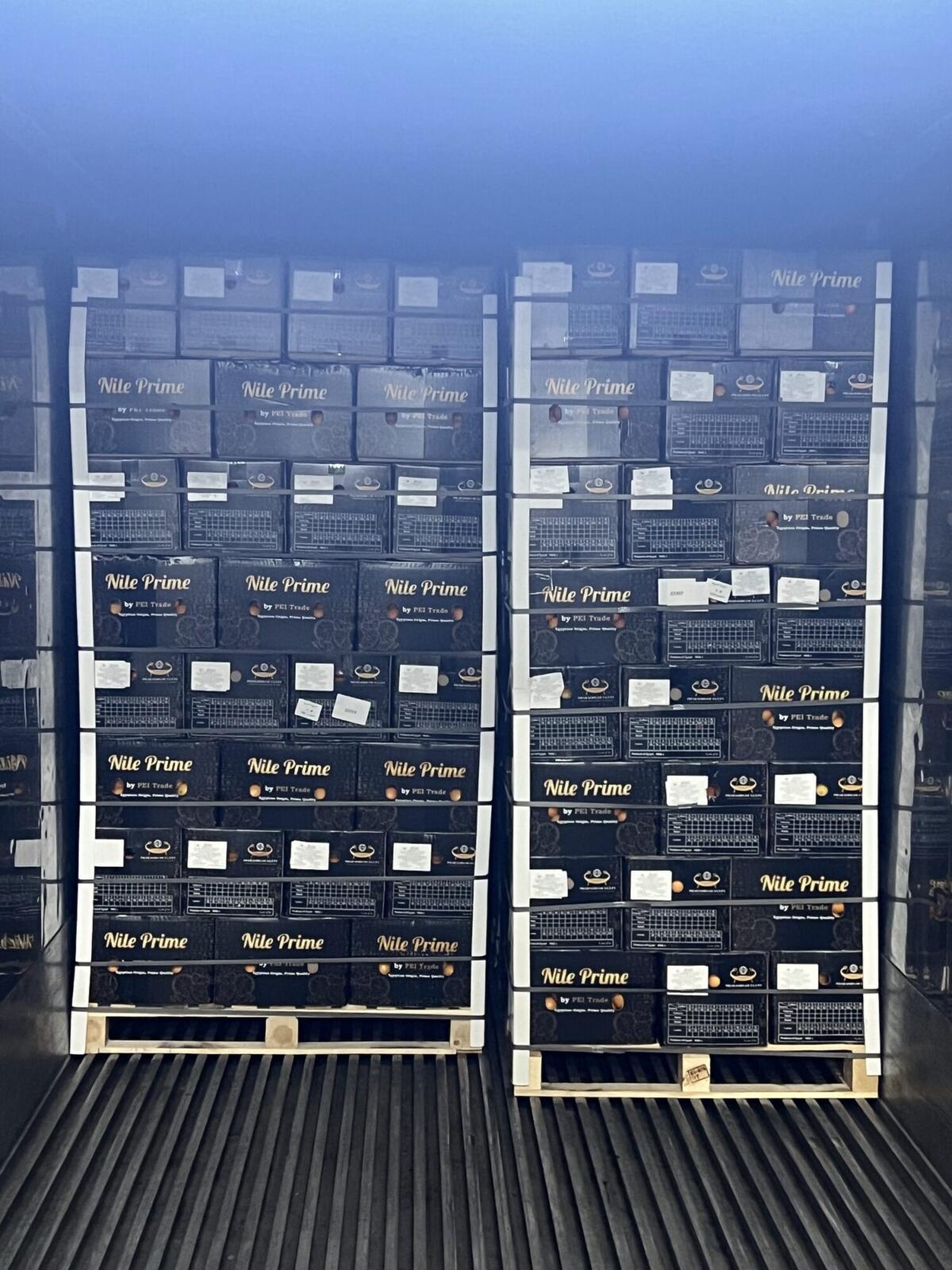
40-foot Reefer Container:
| Product | Pallets | Cartons | Net Weight |
|---|---|---|---|
| 15kg Oranges | 21 (20 standard + 1 Euro) | 1,664 | 24,960kg |
| 10kg Mandarins | 20 | ~960 | ~9,600kg |
| 15kg Lemons | 21 (20 standard + 1 Euro) | 1,664 | 24,960kg |
Packaging is the final quality checkpoint before export. Rigorous inspection ensures only export-worthy fruit leaves the packhouse.
For temperature management after packing, see our Cold Chain Guide.
PEI Trade offers customization to meet specific buyer requirements.
Mandarin skin is thin and bruises under pressure, so the lighter carton reduces the load on the bottom layer during stacking and transport. It is the standard across the easy-peel trade rather than a PEI Trade preference.
Yes, including non-standard weights and dimensions. A minimum applies per specification and the carton has to be produced before the first shipment, so it needs lead time. Send the format you want and we will say what is achievable for your shipping week.
One container, which is 1,664 cartons of 15 kg on our standard stow, because the board is printed in a run and the setup cost has to be carried. Consumer-pack private labelling can carry a higher minimum depending on the pack type.
Wooden export packaging is heat-treated and carries the ISPM-15 mark stamped by the treatment provider, which is what the destination phytosanitary authority checks. The mark is verified on the bins before loading rather than assumed.
Reduced-plastic options are available, including paper-based consumer bags and recyclable tray materials. Fully plastic-free is not possible across every pack type, because a punnet or a flow-wrap needs the film to hold the pack. Tell us which part of the pack matters and we will say what can be changed and what cannot.
Consumer packs such as bags, punnets and flow-wrap go into master cartons, and the master cartons are palletised and shipped in a reefer exactly like standard cartons. The master carton is what protects the consumer pack in transit.
When requesting a quote from PEI Trade, include your packaging specifications to receive accurate pricing and confirm availability.
Helpful details to provide:
Contact PEI Trade:
Email: [email protected]
WhatsApp: +20 109 911 1918
Office: +20 109 911 1918
Website: www.peitrade.com
Request Packaging Specifications
Our team can provide detailed packaging specifications, samples of labeling formats, and guidance on the best packaging options for your market requirements.