Address
Work Hours
Monday to Friday: 7AM - 7PM
Weekend: 10AM - 5PM

Address
Work Hours
Monday to Friday: 7AM - 7PM
Weekend: 10AM - 5PM


A practical guide for Bangladeshi importers buying Egyptian oranges, dates, onions and potatoes: Chattogram and Mongla routing, transit times, LC practice and documentation.
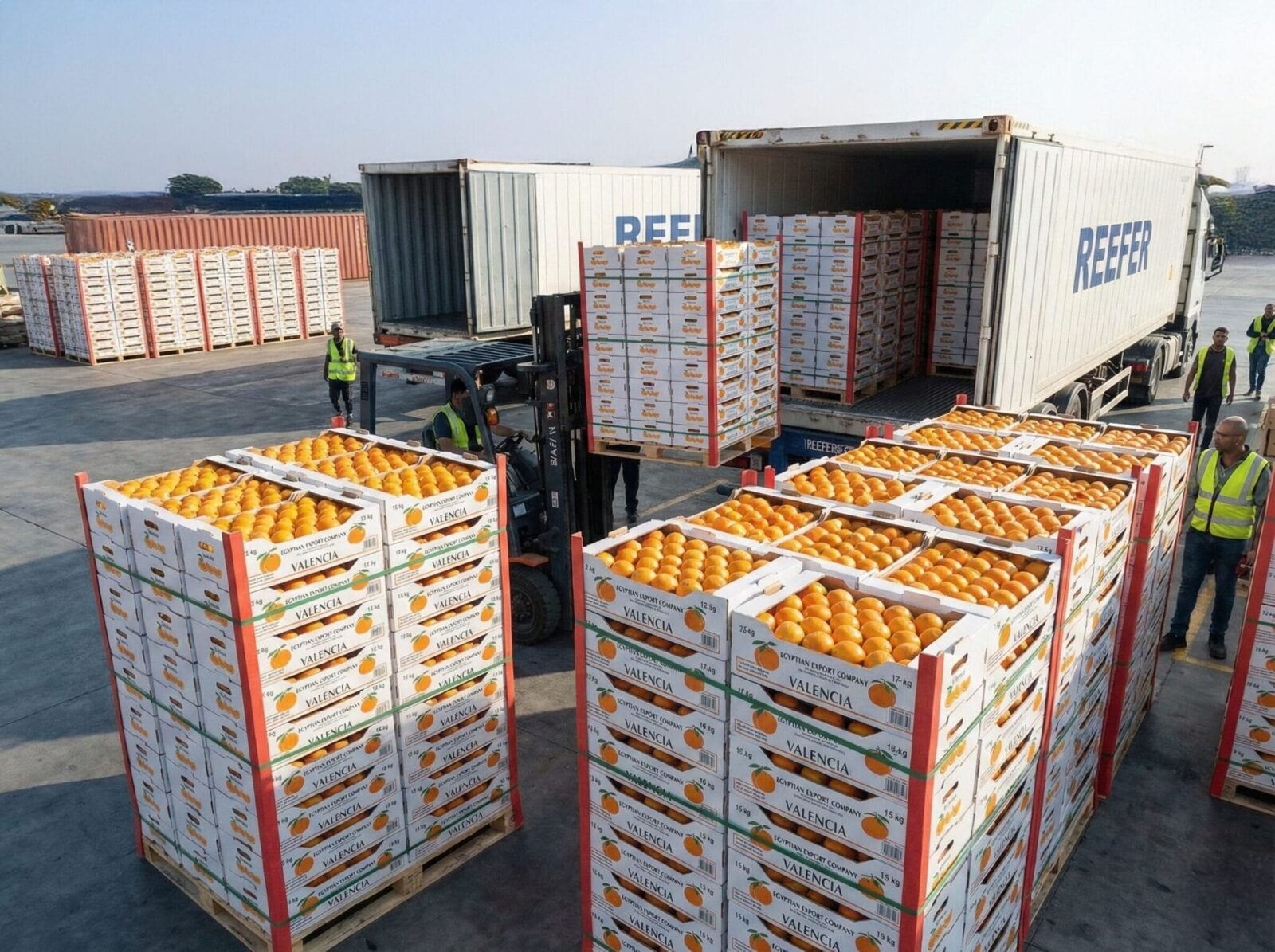
Bangladesh is one of the larger buyers of Egyptian fruit and vegetables outside the Gulf, and it buys differently from most markets. Volumes are concentrated in a few commodities, payment is dominated by letters of credit, and almost everything arrives at Chattogram. This page covers the routing, the payment practice and the crops that actually move, for buyers planning the 2026/2027 season.
Four categories account for most of the trade. The table sets out the shipping window and the usual pack format.
| Crop | Shipping window | Usual pack | Note |
|---|---|---|---|
| Navel and Valencia orange | December to June | 15 kg telescopic carton | Counts 56 to 88 preferred |
| Dates, Siwi and dry grades | August to January | 5 and 10 kg cartons | Volume peaks ahead of Ramadan |
| Onion, red and golden | January to June | 10 and 25 kg mesh bags | Ventilated container, not reefer |
| Potato | January to May | 25 kg mesh or jute | Variety subject to import approval |
There is no direct mainline reefer service from Egypt to Chattogram. Containers load at Alexandria, Damietta or Port Said and tranship, most often at Jebel Ali, Salalah, Colombo or Singapore, depending on the carrier. Plan on roughly 25 to 35 days port to port including the transhipment call, and add a week of buffer during the December to February peak when reefer plugs at transhipment hubs are tight. Mongla handles a smaller share of produce and generally suits bulk and bagged cargo rather than reefer. Air freight through Dhaka is used only for samples and small high-value consignments.
Bangladeshi import regulations make the letter of credit the normal instrument, and most Egyptian shippers work against a confirmed irrevocable LC at sight or on short usance. Two points cause more delays than any other. First, the LC wording must match the shipping documents exactly, including the description of goods, the count or grade, and the port of discharge. Second, transhipment must be permitted in the LC text, since it is unavoidable on this lane. Buyers new to the route should read our note on payment terms on Egyptian produce exports before opening the credit.
The standard set is the commercial invoice, packing list, bill of lading, certificate of origin, and a phytosanitary certificate issued by the Egyptian Central Administration of Plant Quarantine. Fumigation or treatment certificates are required for some commodities and some seasons. Import permit conditions and any additional certificate requirements change from year to year, so confirm the current list with your clearing agent in Chattogram before the goods are packed rather than after the vessel sails.
Both markets buy Egyptian citrus and dates, but the commercial practice differs. Indian buyers work more often on documents against payment and take direct calls at Nhava Sheva and Mundra. Bangladeshi buyers work almost entirely on LC and accept transhipment as normal. Size preference also differs, with Bangladesh taking a larger share of mid and small counts on orange. Our guide to exporting Egyptian produce to India 2026/2027 sets out the Indian side for comparison.
Fix the crop and grade, then the LC wording, then the sailing. Reversing that order is what produces amended credits and rolled bookings. For orange programmes, indicate volume by December so allocation can be held through the Navel peak.
PEI Trade ships 35 export-grade crops from Egyptian packhouses with pre-shipment inspection by SGS or Intertek available on request. For Chattogram sailing schedules, counts and current offers, message our export desk on WhatsApp at +20 10 9911 1918.
