Address
Work Hours
Monday to Friday: 7AM - 7PM
Weekend: 10AM - 5PM

Address
Work Hours
Monday to Friday: 7AM - 7PM
Weekend: 10AM - 5PM


A month-by-month mango season calendar by origin — Egypt, India, Peru, Mexico, Brazil and the US — with the varieties shipping in each window.
Mango season is never fully closed: in any month of the year at least three origins are picking. The northern hemisphere carries March to November — India from March to July, Egypt from July to November, Spain from August to November — while Peru, Brazil and Ecuador cover December to March. This mango season calendar sets out which country is in season each month, which varieties ship in that window, and what a buyer should expect on fruit size and pack format.
Key facts. Egyptian mango season: early July to mid-November, peak August–September, 10 export varieties. Indian mango season: March to July. Peruvian mango season: December to March. Global coverage: 12 months from at least three origins.
Egyptian figures below are measured on our own 2026 packing records. PEI Trade is the exporter, not a neutral reviewer.
Mango season by country splits into two halves. Northern-hemisphere origins — India, Mexico, Egypt, Spain, the Philippines and the United States — supply from February to November. Peru, Brazil and Ecuador supply the December-to-March window that European and North American buyers cannot cover any other way.
| Origin | Jan | Feb | Mar | Apr | May | Jun | Jul | Aug | Sep | Oct | Nov | Dec | Main export varieties |
|---|---|---|---|---|---|---|---|---|---|---|---|---|---|
| Egypt | — | — | — | — | — | — | ○ | ● | ● | ○ | ○ | — | Timour, Fagri Kelan, Naomi, Owaisi, Sedeeka, Zebda, Kent, Shelly, Keitt, Tommy Atkins |
| India | — | — | ○ | ● | ● | ● | ○ | ○ | — | — | — | — | Alphonso, Banganapalli, Kesar, Dasheri, Langra, Chausa |
| Mexico | — | ○ | ○ | ● | ● | ● | ● | ● | ○ | — | — | — | Ataulfo (Honey), Tommy Atkins, Kent, Keitt, Haden |
| Peru | ● | ● | ○ | — | — | — | — | — | — | — | ○ | ● | Kent, Edward, Haden |
| Brazil | ○ | ○ | — | — | — | — | — | ○ | ● | ● | ● | ○ | Palmer, Tommy Atkins, Kent, Keitt |
| Spain | — | — | — | — | — | — | — | ○ | ● | ● | ○ | — | Osteen, Keitt, Kent, Irwin |
| United States (Florida, California) | — | — | — | — | — | ○ | ● | ● | ○ | — | — | — | Haden, Kent, Keitt, Tommy Atkins, Glenn |
| Philippines | — | ○ | ● | ● | ● | ○ | — | — | — | — | — | — | Carabao (Manila Super Mango) |
● peak volume, full range of counts · ○ shoulder volume, limited sizes or limited varieties · — no commercial export volume. Windows shift by one to three weeks year to year with heat, flowering and rainfall.
Egyptian mango season runs from early July to mid-November, with peak volume in August and September. Timour, Fagri Kelan and Naomi open the season in July. Owaisi, Sedeeka, Zebda and Kent hold August and September. Shelly and Keitt close it from late September into November, which is what gives Egypt an eight-to-ten week window after most Asian origins have finished.
| Variety | Peak window | Fruit weight | Counts (5 kg carton) | Brix | Fibre |
|---|---|---|---|---|---|
| Timour | July–August | 350–550 g | 9 · 10 · 12 · 14 | 16–19° | Low |
| Fagri Kelan | July–August | 500–900 g | 6 · 7 · 8 · 9 · 10 | 15–18° | Some |
| Naomi | July–August | 400–600 g | 8 · 9 · 10 · 12 | 13–15° | None |
| Tommy Atkins | July–September | 400–600 g | 8 · 9 · 10 · 12 | 12–14° | Some |
| Owaisi (Ewais) | August–September | 300–500 g | 10 · 12 · 14 · 16 | 18–22° | Low |
| Sedeeka | August–September | 250–450 g | 12 · 14 · 16 | 17–20° | Low |
| Zebda | August–September | 400–800 g | 6 · 7 · 8 · 9 · 10 · 12 | 16–20° | Very low |
| Kent | August–October | 450–700 g | 7 · 8 · 9 · 10 · 12 | 14–16° | Minimal |
| Shelly | September–October | 450–650 g | 8 · 9 · 10 · 12 | 14–16° | None |
| Keitt | September–November | 500–900 g | 6 · 7 · 8 · 9 · 10 | 13–15° | None |
Brix figures are measured ranges from our own 2026 packing records, not fixed values. Sugar content moves with the season, the growing region and the stage of maturity at picking, so treat the ranges as what the fruit does across a normal season rather than a specification a single carton must meet.
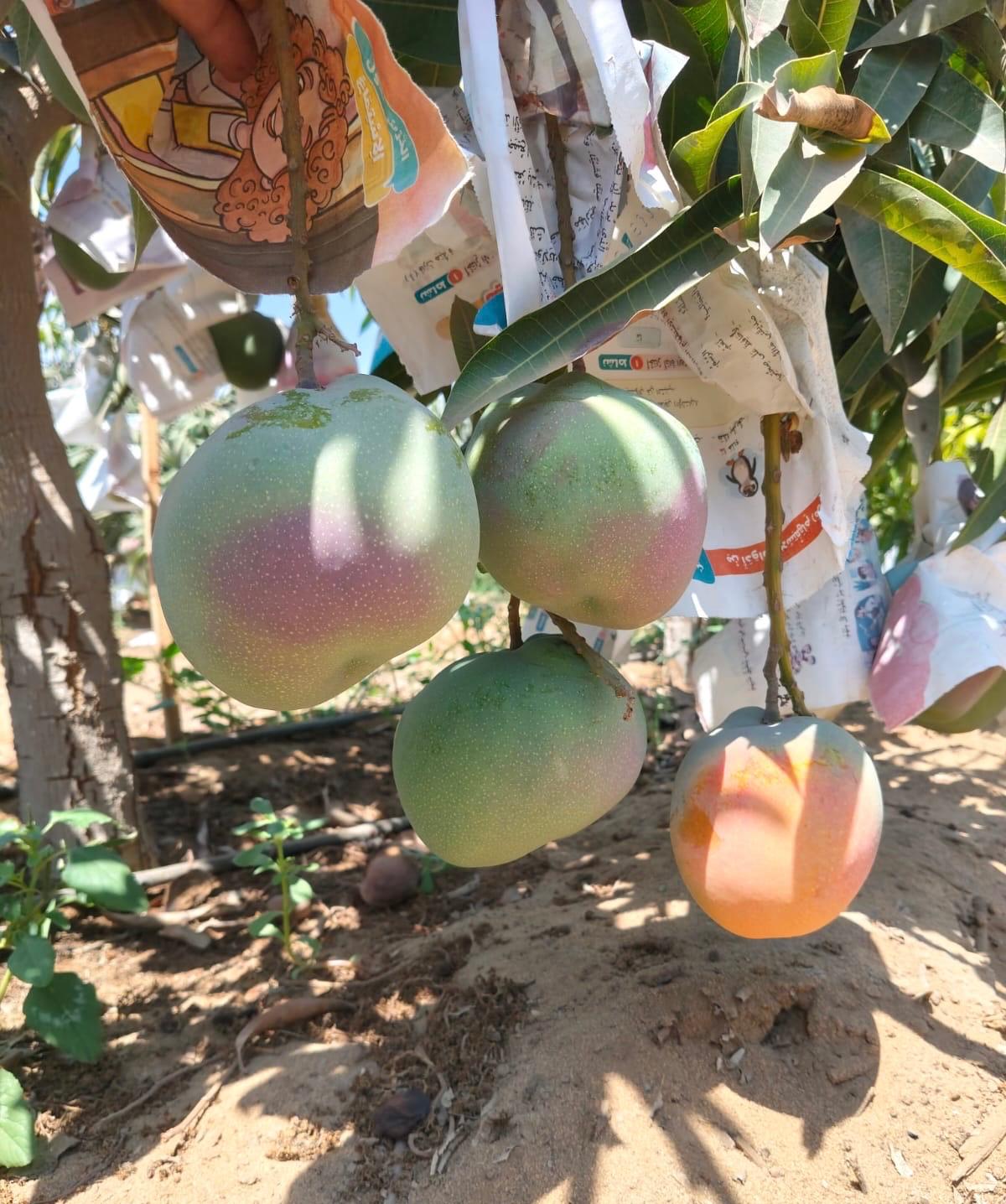
Indian mango season runs from March to July, with peak arrivals in May. Alphonso peaks between mid-April and mid-May, Banganapalli from April, Kesar from May into the first weeks of July, and Dasheri, Langra and Chausa carry June into early August. India therefore finishes almost exactly where Egypt begins, which is why the two origins rarely compete in the same week.
Alphonso, Kesar, Banganapalli, Dasheri, Langra and Chausa are Indian varieties. Egypt does not grow them for export. Where this mango season calendar lists them it is describing the Indian window for comparison, not a range any Egyptian exporter can offer.
The United States has two mango seasons at once: a small domestic crop and a year-round import programme. Florida and California pick from June to September, mostly Haden, Kent, Keitt, Tommy Atkins and Glenn, in volumes that never cover national demand. Everything else is imported.
The National Mango Board puts Mexican peak harvest between April and September, with Brazil, Peru and Indonesia covering roughly August to February, and smaller volumes from Guatemala, Nicaragua, the Dominican Republic and Haiti arriving mainly on the East Coast. For a US buyer the practical answer is that mango season never ends — the origin on the box changes about four times a year.
Between December and March, Peru is the principal mango origin for Europe and North America, with Brazil and Ecuador alongside it. Peru ships mainly Kent, plus Edward and Haden, from December to March. Brazil ships Palmer, Tommy Atkins, Kent and Keitt from August into January. Egypt has no fruit at all in this window, and no Egyptian exporter offering December mango is shipping Egyptian fruit.
This is the most expensive quarter of the mango year in the northern hemisphere. Sea transit from Callao to Rotterdam runs longer than any Mediterranean route, the fruit arrives against low competing supply, and buyers who did not book in October pay for it.
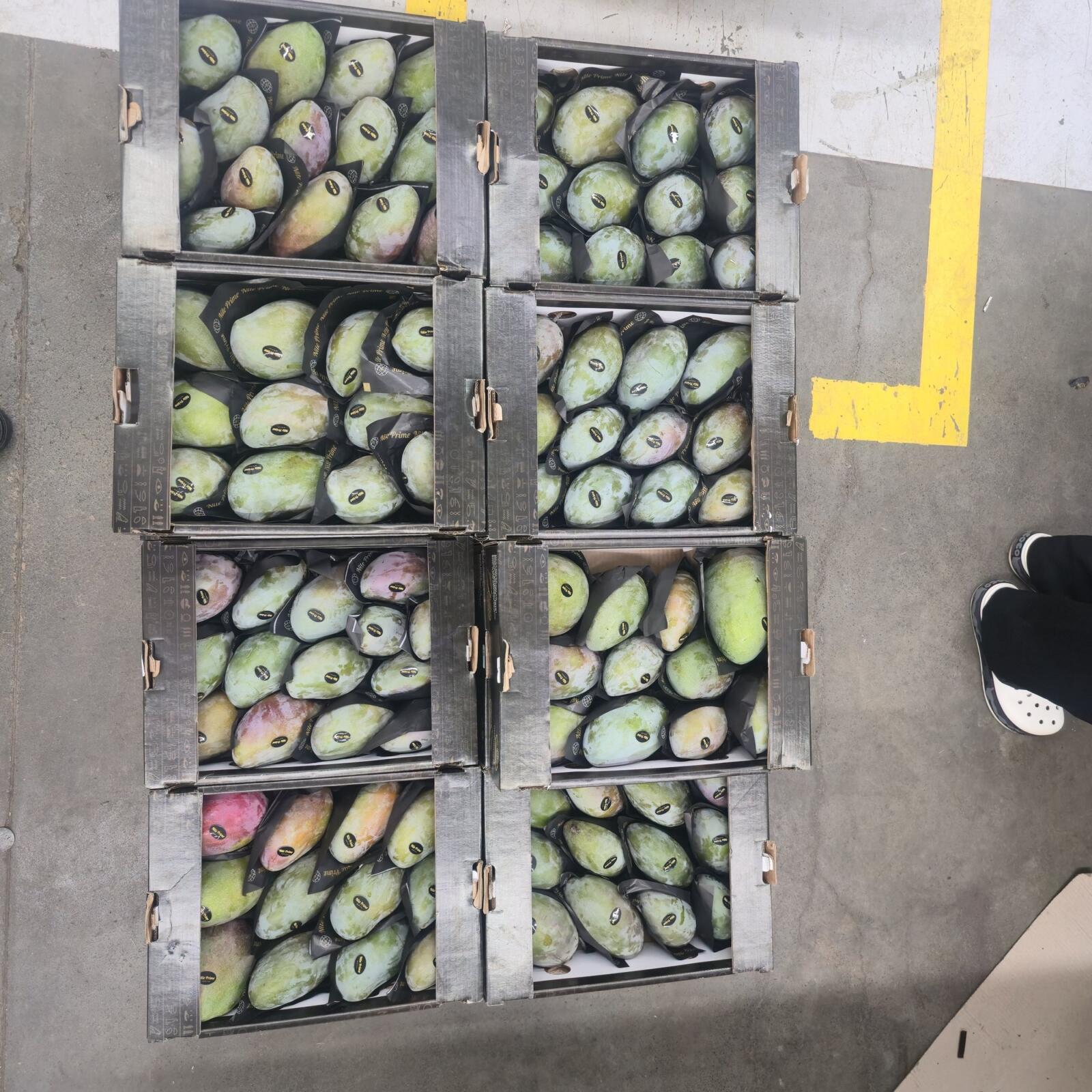
Early-season fruit runs smaller. In July an Egyptian Timour or Naomi block fills counts 10 to 14 on a 5 kg carton — 357 to 500 g average fruit weight. By late August, Zebda and Fagri Kelan fill counts 6 to 9, which is 556 to 833 g. A buyer who specifies a count without naming a month is specifying a variety by accident.
| Count | Average fruit weight | Weight range |
|---|---|---|
| 6 | 833 g | 775–900 g |
| 7 | 714 g | 670–775 g |
| 8 | 625 g | 590–670 g |
| 9 | 556 g | 530–590 g |
| 10 | 500 g | 460–530 g |
| 12 | 417 g | 385–460 g |
| 14 | 357 g | 335–385 g |
| 16 | 313 g | 295–335 g |
Counts 6, 7, 8, 9, 10, 12, 14 and 16 are packed. Counts 11, 18 and 20 are not.
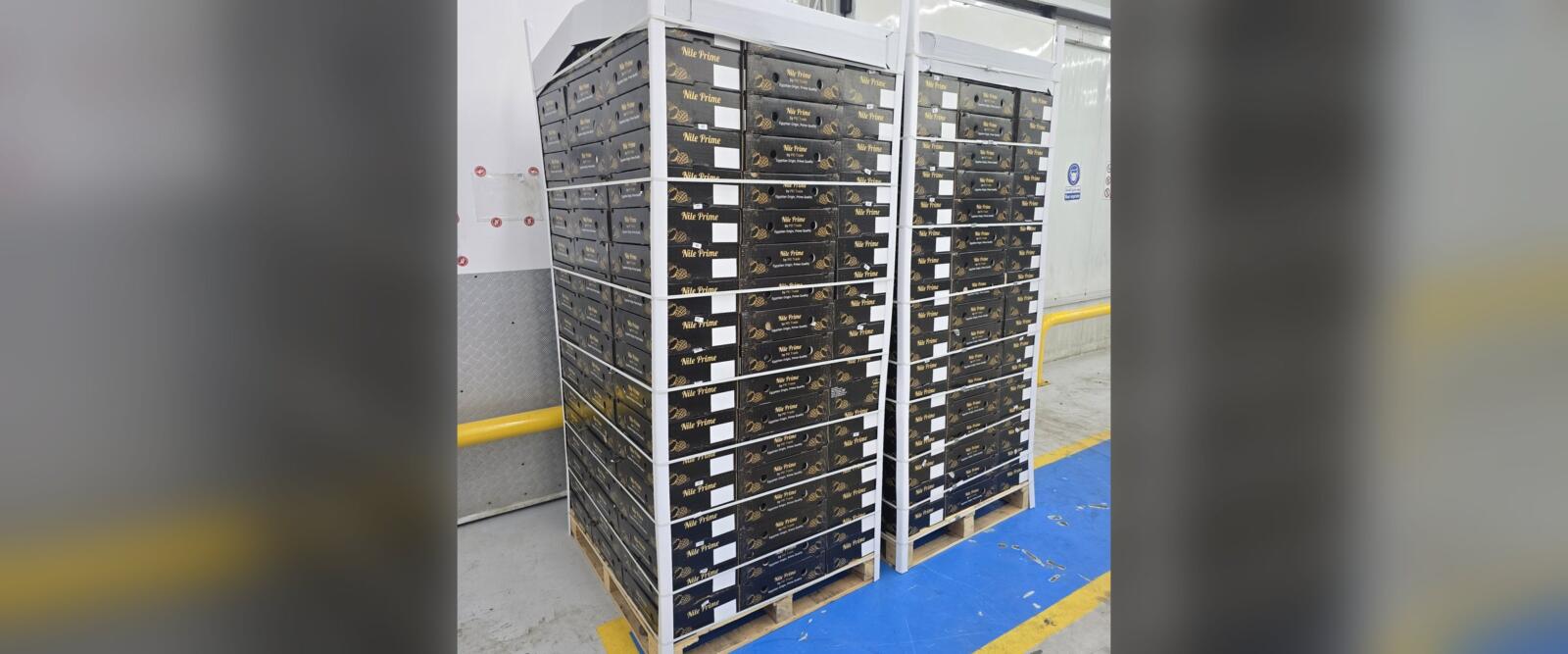
| Format | Net | Gross | Standard pallet | Euro pallet | Dry-van pallet |
|---|---|---|---|---|---|
| 5 kg carton | 5 kg | 5.5 kg | 200 | 160 | 190 |
| 4.5 kg carton | 4.5 kg | 5 kg | 200 | 160 | 200 |
| 5 kg box | 5 kg | 5.5 kg | 180 | 144 | 180 |
A 40 ft high-cube reefer takes 20 standard pallets plus one euro pallet. At 200 cartons per standard pallet and 5 kg net per carton, a full mango load lands between 18.7 and 20.8 tonnes net, inside the 25-tonne payload ceiling. A 20 ft reefer takes 10 standard pallets. Any 40 ft mango figure quoted outside the 18.7–20.8 tonne range is wrong, whoever quoted it.
A 12-month mango programme needs three or four origins, contracted in the quarter before each window opens. The failure mode is always the same: a buyer books a single origin, that origin loses two weeks to heat or rain, and the shelf sits empty while every alternative is already sold.
| Quarter | Primary origin | Backup origin | Varieties | Book by |
|---|---|---|---|---|
| January–March | Peru | Brazil, Ecuador | Kent, Edward, Haden | October |
| April–June | Mexico | India, Philippines | Ataulfo, Tommy Atkins, Alphonso, Kesar | February |
| July–September | Egypt | Mexico, United States | Owaisi, Zebda, Sedeeka, Kent, Keitt | May |
| October–December | Brazil | Spain, Egypt (Keitt to mid-November) | Palmer, Osteen, Keitt | July |
For the Egyptian part of the calendar, our Egyptian mango varieties guide covers each variety in detail, the mango size chart gives counts against weights for every carton format, and the Egyptian mango offer for importers and wholesalers lists what is packing now.
Mango season depends on origin. India picks March to July, Mexico February to September, the United States June to September, Egypt July to November, Spain August to November, Brazil August to January and Peru December to March. There is no month in which no origin is shipping.
Egyptian mango season runs from early July to mid-November and peaks in August and September. Timour, Fagri Kelan and Naomi open it, Owaisi, Sedeeka, Zebda and Kent hold the peak, and Keitt closes it into November.
Florida and California pick from June to September. Imports cover the rest of the year: Mexico from roughly April to September, Peru from December to March, and Brazil and Ecuador from August into February.
In August the main export varieties are Owaisi, Sedeeka, Zebda, Fagri Kelan, Kent and Tommy Atkins from Egypt, Chausa from India, Ataulfo, Kent and Keitt from Mexico, and the first Brazilian Palmer.
Yes, but never from one origin. A year-round programme needs at least three: a spring origin such as India or Mexico, a summer origin such as Egypt, and a December-to-March origin such as Peru.
Between eight and twenty weeks. Egypt runs about nineteen weeks from early July to mid-November across ten varieties, India about eighteen weeks from March to July, and Peru about fourteen weeks from December to March.
Egyptian variety, count, carton and container figures are taken from PEI Trade packing and costing records for the 2026 season. Non-Egyptian season windows are compiled from published origin calendars and are indicative. Last updated 25 August 2026. PEI Trade is the exporter, not a neutral reviewer.
