Address
Work Hours
Monday to Friday: 7AM - 7PM
Weekend: 10AM - 5PM

Address
Work Hours
Monday to Friday: 7AM - 7PM
Weekend: 10AM - 5PM


Where the Egyptian mango season stands at the end of July 2026, how Kent and Keitt volumes and sizing are running, and how importers should structure August and September bookings.
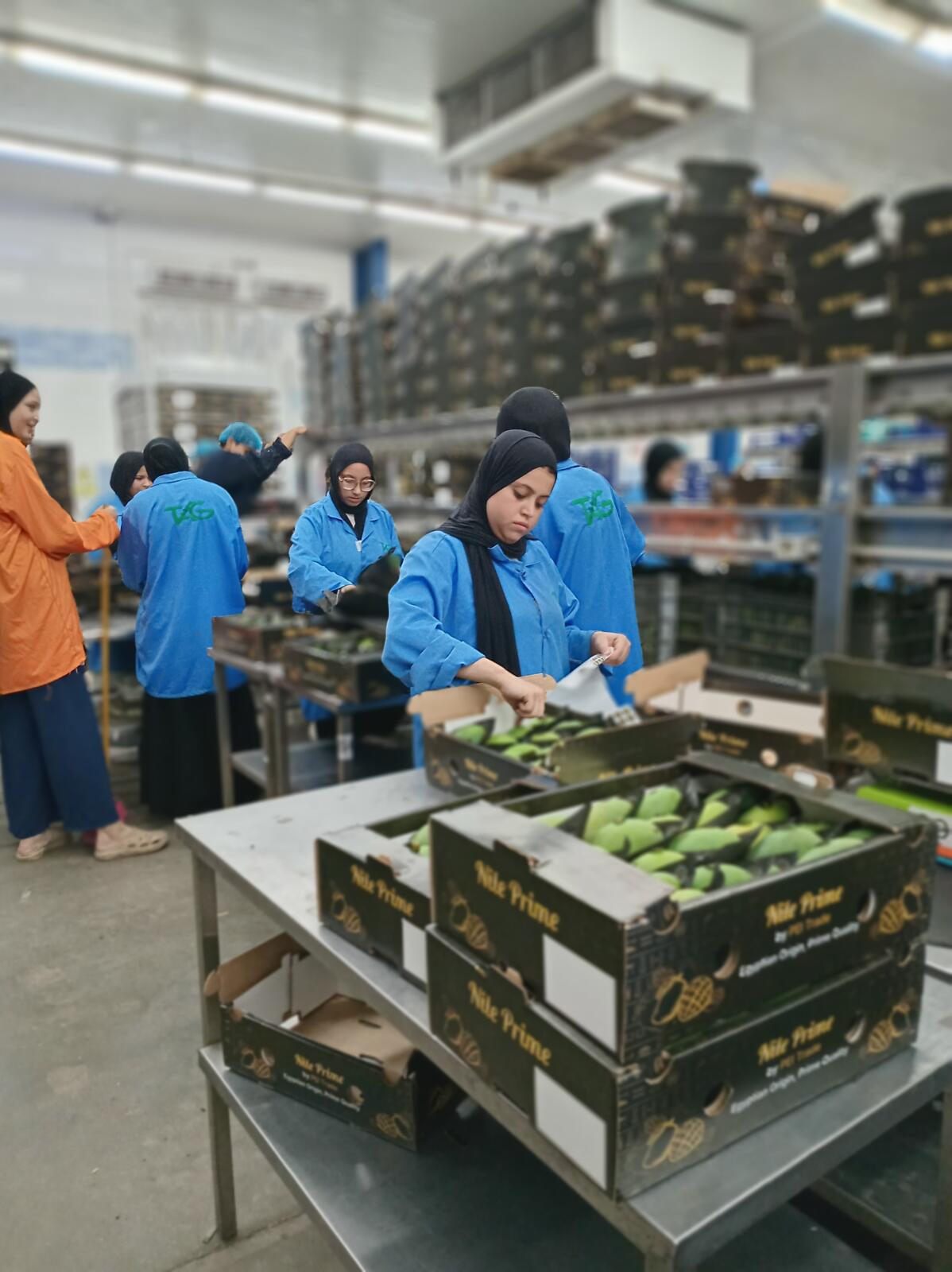
The Egyptian mango season has moved into its second phase. Through most of July the packhouses were running Ewais, Zebda and early Naomi fruit out of Ismailia and Sharqia, largely for the domestic market and for nearby Gulf destinations that take air or short sea transit. From the last days of July the balance shifts toward Kent and then Keitt, and that shift is what August and September export programmes are now being built around.
Kent is entering commercial volume now. It is the variety most European and Gulf buyers ask for when they want a mango with low fibre, a small stone and good colour break under controlled ripening. Kent picking normally runs into early September, so the window for committing Kent volume is short. Keitt follows behind it and carries the season through September and October, which is why Keitt is the variety that appears in most late programmes.
Sizing this season is running in line with a normal year. Kent is grading mainly in the 350 to 550 gram band, which puts most cartons at counts of 8 to 12 per 4 kilogram box. Keitt sizes larger, and it is common to pack counts of 6 to 9 in the same 4 kilogram format, with 5.5 and 6 kilogram cartons available for buyers who prefer fewer, heavier units per pallet.
Standard export packing is a single layer corrugated carton with a moulded pulp or foam tray, individual net sleeves on request, and vented sides for airflow. On a 100 by 120 centimetre pallet the usual build is 8 cartons per layer and 16 to 20 layers, depending on carton height, giving roughly 512 to 640 kilograms per pallet. A 40 foot high cube reefer takes 20 pallets. Buyers who want the exact loading arithmetic for their own carton spec can work from our guide to reefer container loading for Egyptian produce.
Full grade and carton definitions, including tolerance limits by class, are set out in our mango grades and carton formats reference. We recommend agreeing the grade in writing before the first booking rather than after the first arrival.
Three points matter more than price at this stage of the season. The first is variety substitution. If a contract is written for Kent and picking closes earlier than expected, the fallback is Keitt at a different count profile, not the same count in a different variety. Agree the substitution rule in advance.
The second is transit time. Sailings from Alexandria and Damietta to the main Mediterranean and northern European ports normally run 7 to 14 days, and Jeddah and Jebel Ali are shorter. Pulp temperature at loading and the reefer set point, usually 10 to 12 degrees Celsius for mango depending on variety and intended ripening, should be written into the booking, not left to the forwarder.
The third is inspection. Third party pre shipment inspection through SGS or Intertek is available on request and is worth the cost on a first shipment or on any container where the buyer and the packhouse have not worked together before.
PEI Trade supplies mango from audited packhouses with phytosanitary certification and full traceability to the farm block. To check current availability, count profiles and sailing dates for your destination, message our export desk on WhatsApp at +20 10 9911 1918 and we will come back with a written offer.
