Address
Work Hours
Monday to Friday: 7AM - 7PM
Weekend: 10AM - 5PM
Address
Work Hours
Monday to Friday: 7AM - 7PM
Weekend: 10AM - 5PM


 ByMaha
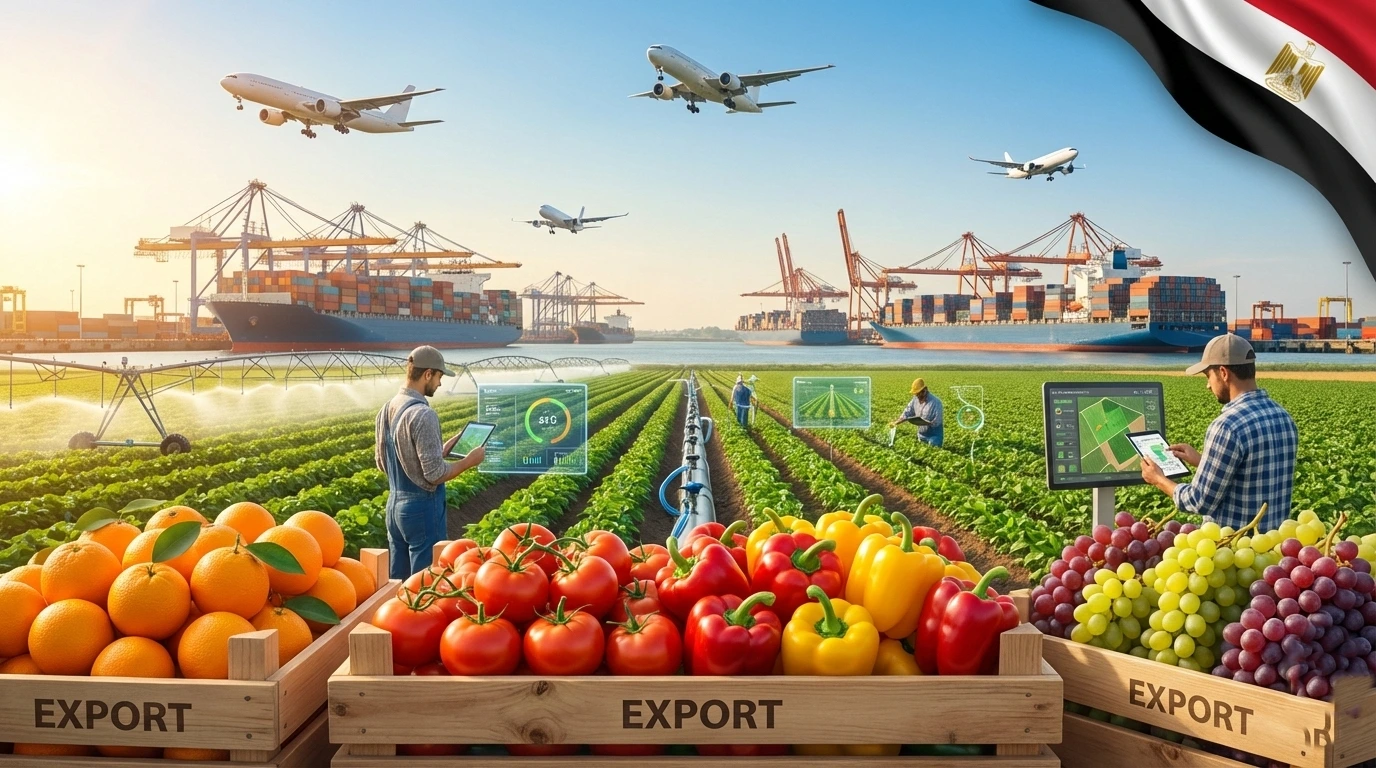
Egypt’s agricultural sector is experiencing a significant transformation as the country solidifies its role as a major player in global food markets. The Egyptian government projects substantial growth in agricultural exports throughout 2026, driven by increased international demand and strategic market expansion initiatives.
Egypt expands its agricultural exports through a combination of quality improvements and strategic market access. European markets continue to show strong appetite for Egyptian fruits and vegetables, while Asian buyers demonstrate growing interest in the country’s diverse agricultural offerings. Beyond these traditional strongholds, Latin American and African markets are emerging as active purchasers of Egyptian agricultural products.
Minister of Agriculture and Land Reclamation Alaa Farouk announced that Egypt successfully opened 25 new foreign markets recently. The ministry continues working to unlock additional international destinations, expanding opportunities for Egyptian farmers and exporters. This aggressive market expansion strategy strengthens Egypt’s ability to compete globally while maintaining strict quality control measures that meet international standards.
The achievement reflects years of investment in agricultural infrastructure, quality assurance systems, and diplomatic efforts to negotiate favorable trade agreements. Each new market represents not just immediate sales opportunities, but long-term relationships that can sustain Egypt’s agricultural sector for decades.
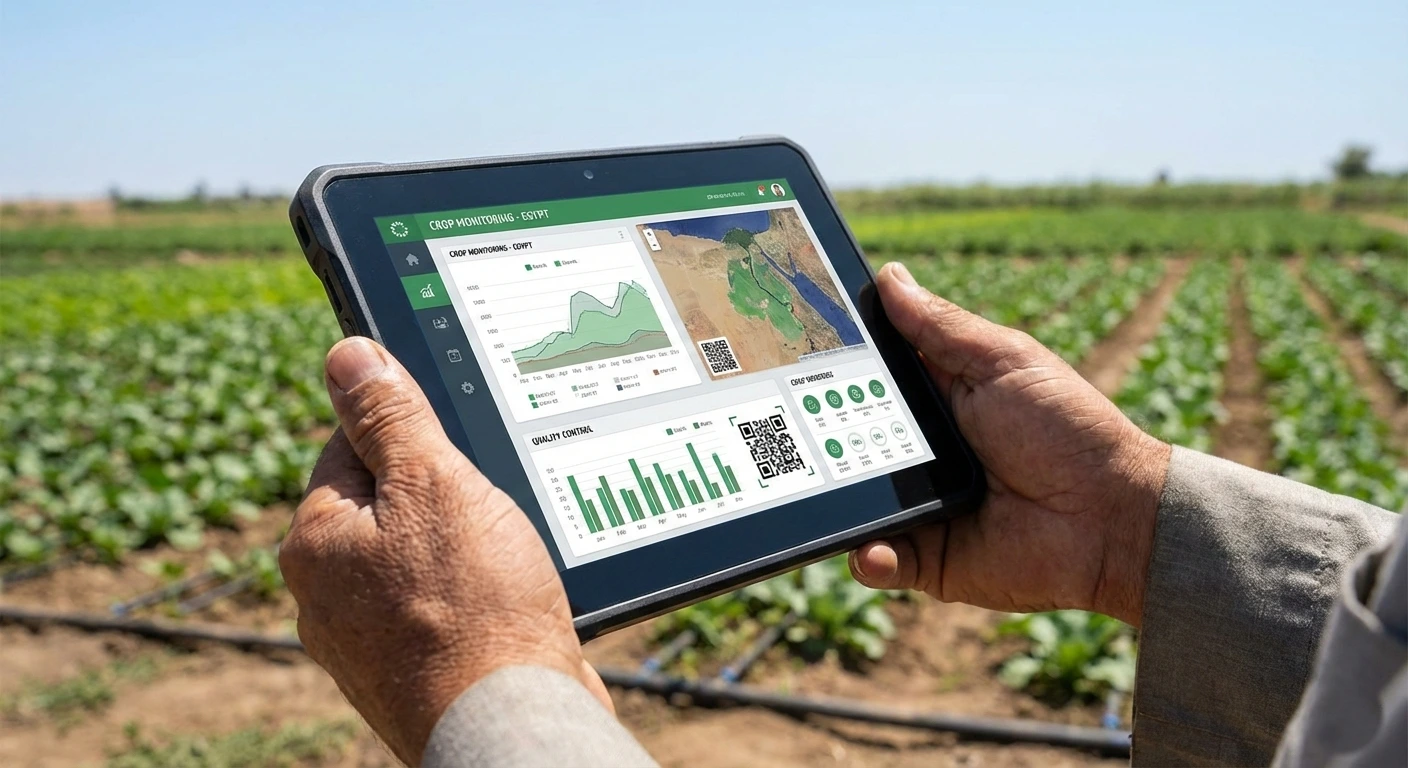
One of the most significant factors behind Egypt’s export success is the implementation of an advanced digital coding system. This technological framework has revolutionized how Egyptian agriculture operates, bringing unprecedented transparency and accountability to the sector.
The system currently encompasses 6,450 farms and export stations across the country, covering approximately 695,000 acres of cultivated land. These impressive numbers demonstrate the scale of Egypt’s commitment to modernizing its agricultural sector.
Key benefits of the digital system include:
Egypt expands its agricultural exports by leveraging this digital infrastructure to meet increasingly strict international requirements. European Union regulations, Asian food safety standards, and American import protocols all demand detailed product tracking. Egypt’s digital system positions the country to meet these demands efficiently.
The technology has become a fundamental pillar supporting Egypt’s agricultural competitiveness. International buyers value the transparency and quality assurance the system provides, giving Egyptian products an edge over competitors lacking similar capabilities.
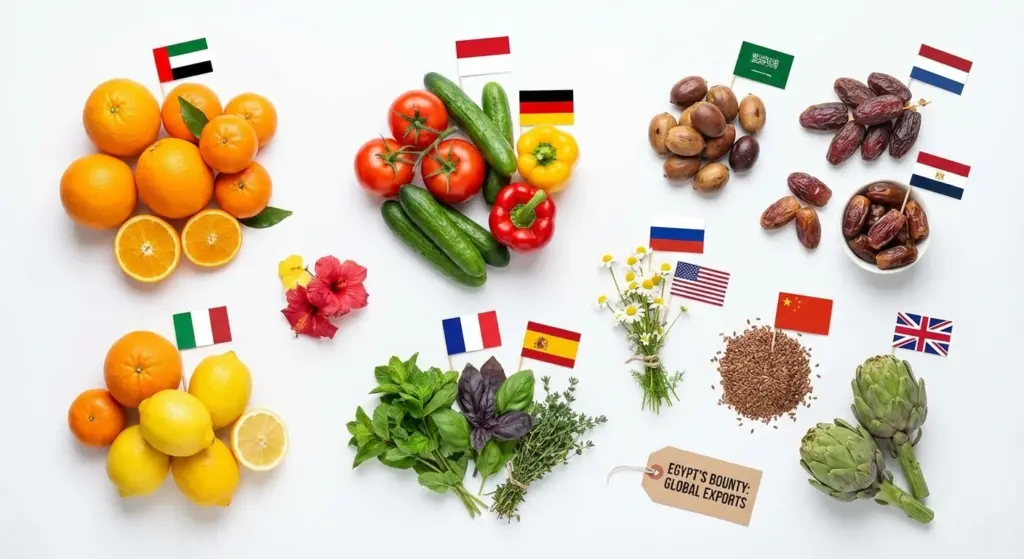
Egypt’s agricultural export portfolio now includes 405 different commodities reaching 167 countries worldwide. This extraordinary diversity showcases the sector’s versatility and ability to serve varied international tastes and dietary preferences.
From citrus fruits to exotic vegetables, from traditional grains to specialty crops, Egyptian agriculture produces an impressive range of products. This diversity protects exporters from market fluctuations affecting single commodities, while allowing the country to capitalize on emerging food trends globally.
Recognizing that administrative efficiency directly impacts export competitiveness, the Egyptian government launched comprehensive digital service improvements. Starting January 1, 2026, nine commercial registry services became exclusively available through the Egypt Digital Platform.
Available digital services include:
These digitalized services eliminate bureaucratic obstacles that previously slowed business operations. Agricultural exporters can now complete essential paperwork without visiting government offices, saving time and resources that can be redirected toward production and market development.
The initiative reflects broader governmental commitment to modernizing Egypt’s business environment. By reducing administrative friction, authorities enable exporters to respond quickly to international opportunities and maintain competitive pricing.
Egypt expands its agricultural exports based on carefully developed strategies combining immediate actions with long-term planning. The targeting of 25 new markets represents just the beginning of an ambitious expansion roadmap extending through 2026 and beyond.
Government support extends beyond market access to include quality improvement programs, farmer training initiatives, and infrastructure development. Modern packing facilities, cold storage chains, and transportation networks ensure products reach international markets in optimal condition.
The geographic diversification strategy reduces Egypt’s vulnerability to economic downturns in specific regions. When European markets face challenges, Asian and Latin American demand can offset losses. This balanced approach provides stability for farmers and exporters while supporting consistent employment in rural areas.
Climate adaptation measures also play a crucial role in sustaining export growth. Egypt invests in drought-resistant crop varieties, efficient irrigation systems, and sustainable farming practices that protect long-term productivity despite environmental challenges.
Looking to source high-quality Egyptian agricultural products for your business? PEI Trade is your trusted Egyptian exporter delivering the same quality-controlled products reaching 167 countries worldwide.
Why choose PEI Trade:
Contact PEI Trade today to explore partnership opportunities and bring premium Egyptian agricultural products to your market. As an established Egyptian exporter, we ensure your business receives top-quality products that meet international standards.
Egypt’s agricultural export sector stands at a pivotal moment of expansion and modernization. Reaching 167 countries with 405 diverse commodities demonstrates impressive market penetration achieved through strategic planning and technological innovation. The digital coding system covering 695,000 acres ensures the quality and traceability that discriminating international buyers demand.
Opening 25 new markets creates fresh opportunities for Egyptian farmers while diversifying the country’s economic base. Government digitalization initiatives streamline business processes, allowing exporters to focus on production excellence rather than administrative burdens. As demand strengthens across European, Asian, Latin American, and African markets, Egypt stands positioned to meet global food needs while building agricultural prosperity at home.
The combination of traditional agricultural expertise, modern technology, and strategic government support creates a powerful formula for sustained growth. Egypt expands its agricultural exports not through short-term tactics, but through fundamental improvements in quality, efficiency, and market access that promise decades of continued success.
Egypt expands its agricultural exports to 167 countries worldwide, making it one of the most geographically diverse agricultural exporters globally. The country ships 405 different commodities ranging from fresh fruits and vegetables to specialty crops. Recent diplomatic and trade efforts opened 25 additional foreign markets, with negotiations continuing for further expansion into new territories.
The digital coding system is an advanced tracking technology that monitors agricultural products throughout the entire supply chain. Currently covering 6,450 farms and export stations across 695,000 acres, the system ensures compliance with international standards and provides complete traceability. This technology enhances Egypt’s reputation in global markets by guaranteeing product quality and safety from farm to consumer.
European and Asian markets demonstrate the strongest demand for Egyptian fruits and vegetables, with consistent purchasing throughout the year. Latin American and African regions show increasing interest, representing emerging opportunities. Indonesia leads specialty crop imports with 19,340 tons of Doum, while the UAE imported 11,753 tons, reflecting diverse geographic demand patterns across continents.