Address
Work Hours
Monday to Friday: 7AM - 7PM
Weekend: 10AM - 5PM

Address
Work Hours
Monday to Friday: 7AM - 7PM
Weekend: 10AM - 5PM


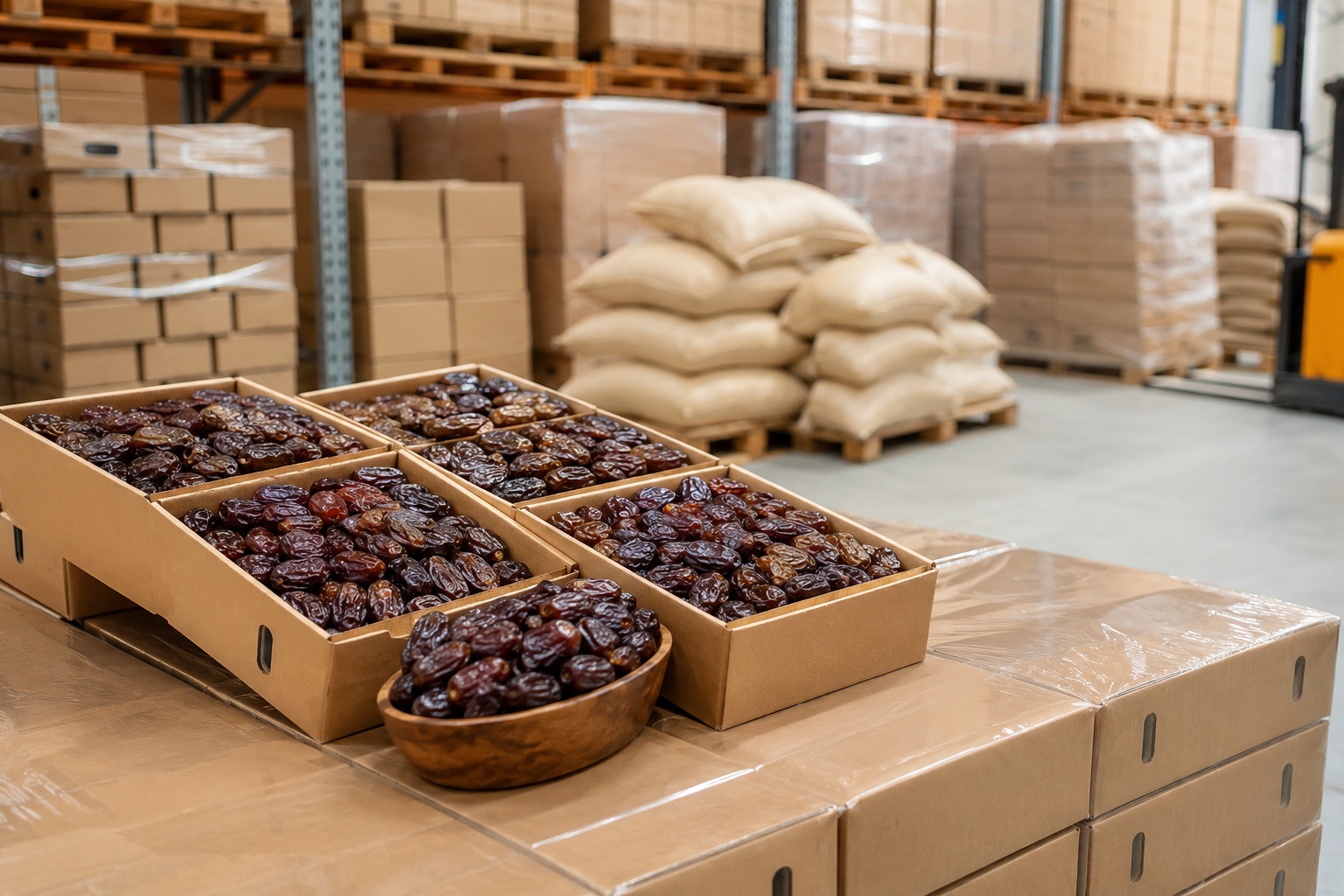
Dates are unusual among Egyptian exports because storage depends entirely on type: dry dates are shelf-stable and travel at ambient temperature, while soft fresh dates need refrigeration like any perishable fruit. Across both, the same theme runs through everything — keeping insects out. This guide covers curing, storage by type, pest-control integration and packing formats for Egyptian dates.
Quick answer: Dry Egyptian dates (e.g. Siwi) are cured to low moisture and stored cool, dry and sealed — shelf-stable for many months and shipped at ambient temperature. Soft / fresh dates (Zaghloul, Hayany, Medjool) are refrigerated (~0–5°C) or frozen for longer life. Freezing also doubles as residue-free pest control. Packing ranges from bulk cartons (5–10 kg) to vacuum / modified-atmosphere packs, retail clamshells and date-paste pails.
After harvest, dates are sorted and brought to the right moisture for their type. Dry and semi-dry varieties are cured / dried (sun or controlled drying) to a low moisture content that makes them shelf-stable; soft varieties are kept moist and handled as perishables. Correct moisture is the foundation of both shelf life and grade.
| Type | Storage | Shipping |
|---|---|---|
| Dry (Siwi, Sakkoti) | Cool, dry, sealed; long shelf life | Ambient (dry container) |
| Semi-dry (Saidy) | Cool/chilled for longer holds | Ambient or reefer |
| Soft / fresh (Zaghloul, Medjool) | Refrigerated ~0–5°C, or frozen | Reefer (chilled / frozen) |
Dry dates keep for many months in cool, dry, sealed conditions. Soft dates are held refrigerated and can be frozen to greatly extend shelf life (Medjool in particular is often shipped chilled or frozen).
Because dates are prone to the carob/date moth and stored-product beetles, pest control is integrated into handling: many exporters freeze dates (a residue-free kill step) or use controlled / modified atmosphere, then store them sealed to prevent re-infestation. Packaging that is airtight or modified-atmosphere helps keep insects out all the way to the buyer.
Dates are often pitted or processed to specification, and packing keeps them clean, intact and protected from moisture and pests.
Dry dates ship in standard dry containers at ambient temperature, kept dry and away from heat. Soft and fresh dates ship in reefer containers, chilled or frozen to the product’s requirement, with the cold chain maintained and logged. For both, protect from moisture, crushing and re-infestation in transit.
Dry dates do not – they are shelf-stable and ship at ambient temperature; soft and fresh dates (and often Medjool) are refrigerated or frozen.
Many months when stored cool, dry and sealed, which is why they can be shipped year-round.
Freezing both extends shelf life and acts as a residue-free way to kill storage insects.
In bulk 5-10 kg cartons, vacuum/modified-atmosphere packs, retail clamshells for premium dates, or pails for date paste.
Dry dates in standard dry containers at ambient temperature; soft/fresh dates in reefer containers, chilled or frozen.
How to cite this page
PEI Trade. “Egyptian Dates Packaging & Storage.” peitrade.com, 2026. https://peitrade.com/egyptian-dates-packaging-storage/
This page is part of our Egyptian Date Export Guide hub.
Ship Egyptian dates that arrive in spec with PEI Trade. Correct curing, sealed pest-protected storage, ambient shipping for dry dates and cold-chain handling for soft and premium dates — in bulk cartons, MAP packs, retail clamshells or paste. Contact: [email protected] · WhatsApp +20 109 911 1918 · www.peitrade.com