Address
Work Hours
Monday to Friday: 7AM - 7PM
Weekend: 10AM - 5PM

Address
Work Hours
Monday to Friday: 7AM - 7PM
Weekend: 10AM - 5PM


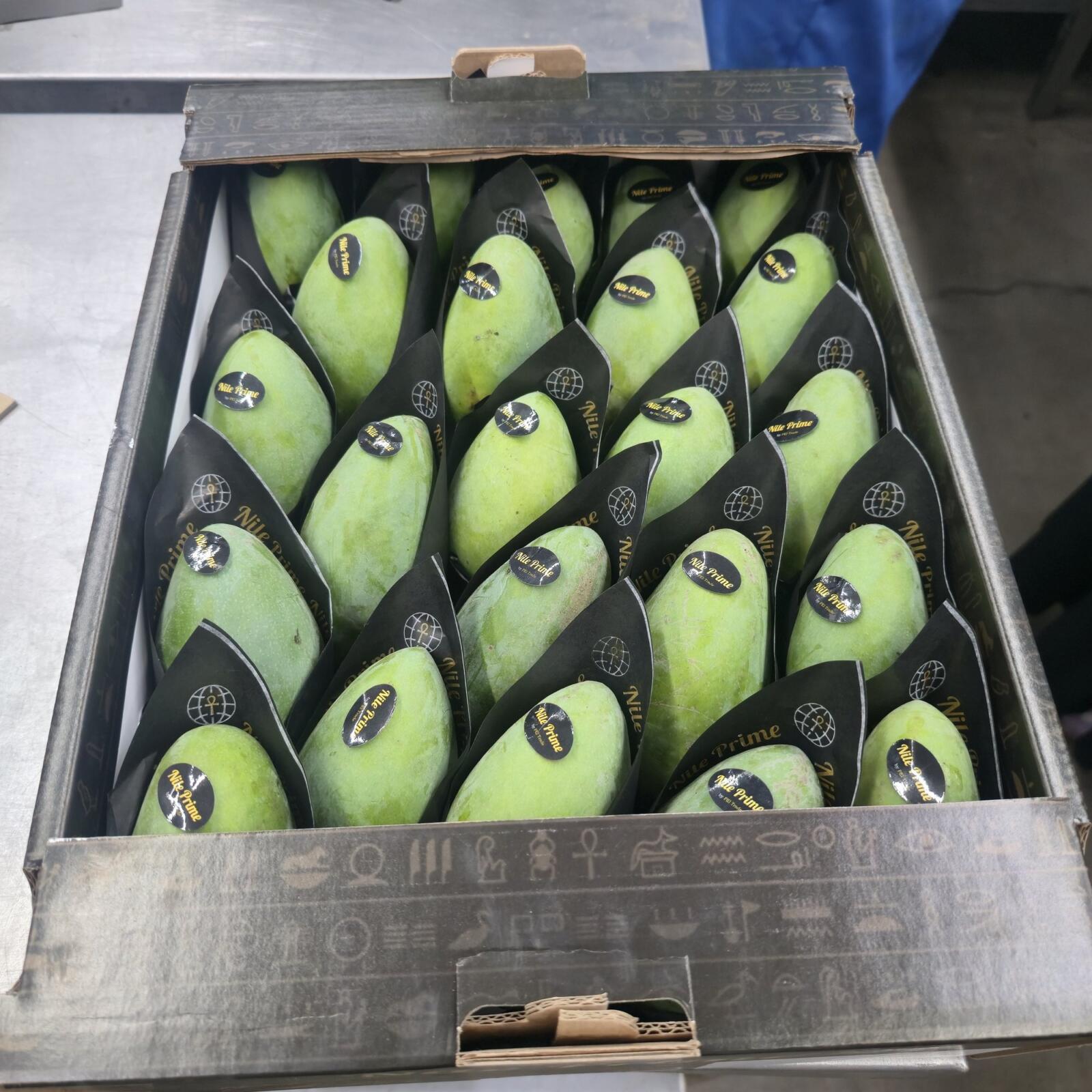
Turkey is the breakout market for Egyptian mango — the fastest-growing destination in the whole export book. Egyptian shipments to Turkey have risen roughly fourfold over the previous season and nearly eightfold since 2022/23, a compound annual growth rate of about 140% over four years. In the 2024/25 season to date (July 2024–February 2025) Turkey took over 1,000 tonnes of Egyptian mango worth about USD 1.11 million — enough to rank among Egypt’s top seven mango destinations, behind only the Gulf, the UK and Morocco. Two things drive it: proximity — a short Mediterranean reefer run keeps a chilling-sensitive fruit in good condition and freight competitive — and Turkey’s thin domestic supply. Turkish mango growing is still a small, niche greenhouse crop in the Antalya and Mersin south (Kent is the cultivar officially registered by Turkey’s BATEM research institute), so demand for imported fruit far outstrips local production, and Egypt has moved straight into the gap left by Peru’s drought-hit exports. This guide covers the varieties that suit the Turkish market, shipping logistics, import and food-safety requirements, the variety-by-window calendar, and how to open a supply program.
No lane in Egypt’s mango book has grown like Turkey. Shipments are up around fourfold on the previous season and roughly eightfold since 2022/23 — a four-year CAGR near 140% — lifting Turkey into Egypt’s top seven mango destinations. The driver is a squeeze on supply: Turkey’s own mango is a small, high-cost greenhouse crop confined to the frost-free south (Antalya’s Alanya and Gazipaşa, and Mersin’s Erdemli and Anamur), so the country leans heavily on imports, and when Peru’s drought-hit Kent exports fell, Egypt was positioned to fill the gap.
Proximity and variety fit seal it. A short Mediterranean reefer run from Egypt keeps a chilling-sensitive fruit in good condition and freight competitive against Latin-American origins. And Turkish buyers — like European retail — favour appearance, calibre and shelf life over intense sweetness, which suits internationally familiar Kent (the cultivar Turkey’s BATEM institute has registered), Keitt and Tommy Atkins, alongside Egypt’s clean-looking Naomi. The main season runs August to November, and in the latest campaign October set a record with 339 tonnes shipped in a single month.
Turkish demand tracks European taste — look, calibre and shelf life ahead of aroma — and rewards fruit that travels and holds. The table below leads with appearance and handling.
| Variety | Appearance & handling | Shelf life / transit | Turkey fit |
|---|---|---|---|
| Kent | Large, plump, greenish-red blush, smooth skin, very low fibre | Excellent — the sea-freight standard | ★★★ Registered by Turkey’s BATEM; the benchmark variety |
| Keitt | Large, stays green when ripe, firm, fibreless | Excellent — long shelf life, late season | ★★★ Strong late-window and retail fruit |
| Naomi | Attractive golden-yellow, smooth, low fibre, medium–large | Very good — ships by sea | ★★★ Clean-looking Egyptian differentiator |
| Tommy Atkins | Firm, deep red blush, thick skin, higher fibre | Excellent — very robust in transit | ★★ Durable commodity fruit with strong colour |
For full variety detail and calibres see the Egyptian mango export guide, and the profiles for Naomi & Kent, Keitt and Tommy Atkins & Zebda.
The route is a short reefer sea freight run from Egypt’s Mediterranean ports to Turkey’s southern gateway at Mersin — the country’s largest Mediterranean container port and its natural fruit hub — with onward road distribution to İzmir, İstanbul and Ankara. That short crossing is a big part of Turkey’s appeal: it protects a chilling-sensitive fruit and keeps freight competitive.
Hot-water treatment is a standard post-harvest step for export mango, and it serves two purposes. Disease control: a hot-water dip at roughly 48–52 °C for 5–10 minutes, followed by hydro-cooling and drying, suppresses anthracnose and stem-end rot — the main post-harvest diseases that shorten shelf life in transit. Fruit-fly disinfestation: where a destination’s phytosanitary rules require it, the internationally accepted quarantine schedule is around 46.1 °C for 65–90 minutes, with longer times used for larger fruit. Exact temperature and dwell time depend on cultivar, fruit size and maturity, so the protocol is set per consignment and per destination requirement, applied within about 24 hours of harvest.
| Month | Available varieties (export) | Turkey notes |
|---|---|---|
| Aug | Naomi, Kent, early Keitt, Tommy Atkins | Season opens; import demand builds as local greenhouse supply is thin |
| Sep | Keitt, Kent, Naomi, Tommy Atkins | High-volume window; Peru still off-season |
| Oct | Keitt (peak), Kent, Tommy Atkins | Peak month — a record 339 t shipped in the latest campaign |
| Nov | Keitt (late), Kent | Late window; firm, long-shelf-life fruit closes the season |
Windows are indicative and shift year to year with weather. Book Kent and Naomi ahead of the autumn peak. See the Egyptian mango export report 2026 for volumes, destinations and price context.
Long-shelf-life, appearance-led varieties: Kent (the cultivar Turkey’s BATEM has registered), Keitt and Tommy Atkins, plus Egypt’s clean-looking Naomi. Turkish buyers, like European retail, prioritise look, calibre and shelf life over intense sweetness.
By a short reefer sea-freight run from Egypt’s Mediterranean ports to Mersin, Turkey’s main southern gateway and largest Mediterranean port, then onward by road. Carried at about 10–13 °C; the short crossing is a key advantage over distant origins.
August to November, peaking in October — which set a record of 339 tonnes in a single month in the latest campaign — a window that opens as Turkey’s thin local greenhouse supply runs down and Peru is off-season.
A roughly 140% four-year CAGR — about fourfold on the previous season and eightfold since 2022/23 — driven by proximity, long-shelf-life varieties, competitive pricing, and the gap left by Peru’s drought-hit Kent exports.
Importer registration and a GGBS pre-notification, document / identity / physical inspection at the border, a phytosanitary certificate certifying fruit-fly freedom (via hot-water treatment), Turkish Food Codex MRL compliance, and Turkish labelling of variety, class and origin.
Planning a Turkish mango program for the coming season? PEI Trade supplies long-shelf-life Egyptian varieties — Kent, Keitt, Naomi and Tommy Atkins — with calibre selection, grading, traceable packing, and cold-chain management on the short Mediterranean run to Mersin. Tell us your target volumes, calibres and delivery window, and we’ll structure a compliant, well-timed offer.
PEI Trade. “Egyptian Mango Exports to Turkey: Varieties, Logistics & Market Guide.” peitrade.com, 2026, https://peitrade.com/egyptian-mango-exports-to-turkey/
Sources: EastFruit / Global Trade Tracker (Egypt→Turkey mango, season 2024/25: >1,000 t / USD 1.11M Jul 2024–Feb 2025; ~4× YoY, ~8× since 2022/23; 140% four-year CAGR; top-7 destination); FreshPlaza (October record 339 t; Aug–Nov window; variety & market context, 2024–2025); Republic of Türkiye Ministry of Agriculture & Forestry / Antalya Provincial Directorate (Kent registered by BATEM; Antalya/Mersin production; GGBS import clearance — via Tridge market overview); UN Comtrade / ITC Trademap (HS 080450); ISHS / ScienceDirect post-harvest hot-water-treatment studies.
[email protected] · WhatsApp +20 109 911 1918 · www.peitrade.com · Brand: nile-prime.com · Ports: Alexandria, Damietta, Sokhna, Port Said (Incoterms 2020)