Address
Work Hours
Monday to Friday: 7AM - 7PM
Weekend: 10AM - 5PM

Address
Work Hours
Monday to Friday: 7AM - 7PM
Weekend: 10AM - 5PM


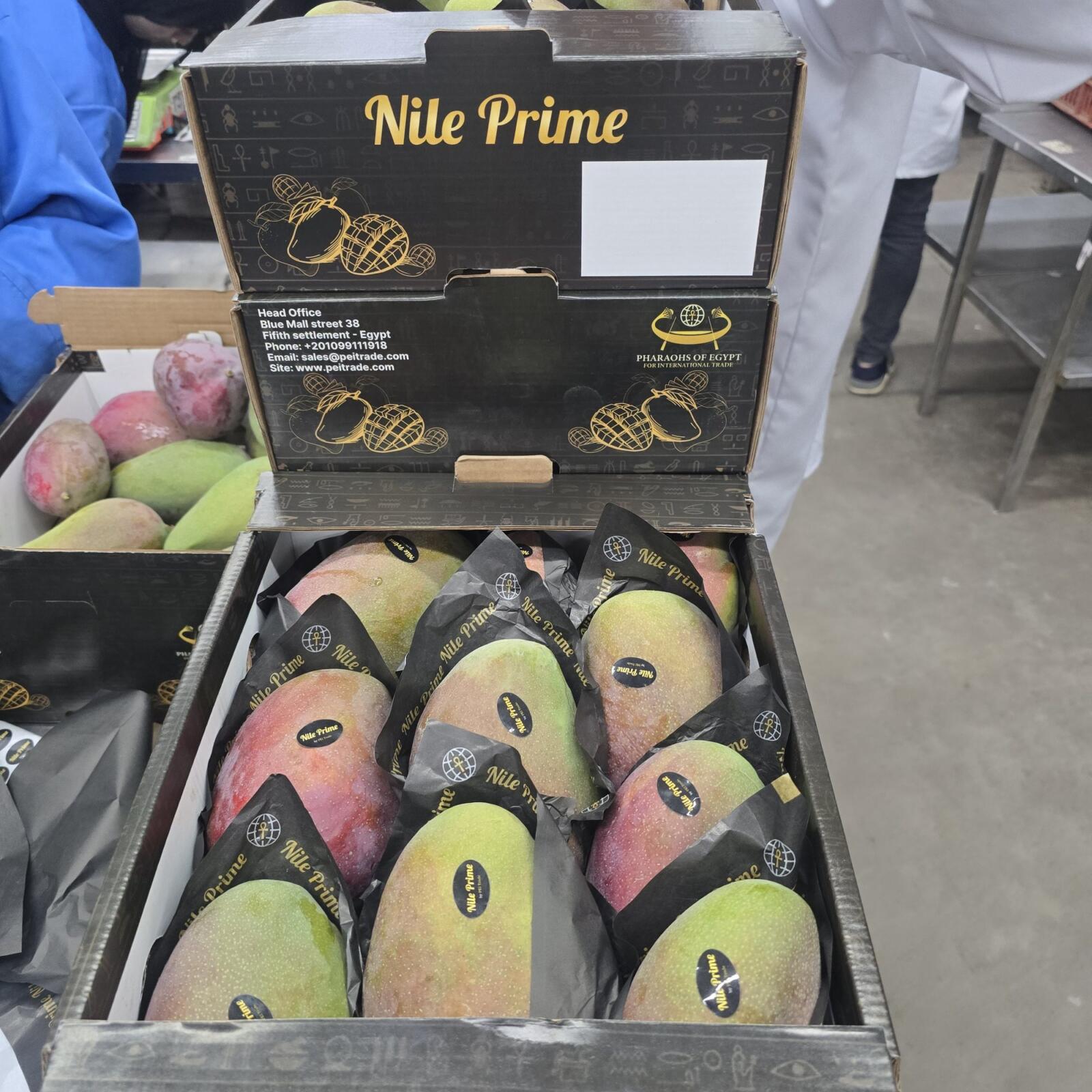
The United Arab Emirates is the Gulf’s second-largest market for Egyptian mango after Saudi Arabia — and, uniquely, a market and a gateway at the same time. In 2023 the UAE took about 5,831 tonnes of Egyptian mango (HS 080450) worth roughly USD 12.9 million (UN Comtrade), a premium destination where an 80%-plus expatriate population and a large hotel, restaurant and catering sector drive strong, diverse fresh-fruit demand through the hot summer. What sets the UAE apart is its role as the region’s re-export hub: Dubai — home to Jebel Ali Port and a major fresh-food logistics hub — is the principal gateway that redistributes imported fruit onward to the wider Gulf, Africa and South Asia under GCC and Pan-Arab free-trade access. For an Egyptian supplier that means two markets in one: high-value UAE retail and HORECA, plus a springboard into the surrounding region. Demand here is flavour-led, favouring aromatic Egyptian varieties, and Egypt’s summer season and short Red Sea run make it a natural fit. This guide covers the varieties that suit the UAE market, shipping logistics, import and food-safety requirements, the variety-by-window calendar, and how to open a supply program.
Three things make the UAE a natural home for Egyptian mango. First, it is a large, high-value consumer market: an expatriate-majority population — including big South Asian, Arab and Western communities — and one of the region’s densest hotel and restaurant sectors create broad fresh-fruit demand that peaks in the hot summer, exactly when Egypt is in season. Second, proximity: a short Red Sea reefer run lands a chilling-sensitive fruit in strong condition and keeps freight competitive. Third, and distinctively, the UAE is the region’s re-export hub — Dubai’s Jebel Ali and its fresh-food logistics corridors redistribute imported fruit onward to the rest of the Gulf, Africa and South Asia, and the GCC’s single-entry-point customs rule lets unopened containers move duty-free between member states. A single UAE program can therefore serve both Emirati retail and a much larger surrounding region.
On variety, the UAE behaves like the wider Gulf: buyers reward flavour, aroma and sweetness, which plays to Egypt’s aromatic indigenous cultivars — Owaisi, Naomi, Taymour and rich Zebda — alongside internationally familiar late Keitt for the retail and re-export shelf. Egypt is already the Gulf’s leading fresh-fruit supplier, and the UAE sits second only to Saudi Arabia among Egyptian mango destinations in the region, so the commercial relationship and logistics are well established.
Because this market buys on the eating experience, the table below leads with flavour and sweetness. Egypt’s aromatic indigenous varieties are the differentiator, with late Keitt extending the retail and re-export window.
| Variety | Flavour profile | Best use | UAE / Gulf fit |
|---|---|---|---|
| Owaisi (Ewais) | Intensely aromatic, very sweet, fine texture; premium indigenous variety | Premium fresh eating | ★★★ Top flavour pick for the Gulf |
| Naomi | Rich, sweet, balanced; attractive golden fruit that ships well | Fresh eating & retail | ★★★ Strong all-rounder for retail & re-export |
| Taymour | Large, sweet, aromatic classic Egyptian variety | Fresh eating | ★★★ Well-known Gulf favourite |
| Keitt | Large, firm, mild-sweet, low fibre; late-season and long shelf life | Late-window supply & re-export | ★★ Extends the season; travels well onward |
| Zebda | Very rich, dense, sweet; the classic juicing and dessert mango | Juicing & rich-taste demand | ★★★ Prized for flavour & processing |
For full variety detail and calibres see the Egyptian mango export guide, and the profiles for Owaisi (Ewais), Naomi & Kent and Keitt.
The workhorse route is reefer sea freight on the short Red Sea run to Jebel Ali (Dubai) — one of the world’s busiest container ports and the region’s re-export gateway — and to Khalifa Port (Abu Dhabi). From Dubai, fruit is repacked and redistributed to Emirati retail and HORECA and, under GCC duty-free transit, onward to the wider region.
Hot-water treatment is a standard post-harvest step for export mango, and it serves two purposes. Disease control: a hot-water dip at roughly 48–52 °C for 5–10 minutes, followed by hydro-cooling and drying, suppresses anthracnose and stem-end rot — the main post-harvest diseases that shorten shelf life in transit. Fruit-fly disinfestation: UAE plant-health rules (MoCCAE) require imported mango to be free of quarantine pests including fruit flies, and the internationally accepted quarantine schedule is around 46.1 °C for 65–90 minutes, with longer times used for larger fruit. Exact temperature and dwell time depend on cultivar, fruit size and maturity, so the protocol is set per consignment and per destination requirement, applied within about 24 hours of harvest.
| Month | Available varieties (export) | UAE / Gulf notes |
|---|---|---|
| Jun | Season opening — early Owaisi, Zebda | Summer demand builds across retail and HORECA |
| Jul | Owaisi, Naomi, Taymour, Zebda | Peak flavour varieties; strong retail and re-export pull |
| Aug | Naomi, Taymour; Keitt begins | High-volume summer window to Jebel Ali |
| Sep | Keitt (peak), Naomi, Kent | Late-season shift; retail and onward re-export continue |
| Oct–Nov | Keitt (late), Kent | Late window — firm, travel-ready fruit for re-export closes the season |
Windows are indicative and shift year to year with weather. Book premium early varieties such as Owaisi and Zebda ahead of the summer peak. See the Egyptian mango export report 2026 for volumes, destinations and price context.
The UAE, like the wider Gulf, buys on flavour and sweetness, so aromatic indigenous varieties lead: Owaisi (Ewais), Naomi and Taymour for fresh eating, with rich Zebda for juicing. Late-season Keitt extends supply and travels well for onward re-export.
By reefer sea freight on the short Red Sea run to Jebel Ali (Dubai) and Khalifa Port (Abu Dhabi), carried at about 10–13 °C. From Dubai, fruit is repacked for Emirati retail and, under GCC duty-free transit, redistributed to the wider region.
June to November, peaking through the hot summer when Gulf demand for fresh fruit and juice is strongest. Early aromatic varieties open the season; late Keitt closes it.
Dubai’s Jebel Ali port and fresh-food logistics redistribute imported fruit to the wider Gulf, Africa and South Asia, and the GCC single-entry-point customs rule lets unopened containers move duty-free between member states — so a UAE program serves both Emirati demand and the surrounding region.
A MoCCAE agricultural import permit and phytosanitary certificate (fruit-fly freedom), a certificate of origin, pesticide-residue compliance with GSO limits, emirate food-safety clearance and label registration (federal ZAD or Dubai Municipality’s FIRS / Abu Dhabi’s ATLP), GSO 9 Arabic labelling, and GSO 123 grading.
Planning a UAE mango program — for Emirati retail, HORECA or onward Gulf re-export? PEI Trade supplies flavour-led Egyptian varieties — Owaisi, Naomi, Taymour, Keitt and Zebda — with calibre selection, GSO grading, Arabic-labelled and re-export-ready packing, and cold-chain management on the short Red Sea run to Jebel Ali or Khalifa Port. Tell us your target volumes, calibres and delivery window, and we’ll structure a compliant, well-timed offer.
PEI Trade. “Egyptian Mango Exports to the UAE: Varieties, Logistics & Market Guide.” peitrade.com, 2026, https://peitrade.com/egyptian-mango-exports-to-uae/
Sources: UN Comtrade / WITS (HS 080450, 2023: Egypt→UAE 5,831 t / USD 12.94M; Gulf #2 after Saudi Arabia); Mordor Intelligence (UAE fresh-produce market; Dubai / Jebel Ali re-export hub); USDA FAS (UAE fresh-fruit imports incl. guavas / mangoes / mangosteens; 80%+ expatriate population; PAFTA / GCC re-export access); UAE Ministry of Climate Change & Environment (MoCCAE) import & phytosanitary requirements; Gulf Standards GSO 9 (labelling) & GSO 123 (fresh produce); ISHS / ScienceDirect post-harvest hot-water-treatment studies; FAO storage-temperature guidance.
[email protected] · WhatsApp +20 109 911 1918 · www.peitrade.com · Brand: nile-prime.com · Ports: Alexandria, Damietta, Sokhna, Port Said (Incoterms 2020)