Address
Work Hours
Monday to Friday: 7AM - 7PM
Weekend: 10AM - 5PM

Address
Work Hours
Monday to Friday: 7AM - 7PM
Weekend: 10AM - 5PM


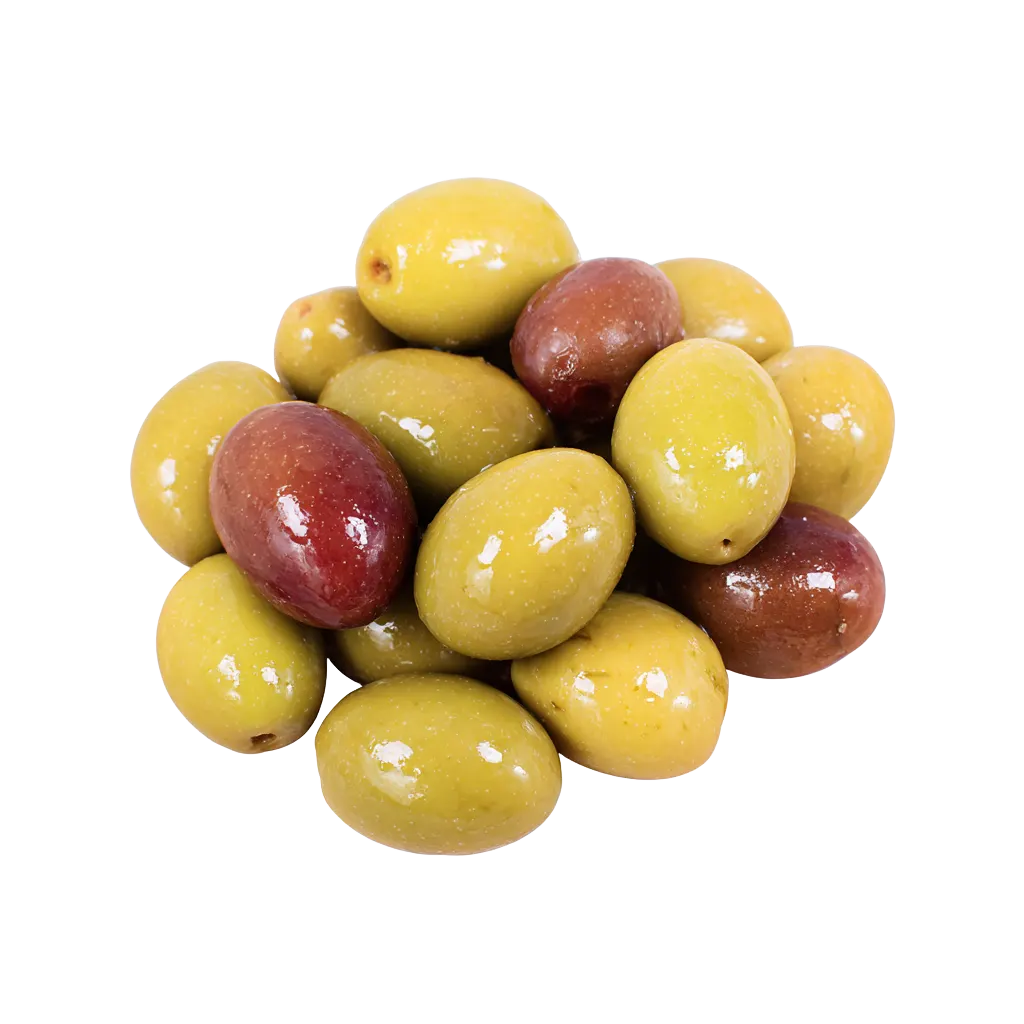
Egypt is one of the world’s two largest table-olive producers, accounting for roughly 18% of global table-olive output in the 2024/25 crop year (International Olive Council) — and a top-three supplier into the EU, Brazil and the wider Middle East. This guide covers the main export varieties, curing and brining methods, packing formats, the September–November harvest window, and how importers source Egyptian table olives in bulk.
Egypt’s olive belt runs across Fayoum, the North Coast (Marsa Matrouh), Siwa, and reclaimed desert land in the Delta fringe. The cultivar mix is built for the table-olive market rather than oil, giving large, fleshy fruit with a high flesh-to-pit ratio.
| Variety | Type / Color | Typical Use | Notes |
|---|---|---|---|
| Aggezi (Egyptian green) | Green | Whole / stuffed | Large fruit, firm flesh, mild flavor — flagship Egyptian table variety |
| Picual | Green & black | Whole / pitted | Dual-purpose; firm, holds up well in brine |
| Manzanillo | Green | Stuffed / pitted | Rounded, thin skin, classic Spanish-style processing |
| Kalamata-type | Natural black | Whole / halved | Almond-shaped, rich flavor, natural-brine curing |
| Toffahi | Green | Whole | “Apple” olive — large, crisp, popular in Gulf markets |
Raw olives are inedibly bitter (oleuropein) and must be cured before shipping. Egyptian processors offer three main routes, chosen by variety and destination taste profile:
Export brine is typically standardized to 6–10% salt with pH controlled below 4.0 for shelf stability, acidified with food-grade lactic or citric acid where required by the buyer’s spec.
Table olives are graded by count per kilogram (caliber). Common export sizes:
| Caliber (count/kg) | Size grade | Typical format |
|---|---|---|
| 101–110 | Super Mammoth | Whole / stuffed, glass jars |
| 141–160 | Jumbo | Whole, drums & pouches |
| 181–200 | Large | Whole / pitted |
| 241–260 | Medium | Sliced / pitted, bulk |
| 301–320 | Small | Sliced, foodservice |
Green olives are hand-picked first, from September, when the fruit reaches full size but before color change. Semi-ripe and naturally black olives follow through October and November. Because curing and fermentation add weeks to months, cured product ships year-round from tank stock — but fresh-crop pricing and allocation are set during the autumn harvest window.
Bulk brine olives typically ship by the pallet or full container (FCL) in 120–200 kg drums. Retail-packed jars and pouches can be consolidated to mixed pallets. Contact the export desk for current MOQ and caliber availability.
Yes — whole, pitted, sliced, halved, and stuffed (pimento, garlic, almond, jalapeño) formats are all produced for export, in both green and black.
Cured olives are packed in acidified brine (pH < 4.0, 6–10% salt) in sealed drums, jars, or pouches. They ship as ambient/dry cargo — no cold chain required — which keeps freight cost low for long-haul markets.
Egypt is a leading supplier into the EU, Brazil, the Gulf, and North America. Per IOC trade data, Egypt is consistently among the top global table-olive export origins by volume.
PEI Trade. “Egyptian Table Olives Export: Varieties, Curing, Packing & Season.” peitrade.com, 2026, https://peitrade.com/egyptian-table-olives-export/
Primary data source: International Olive Council (IOC), Olive Sector Statistics & Forecasts (Dec 2025); IOC World Market of Olive Oil and Table Olives.
[email protected] · WhatsApp +20 109 911 1918 · www.peitrade.com · Brand: nile-prime.com · Ports: Alexandria, Damietta, Sokhna, Port Said (Incoterms 2020)