Address
Work Hours
Monday to Friday: 7AM - 7PM
Weekend: 10AM - 5PM

Address
Work Hours
Monday to Friday: 7AM - 7PM
Weekend: 10AM - 5PM


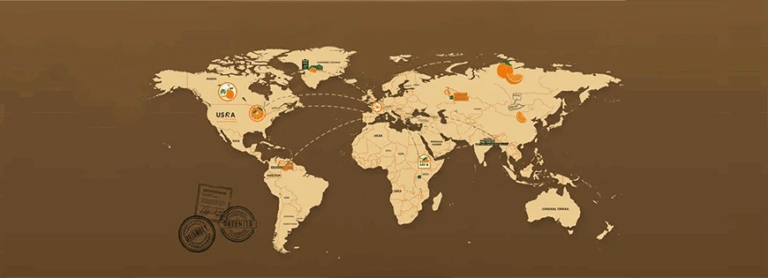
Oranges are among the most heavily traded fruits in the world and among the most heavily regulated, because citrus carries pest risk and every importing country manages that risk its own way. The result is that the same container is acceptable in one market and refused in another, on paperwork rather than on fruit.
This guide compares what the main citrus-importing markets require, market by market, so a buyer can see what their own destination will ask for before contracting. Requirements change, so treat this as the shape of each regime and confirm the current position for your shipping weeks.
Every regime, whatever its paperwork looks like, is managing the same five things:
Miss one and the consequence is not usually a fine. It is a held container accruing demurrage while somebody looks for a document.
| Market | Exporter or facility registration | Treatment | Label language | The point that catches people |
|---|---|---|---|---|
| European Union | Not a separate exporter registration; importer pre-notifies | Where pest requirements apply | An accepted EU language | Residue limits, and the importer’s pre-notification duty |
| China | Yes: registered orchards and packhouses on the approved list | Cold treatment | Chinese | Only registered orchards may ship; this cannot be arranged late |
| Russia and the CIS | Quarantine inspection regime | As specified | Russian | Documents must be in Russian; translation errors hold containers |
| Saudi Arabia | Yes: exporter registration with the food authority | As specified | Arabic | Registration must exist before the first shipment, not during it |
| United Arab Emirates | Yes: registration with the competent authority | As specified | Arabic and English | Re-export onward means the label must satisfy the next market too |
| United States | Yes: USDA-approved protocol and treatment | Approved pest treatment protocol | English | Market access for a given commodity and origin is protocol-specific |
One of the largest citrus importers and the strictest on residues. The framework is Regulation (EC) No 396/2005 on maximum residue limits and Regulation (EC) No 178/2002, the general food law that puts traceability on a legal footing.
The EU lane in full detail, including the questions to put to a supplier, is in meeting EU certification standards for Egyptian oranges.
High demand, and the most structurally demanding entry of the six because access runs through a protocol rather than a document set. The orchards and packhouses that may ship are registered in advance with the customs administration, which means a buyer cannot switch a supply base mid-season and a supplier cannot add an orchard to a shipment at short notice.
Build clearance time into the programme. A protocol market does not reward a tight schedule.
Egypt’s largest citrus destination. Commercially the most accessible of the six, and the one where the most shipments are delayed for the least interesting reason: documents that are not in Russian, or whose translation does not match the load.
A major destination for Egyptian oranges, with a registration requirement that has to be satisfied before a first shipment rather than alongside it.
Both a consumer market and the region’s main re-export hub, and that dual role is the thing to plan for: fruit landing in Dubai may be destined for a third market whose labelling and shelf-life requirements also have to be met.
Citrus entry is controlled by the USDA on plant health and the FDA on food safety, and access for a given commodity from a given origin is protocol-specific rather than general. Before planning a US programme, confirm that the commodity and origin combination is currently approved.
Every market requires a phytosanitary certificate from the origin’s plant protection authority, plus documentation on residues and traceability. Beyond that the requirements diverge: some markets register the exporter or the orchard in advance, some require a specific treatment, and all specify the label language.
Because residue limits, treatment requirements and labelling rules are set nationally and do not match. Fruit grown to Gulf residue limits can exceed EU limits on the same active substance. Compliance is decided per destination, at the orchard, months before loading.
China, because access runs through a protocol with registered orchards and packhouses rather than a document set. Registration cannot be arranged at short notice, so the supply base has to be settled before the season.
Documentation rather than fruit. Papers not in the required language, a packing list that disagrees with the physical load, a missing pre-notification, or a registration that was not in place before the first shipment.
No. Where a market requires cold treatment for a specified pest, the schedule has to be planned into the voyage from the start. It cannot be applied retrospectively at arrival.
No. Residue limits are revised, treatment requirements change with pest findings, and market access for a specific commodity and origin can open or close between seasons. Confirm the current position for your shipping weeks rather than relying on last year.
Tell us the destination market, the variety and volume, and the shipping weeks, and we will set out what that lane’s document set and treatment requirements look like before you commit to anything.