Address
Work Hours
Monday to Friday: 7AM - 7PM
Weekend: 10AM - 5PM

Address
Work Hours
Monday to Friday: 7AM - 7PM
Weekend: 10AM - 5PM


 ByHager
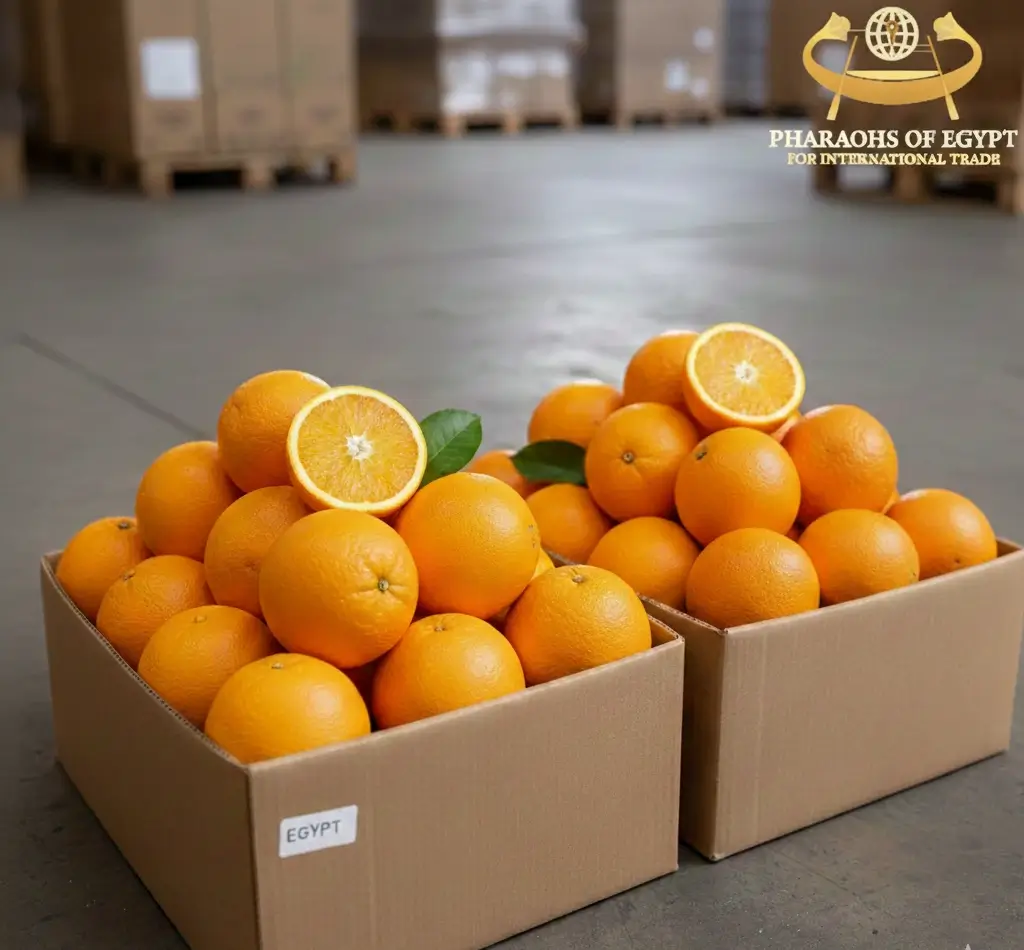
Egyptian oranges have moved from being a seasonal option to a core product in global citrus trade. Today, Egyptian Oranges Export is a fast-growing segment driven by quality, price stability, and reliable supply chains. For importers looking to expand or diversify sources, Egypt offers a clear opportunity.
Egypt stays a key origin because volumes are strong, and the window fits many markets. USDA forecasts Egypt’s orange exports to reach about 1.9 million metric tons in MY 2025/26.
This guide explains the differences between Navel and Valencia oranges, how they fit into import strategies, and why many buyers now choose to import Egyptian fruits through trusted partners like PEI Company.
Both varieties can win, but for different reasons.
Choose Navel when you need:
Choose Valencia when you need:
This is why importers who Import Egyptian Fruits often run a “two-wave” plan: Navel first, Valencia second, with one supplier managing both.
Navel is the orange that sells itself in fresh channels. Buyers like its eating quality and the way it looks in a box. When your target is modern retail, Navel is often the “first yes.”
What importers usually value in Navel:
Where Navel fits best:
If you are entering a new market, Navel can be the product that helps you win the first trial order.
Valencia is your “keep the program running” variety. It becomes very important when buyers want continuity and other origins slow down.
Where Valencia shines:
Valencia is often the variety that turns a trial into a long-term contract.
Variety is only half the job. The other half is execution: sizing, packing, cooling, and documents.
Common B2B expectations:
Practical tip from PEI programs:
Do not “over-promise” on size mix early. Agree on acceptable ranges, then lock the final count after packing photos and a packing report.
This is where strong Egyptian Produce Suppliers separate themselves from traders who only chase spot deals.

If you sell into Europe, compliance must be planned from day one. The EU plant health framework requires regulated plant products to meet official import conditions.
What EU importers typically need in place:
About “extra” measures you may hear in the market:
Europe has tightened controls around key citrus pests, including measures linked to citrus black spot for specific origins.
Cold treatment requirements have also been discussed and applied for oranges from countries affected by false codling moth
Your compliance approach should be based on your destination, route, and the exact rules that apply to your origin and product.
Looking for detailed insights on Egyptian citrus exports? Explore our Complete Guide to Egyptian Citrus Export.
Let’s be direct: pricing is not one number. It changes by week, size, grade, pack style, and destination.
Still, 2025 showed clear movement. Industry reporting noted export FOB prices rising sharply in spring 2025, reaching around $0.66/kg after being around $0.43 to $0.45/kg in mid-April.
How B2B buyers should use this:
If your goal is stable landed cost, the best tool is a season plan, not last-minute spot buying.
Egyptian citrus is part of a broader strength in agricultural trade.
Competitive advantages of Egyptian agricultural exports include:
This is why Egypt Fresh Produce Export is growing beyond traditional markets into new routes where buyers want stable supply and clear documentation.
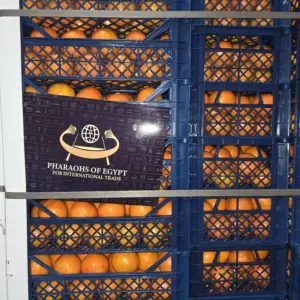
Many importers have the same pain points: mixed quality, unclear paperwork, and weak packing discipline. PEI focuses on solving those problems with a program mindset.
What PEI delivers for B2B orange buyers:
PEI’s export approach on its product pages highlights verified packing, documentation support, and logistics discipline for global buyers.
If you want to expand into new markets, treat Navel and Valencia as one story. Navel wins the first impression. Valencia protects continuity and volume.
When you choose the right variety for the right window, you reduce claims, stabilize pricing, and make reorders easier.
Ready to source oranges with a clean program setup?
Contact PEI Company by filling out the inquiry form on PEI’s website (the form is on PEI’s Page here).
For most retail programs, Navel is the first choice due to fresh eating quality and strong look. Valencia can still work if your buyer wants late-season continuity.
Most EU imports require a phytosanitary certificate and handling through TRACES NT processes, plus correct packaging and traceability.
Use 2026 price reports as a trend indicator. Final pricing depends on week, size, grade, and destination, so build a season plan and lock specs early.