Address
Work Hours
Monday to Friday: 7AM - 7PM
Weekend: 10AM - 5PM

Address
Work Hours
Monday to Friday: 7AM - 7PM
Weekend: 10AM - 5PM


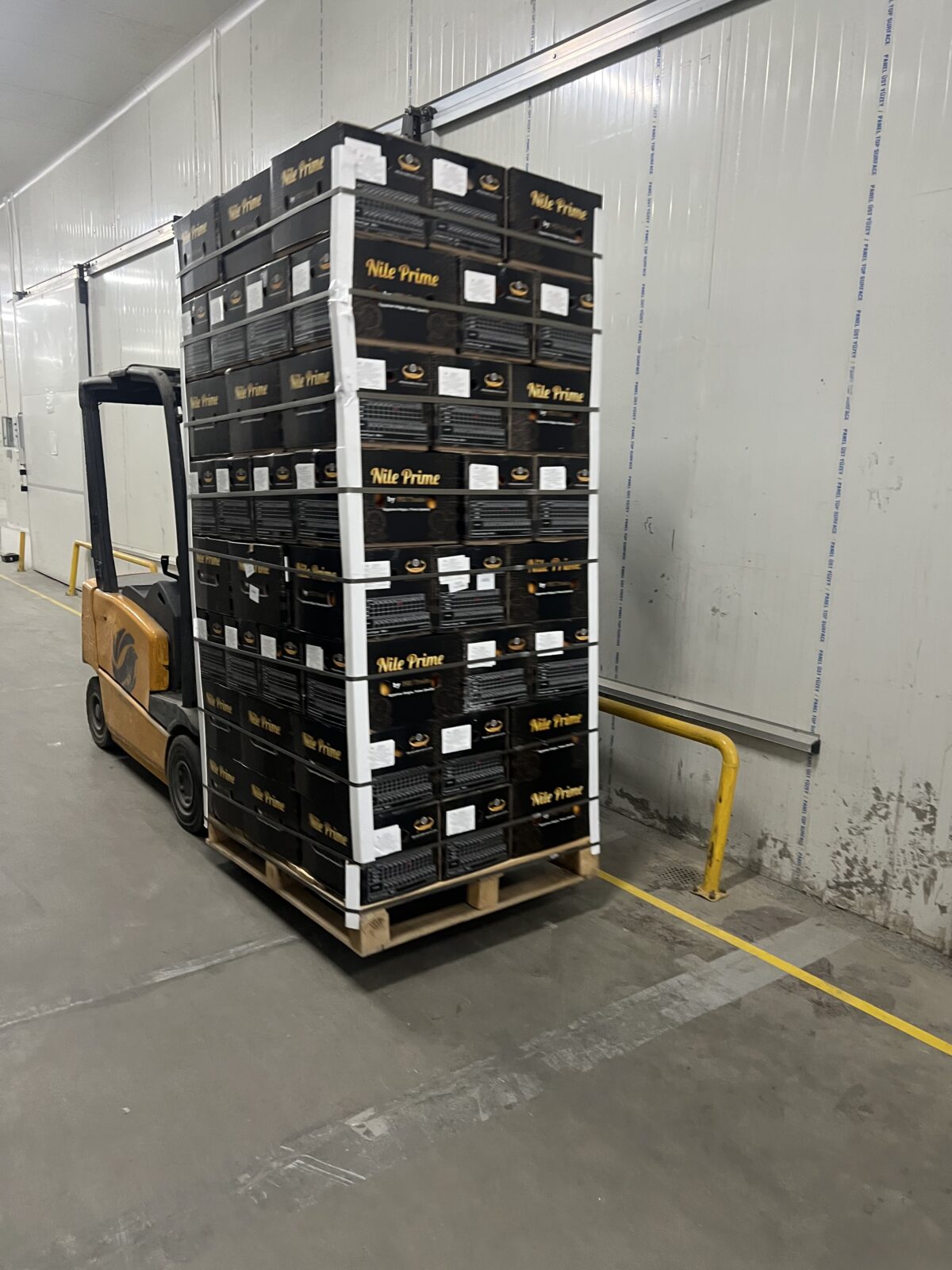
Pallet counts, stacking heights, temperature and ventilation set points and load-plan rules for 40ft high cube reefers shipping Egyptian citrus, mango, pomegranate, onion and IQF products.
Two containers of the same fruit, packed on the same day from the same packhouse, can arrive in very different condition. The difference is almost always the load plan and the set point rather than the fruit. This note sets out how we configure 40ft high cube reefers for the main Egyptian export crops so that buyers can check a proforma against something concrete.
A 40ft high cube reefer takes 20 industrial pallets at 120 by 100 cm in a single tier, or up to 23 Euro pallets at 120 by 80 cm, depending on the container build and the shipping line. Internal usable height under the T-bar floor and below the return air duct is generally around 235 to 250 cm, which caps stack height at roughly 220 cm including the pallet base. That ceiling is not negotiable. Loading above the red load line blocks the return air path and produces the classic pattern of warm fruit at the door end and cold fruit at the machinery end.
Typical loads by crop on 120 by 100 cm pallets are 20 pallets of citrus at around 24 tonnes gross, 20 pallets of mango at 18 to 20 tonnes depending on carton weight, and 20 pallets of IQF product at 24 to 26 tonnes. Payload ceilings vary by line and by road-legal limits in the destination country, so we confirm the maximum with the carrier before finalising a pallet count.
Set points are chosen for the specific product and maturity, not for the category. Valencia and Navel oranges travel at 4 to 6 degrees Celsius with 90 to 95 percent relative humidity and moderate fresh air exchange. Mature green Keitt and Kent mango travel at 10 to 12 degrees, since anything below 10 risks chilling injury that shows as grey flesh and uneven ripening after arrival, with 85 to 90 percent humidity and fresh air exchange in the range of 15 to 25 cubic metres per hour to vent ethylene and carbon dioxide. Pomegranates run at 5 to 7 degrees. Onions are the exception in that they are usually shipped in ventilated dry containers rather than reefers, and where a reefer is used the target is 0 to 2 degrees with low humidity to prevent sprouting and neck rot. IQF strawberries, okra and molokhia ship at minus 18 degrees or colder with the fresh air vent fully closed. Details on the fresh mango side are covered in our note on mango cold chain and inspection.
Reefer machinery is designed to hold temperature, not to pull it down. Fruit must reach its target core temperature in the packhouse cold room before stuffing, and the container must be pre-cooled and running at set point when it arrives. We record pulp temperature on arrival at the loading bay and again on the last pallet loaded. Loading is done under a covered dock where possible, in a single continuous operation, with the doors closed between pallet movements on long loads. Data loggers are placed at three points, one near the door, one mid-container and one at the machinery end, so that the temperature trace can be read against the arrival survey rather than argued about.
The set point, ventilation rate and humidity target belong in the booking instruction and on the bill of lading, not only in an email. Under FOB Incoterms 2020 the buyer controls the carrier and therefore the reefer specification, so those values need to be passed to the line by the buyer or their forwarder. Under CFR or CIF we handle the booking and instruct the line directly. Seasonal availability across our range is set out in our guide to Egyptian onion supply.
For a load plan and set point sheet matched to your destination and Incoterm, contact the PEI Trade export desk on WhatsApp at +20 10 9911 1918.
