Address
Work Hours
Monday to Friday: 7AM - 7PM
Weekend: 10AM - 5PM

Address
Work Hours
Monday to Friday: 7AM - 7PM
Weekend: 10AM - 5PM


Cut sizes, grades, microbiological specifications and packing formats for Egyptian IQF okra and molokhia, with contracting notes for the 2026/2027 processing season.
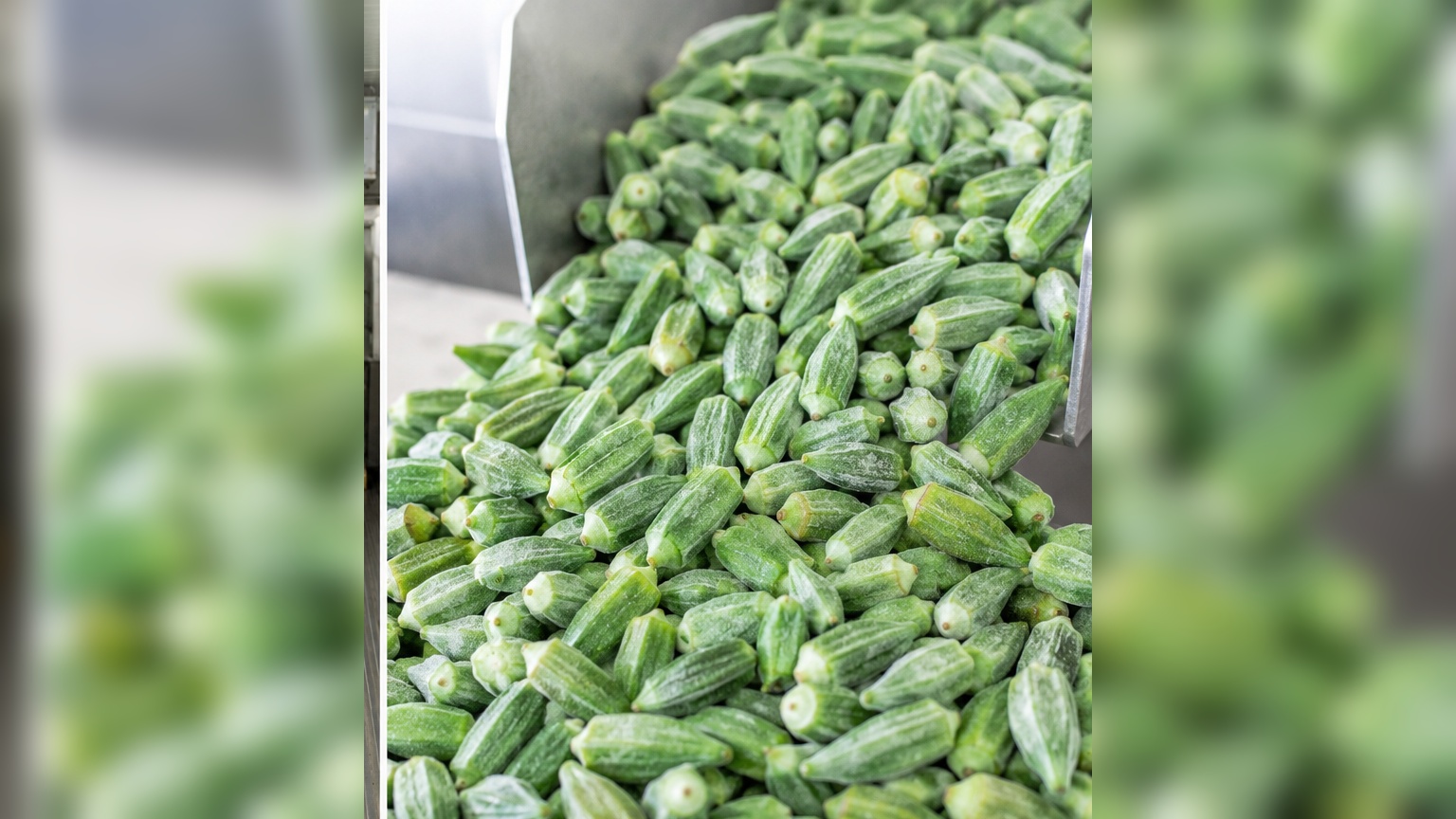
Frozen strawberry gets most of the attention in Egyptian IQF, and Egypt’s number one position in frozen strawberry exports explains why, but okra and molokhia carry the steadier demand. Both move year round into the Gulf, into North American and European ethnic retail, and into food service kitchens that cannot source consistent fresh supply. Both are also easy to buy badly, because the grading language is less standardised than it is in fruit. Here is what actually needs to be agreed before a purchase order is issued for the 2026/2027 season.
Egyptian okra for freezing is field harvested from roughly May through November, with the heaviest volume from July to October. Sizing is by pod length and it is the single most important line in the specification.
Zero grade covers pods under 3 cm and commands the highest price. Grade one runs 3 to 5 cm, grade two 5 to 7 cm, and grade three 7 to 9 cm. Gulf retail and premium food service buy zero and grade one. Grade two and three move into catering and industrial applications where the pod will be sliced anyway. Mixed grade exists but it is a discount product and should be priced as such.
Cut formats are whole with the cap trimmed and the pod intact, cut in rings of 10 to 15 mm, or cross cut. Whole okra carries a slime risk if the cap is cut into the seed cavity, so trimming quality separates a good processor from an average one. Ask for a photograph of the trimmed cap on the pre-shipment sample, not just the finished pack.
Molokhia, or jute mallow, is harvested from May to October and is sold in two formats. Minced molokhia is the volume product, blanched then finely chopped and frozen in blocks or free flowing. Leaf molokhia is whole leaf, destemmed, and is a specialty line for buyers who prefer to chop at the kitchen.
The quality markers are colour and stem content. Good minced molokhia is a deep uniform green, not olive or brown, which indicates blanching was correct and the cold chain held. Stem content should be specified as a maximum percentage, usually 1 to 2 percent by weight. Foreign material should be nil. Ask for the blanching time and temperature on the process sheet.
Standard microbiological limits on both products are total plate count below 100,000 cfu per gram, E. coli absent in 1 gram, salmonella absent in 25 grams and listeria monocytogenes absent in 25 grams. Core temperature at loading should be minus 18 C or colder, with a tolerance of no more than 3 degrees during transit.
Retail packing is 400 g or 1 kg polybags, ten or twenty bags to a printed carton. Food service and industrial packing is 10 kg polybags in a plain or printed carton. A 40 ft reefer takes roughly 20 to 24 tonnes depending on carton dimensions and pallet configuration, typically 20 pallets at 1,000 to 1,200 kg each. Private label printing needs eight to ten weeks lead time on carton and bag artwork.
Contracting for the season works the same way it does in frozen fruit. Volume is committed against the processing window, and a buyer who fixes tonnage in advance holds a firmer price than one who buys spot in February. The mechanics are set out in our note on Egyptian IQF strawberry programmes for 2026/2027. On the compliance side, what GLOBALG.A.P, BRCGS and ISO 22000 each prove explains which certificate covers the processing plant rather than the farm.
PEI Trade supplies IQF okra and molokhia from BRCGS certified plants with full process documentation and third party inspection on request. For current season pricing and available slots, contact our frozen desk on WhatsApp at +20 10 9911 1918.
