Address
Work Hours
Monday to Friday: 7AM - 7PM
Weekend: 10AM - 5PM

Address
Work Hours
Monday to Friday: 7AM - 7PM
Weekend: 10AM - 5PM


A practical supplier audit for importers buying Egyptian produce for the first time, covering certification scope, cold chain capacity, grading discipline, records and the questions that reveal how a packhouse really runs.
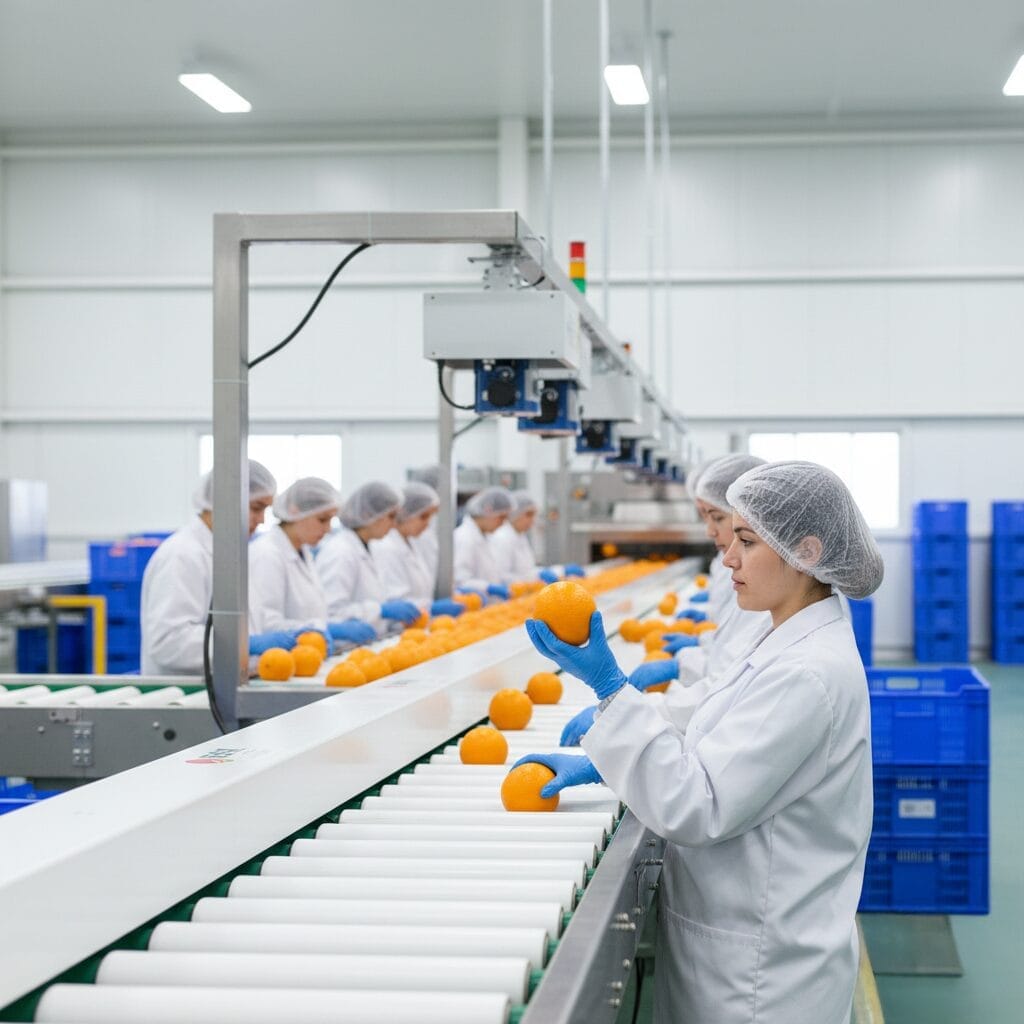
Most disputes on a first container trace back to something that was visible at the packhouse and never checked. A supplier audit does not have to be a formal third party exercise. It can be a structured visit, a video walkthrough, or a document request answered within a working day. What matters is that the same points are covered every time, and that the answers are specific rather than reassuring.
A GLOBALG.A.P certificate covers named farms and named crops. A BRCGS or IFS certificate covers a named site and named processes. Ask for the certificate number, then check the scope lines against the crop you intend to buy and the site that will actually pack it. It is common for a group to hold valid certification that does not extend to the specific product or the specific facility handling your order. Confirm the expiry date sits beyond your loading window, and ask what the last audit non-conformities were and how they were closed.
For fruit destined for EU or UK retail, ask whether the growers hold GGN numbers that can be quoted on the carton label, and whether the packhouse can supply the residue analysis for the harvest block your fruit will come from.
Ask how many tonnes of pre-cooling capacity the site runs per day, whether cooling is forced air or room cooling, and how long fruit sits between field arrival and cooling. Ask for the temperature range held in the holding chambers and how it is logged. A site that can pre-cool 40 tonnes a day cannot honestly commit to three reefers of the same crop leaving on the same date.
Look at the loading bay. A sealed dock with a temperature controlled transfer area behaves differently from an open yard where pallets wait in ambient heat while the container is positioned. Ask how long a loaded pallet is exposed before it goes through the container door, and whether the reefer is pre-cooled before stuffing.
Ask to see the grading standard the line works to, in writing, for your crop. Then ask what happens to the fruit that falls out of it. A packhouse with a clear domestic or processing outlet for Class II volume has less incentive to slip it into an export lot. Ask what the reported pack-out percentage is for the current season, and compare it against what the exporter is quoting you.
Records are the fastest read on how a site is run. Ask for a sample lot code and follow it backwards to a farm block and a harvest date, and forward to a carton label and a pallet number. If that takes more than a few minutes to produce, traceability exists on paper only. Our note on traceability and lot coding sets out what a workable coding system looks like.
An audit tells you how a site operates. It does not tell you what went into your container. For the first two or three shipments, pair the audit with an independent pre-shipment inspection so the loading is documented by someone with no stake in the sale. The checkpoints a surveyor covers are described in our guide to pre-shipment inspection on Egyptian produce. Once a supplier has passed both consistently, the inspection can move to spot frequency.
PEI Trade works from audited, certified packhouses across 35 export-grade crops and can arrange site visits, document packs and SGS or Intertek verification for buyers evaluating a first order. To arrange an audit or request the certification file, message our export desk on WhatsApp at +20 10 9911 1918.
