Address
Work Hours
Monday to Friday: 7AM - 7PM
Weekend: 10AM - 5PM

Address
Work Hours
Monday to Friday: 7AM - 7PM
Weekend: 10AM - 5PM


The pallet footprint decides how many cartons reach your warehouse and whether the load clears customs. Euro against industrial pallets, ISPM 15 marking, stack heights and typical cartons per pallet across Egyptian export crops.
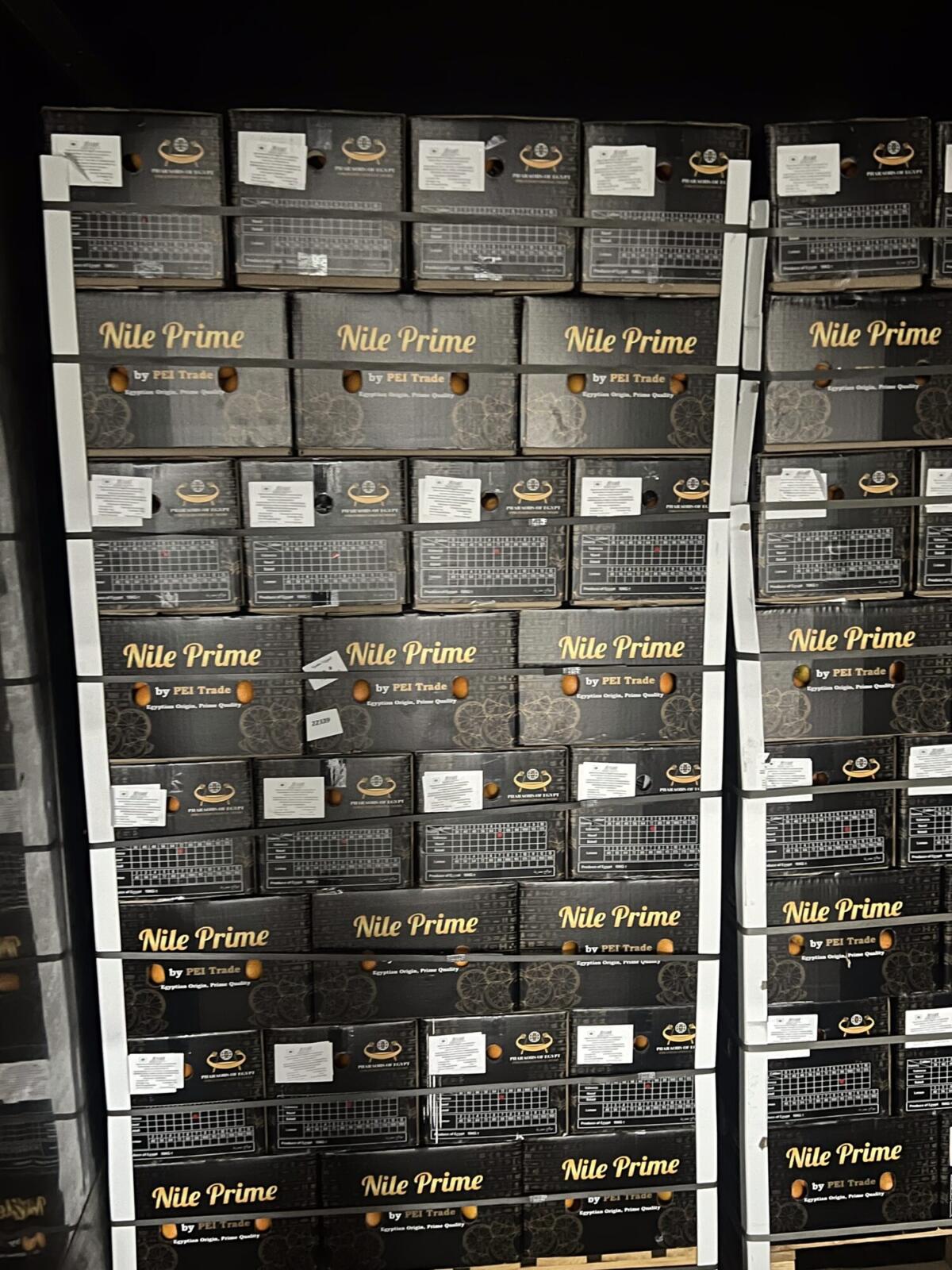
Buyers spend a long time on carton specification and almost no time on the pallet under it. That is the wrong order of attention. The pallet footprint sets how many cartons fit the container, how the load is braced, and whether the wood itself is admissible at your border. Getting it wrong costs either payload or a hold at inspection.
Egyptian export loads run on two sizes. The Euro pallet measures 1200 by 800 mm and dominates shipments into the European Union, the United Kingdom and Eastern Europe, because it matches European racking and roll-cage handling. The industrial or ISO pallet measures 1200 by 1000 mm and is the default for the Gulf, Africa and most long-haul lanes. Both are four-way entry in export use.
The choice is not neutral on payload. A 40ft high cube reefer typically takes 20 pallets on the 1200 by 1000 footprint, loaded in two rows of ten. The same box usually accepts 23 or 24 Euro pallets, though the exact count depends on the line, the box make and whether the loading plan allows a pinwheel at the door end. Confirm the number with the carrier before you price the order, because three extra pallets change your freight per carton materially.
All solid wood packaging leaving Egypt must comply with ISPM 15. In practice that means heat treatment to a core temperature of 56 degrees Celsius held for 30 minutes, and a stamped IPPC mark carrying the wheat symbol, the country code EG, the producer registration number and the treatment code HT. The mark must appear on at least two opposite sides of the pallet and must be legible.
Unmarked or illegibly marked wood is the single most avoidable border problem in this trade. Plastic and pressed-wood pallets sit outside ISPM 15 entirely and are sometimes specified for that reason, though they cost more and are rarely returned. If your market is strict on wood, say so in the purchase order rather than assuming.
Inside a 40ft high cube reefer the load must stay below the red load line so return air can pass over the top of the stack. That usually puts the working ceiling at roughly 2.15 to 2.25 m of gross pallet height including the pallet itself. Building higher blocks airflow and produces exactly the warm door-end arrivals buyers then complain about.
Corner boards, top caps and either strapping or stretch wrap hold the stack square. Vertical strapping through the pallet blocks is standard on citrus and pomegranate. Choose a wrap that does not seal the carton vents, since the vent area you paid for in the carton specification is worthless if film covers it.
These are working figures on a 1200 by 1000 footprint and should always be confirmed against the agreed spec. Citrus in 15 kg telescopic cartons runs about 8 per layer and 10 layers, near 1,200 kg net. Mango in 4 kg cartons runs 12 to 14 per layer over 14 to 16 layers. Pomegranate in 4.5 kg cartons sits in the same range. Onions and potatoes in 25 kg mesh bags stack around 40 bags for 1,000 kg net, and the bag format tolerates less height than a rigid carton.
Match the figures to your set point and stow plan before booking. Our notes on reefer container loading and set points by crop cover how the pallets are then positioned in the box.
State the footprint, the pallet material, the ISPM 15 requirement, the maximum gross height and the bracing method in the order. Those five lines remove most pallet disputes before loading.
PEI Trade ships 35 export-grade crops from Egypt on both footprints, with SGS or Intertek pre-shipment inspection available on request. For a quotation with the pallet configuration set out line by line, message our export desk on WhatsApp at +20 10 9911 1918.
