Address
Work Hours
Monday to Friday: 7AM - 7PM
Weekend: 10AM - 5PM

Address
Work Hours
Monday to Friday: 7AM - 7PM
Weekend: 10AM - 5PM


How many loggers to put in an Egyptian reefer, where they go, who downloads them and why a container's own machinery record rarely settles an arrival dispute.
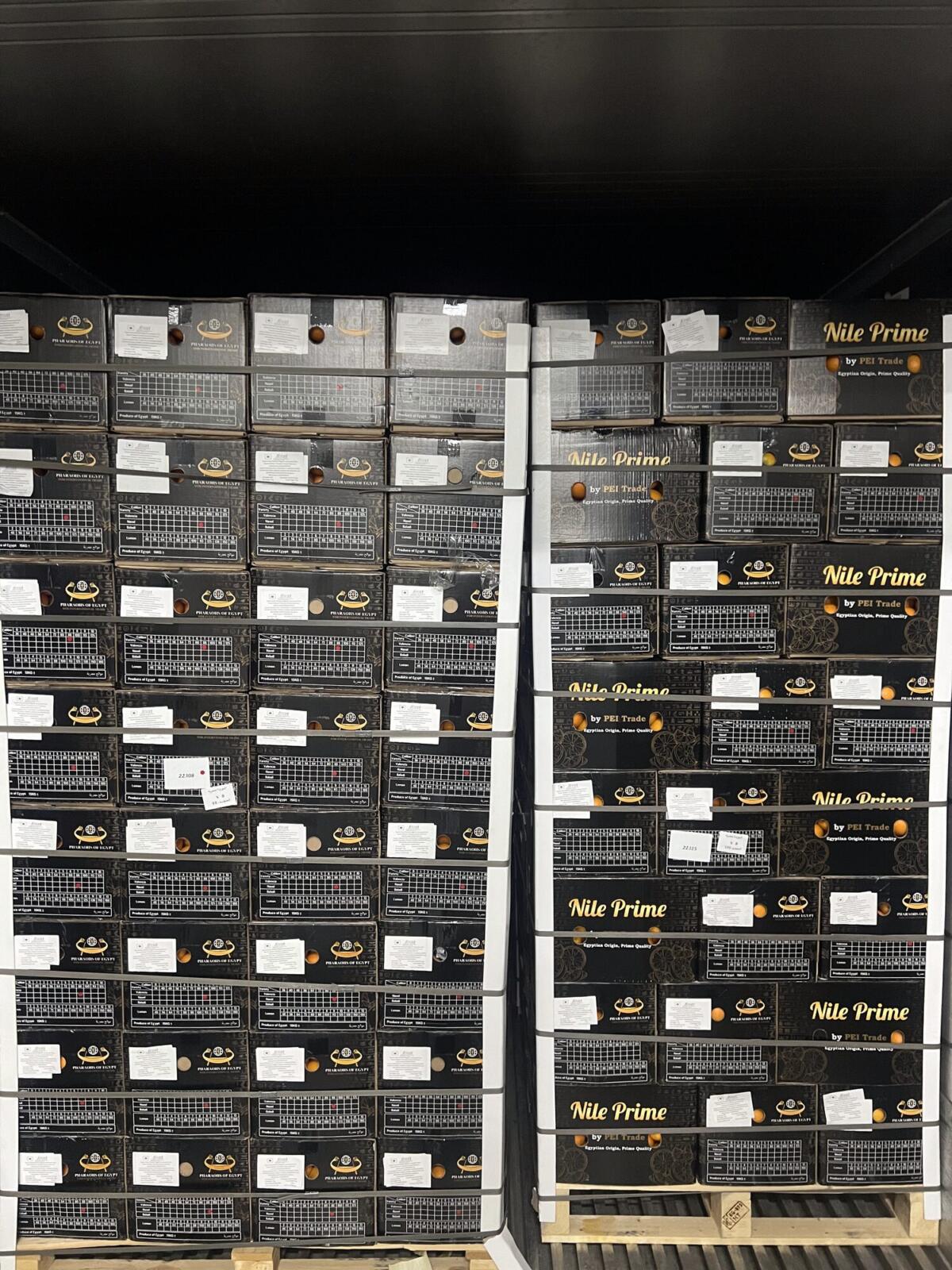
Most arrival disputes on Egyptian produce turn into an argument about temperature, and most of those arguments are unwinnable because nobody agreed in advance on what would be measured. The container’s own machinery record is not the same thing as fruit temperature, and a single logger thrown into the door-end pallet answers almost nothing. This is how to specify loggers on a shipment so the trace is worth reading when it matters.
Every reefer keeps a partlow or electronic record of supply and return air. Carriers release it on request, usually within a few days of discharge. It shows what the unit was doing, not what the fruit was doing. Supply air sits at or near the set point almost continuously, which is why a carrier record can look clean on a load that arrived with chilling injury or with soft fruit at the door end. Product temperature is what a buyer claims against, so product temperature is what needs an independent record.
For a 40 ft high cube reefer carrying a single crop, three loggers is the practical minimum and five is better on a long transit. Placement matters more than count:
Record the pallet number and carton position of every logger on the loading sheet. A trace with no known position proves nothing about the load, only about one carton nobody can find.
Start the logger at the packhouse, not at the port. A five to fifteen minute logging interval covers a 12 to 30 day transit comfortably within memory. Set a delayed start of one hour so the ambient reading at activation does not sit in the file as a spike. USB and Bluetooth types are read at destination without special software, which is why they suit buyers who do not want to send a device back. Single-use PDF loggers are the cheapest route for a first shipment.
Three patterns account for most of what a file shows. A slow decline from harvest temperature down to set point over 24 to 48 hours means pre-cooling was incomplete and the reefer was asked to do work it is not designed for. A flat line at set point with a sharp excursion in the last day is usually the discharge and inland leg, not the sea voyage. Repeated short spikes at regular intervals point to defrost cycles, which are normal. Against those, real damage usually appears as a sustained run above or below the agreed range, and that is what pairs with the arrival defects described in our note on how a quality claim is assessed and settled.
Agree the number of loggers, their positions, the logging interval, the acceptable range for the crop and who downloads the data. Agree also that the trace is read alongside the carrier machinery record rather than instead of it. The set point itself should follow the crop, not the container: our reefer set point reference by crop gives the temperature, humidity and ventilation figures we work to on Egyptian citrus, pomegranate, onion and frozen lines.
Loggers cost a few dollars per container. A disputed load costs several thousand. The only shipment where logger data is expensive is the one where nobody fitted any.
We fit and document loggers on request across all export lines, and send positions and serial numbers with the loading photographs. For specifications, availability and a quotation on Incoterms 2020 terms, message the PEI Trade export desk on WhatsApp at +20 10 9911 1918.
