Address
Work Hours
Monday to Friday: 7AM - 7PM
Weekend: 10AM - 5PM

Address
Work Hours
Monday to Friday: 7AM - 7PM
Weekend: 10AM - 5PM


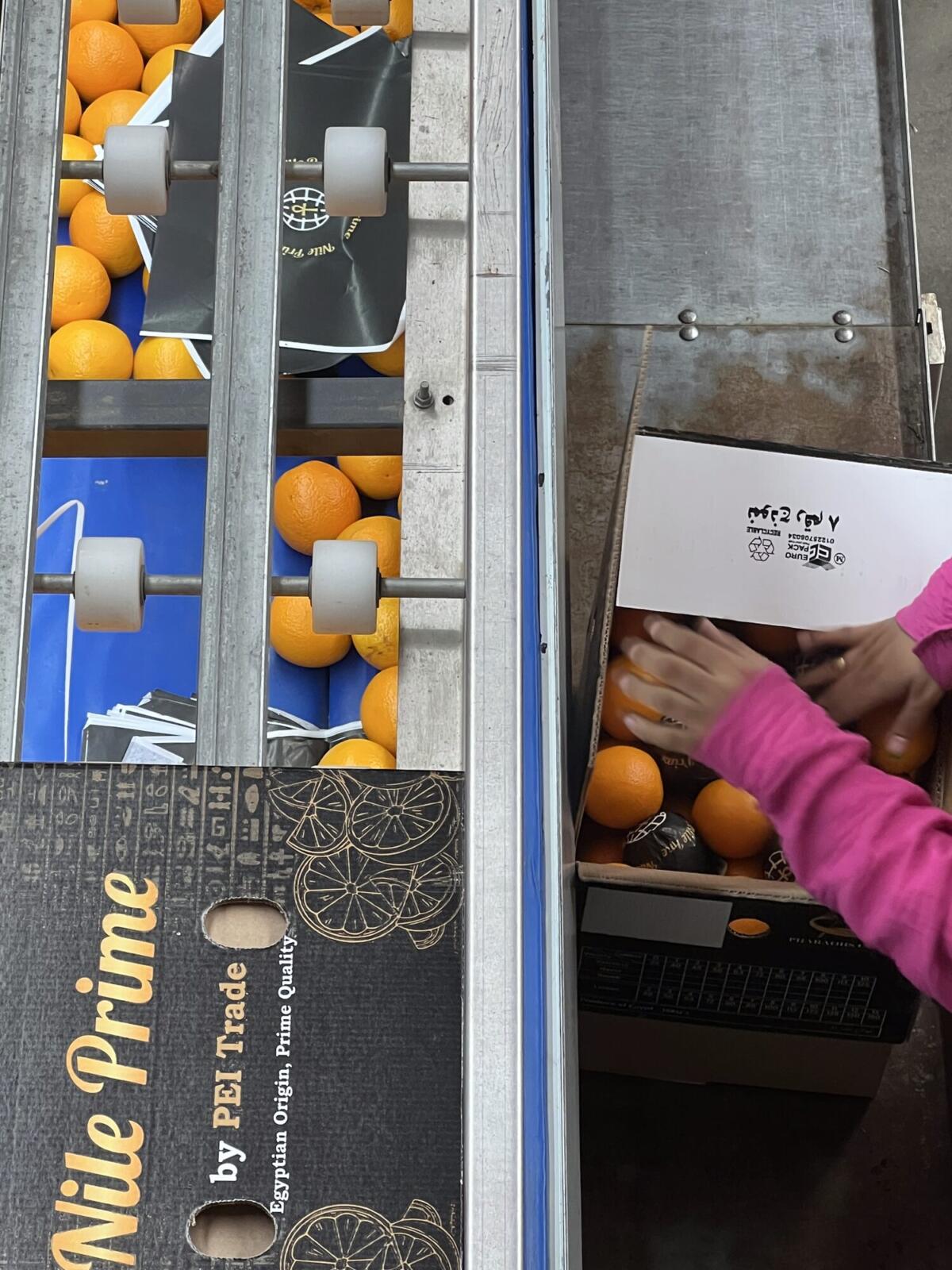
A market by market guide to what belongs on an Egyptian produce export carton, from origin and class to packer codes, Arabic panels and net weight declarations.
More consignments are held at destination over a label than over the fruit inside the carton. The produce passes inspection, the paperwork is in order, and the load sits because the class was not declared, the packer code does not match the certificate, or the Arabic panel is missing. Labelling is the cheapest part of an export programme to get right and one of the most expensive to get wrong, because the correction happens after the container has already arrived.
Whatever the destination, an Egyptian export carton should show the country of origin as Product of Egypt, the name and address of the packer or dispatcher or an officially issued code, the produce name and variety, the class, the size or count, and the net weight. Add the lot or batch code that ties the carton back to the farm block and the packing date. If the grower holds GLOBALG.A.P. certification, the GGN belongs on the label as well, since most European buyers reconcile it against the certificate database before the load leaves the port.
EU marketing standards govern most of what appears on the carton for citrus, table grapes, strawberries and the other crops with a specific standard, and the general marketing standard covers the rest. Inspectors read origin, class, size and packer identification. For citrus the variety is required, and where the fruit has been treated after harvest the treatment must be declared. The United Kingdom applies an equivalent set, so the same carton usually serves both, but the importer of record differs and the label should not name an EU dispatcher on a load consigned to a UK buyer.
Saudi Arabia, the UAE, Kuwait and Qatar expect an Arabic panel alongside the English. Origin, product name, net weight and packing date are the fields most often checked at the border. Gulf buyers frequently re-export, so a carton that carries clean bilingual information moves through Jebel Ali or Jeddah faster than one that has to be relabelled in a bonded warehouse. Keep the Arabic text on the printed carton rather than on a sticker where possible, because stickers lift in a reefer at high humidity.
Russian language labelling is expected on retail-facing packs, and the EAEU technical regulations drive what must appear. Net weight declarations and the packing date are read closely. For bulk cartons destined for wholesale markets the requirement is lighter, but the origin and the packer identification still have to be legible after the pallet has been broken down.
Labelling sits on top of the wider traceability system, and the two only work together. Our note on traceability and lot coding from farm block to carton label covers how the codes are built, and the full export document set explains which certificate each label field has to match.
Requirements move, and the final word always belongs to your own importer and the competent authority in the destination market. We hold approved artwork on file for the markets we ship into and check every proof before printing.
For carton artwork, label specifications and packing details on any of our 35 export crops, message the PEI Trade export team on WhatsApp at +20 10 9911 1918 and we will send the current specification sheet for your market.
