Address
Work Hours
Monday to Friday: 7AM - 7PM
Weekend: 10AM - 5PM

Address
Work Hours
Monday to Friday: 7AM - 7PM
Weekend: 10AM - 5PM


Demurrage, detention and reefer plug-in charges explained for importers of Egyptian produce: what free time covers, who pays under each Incoterm, why reefer free time is short, and how to challenge an invoice that should not have been raised.
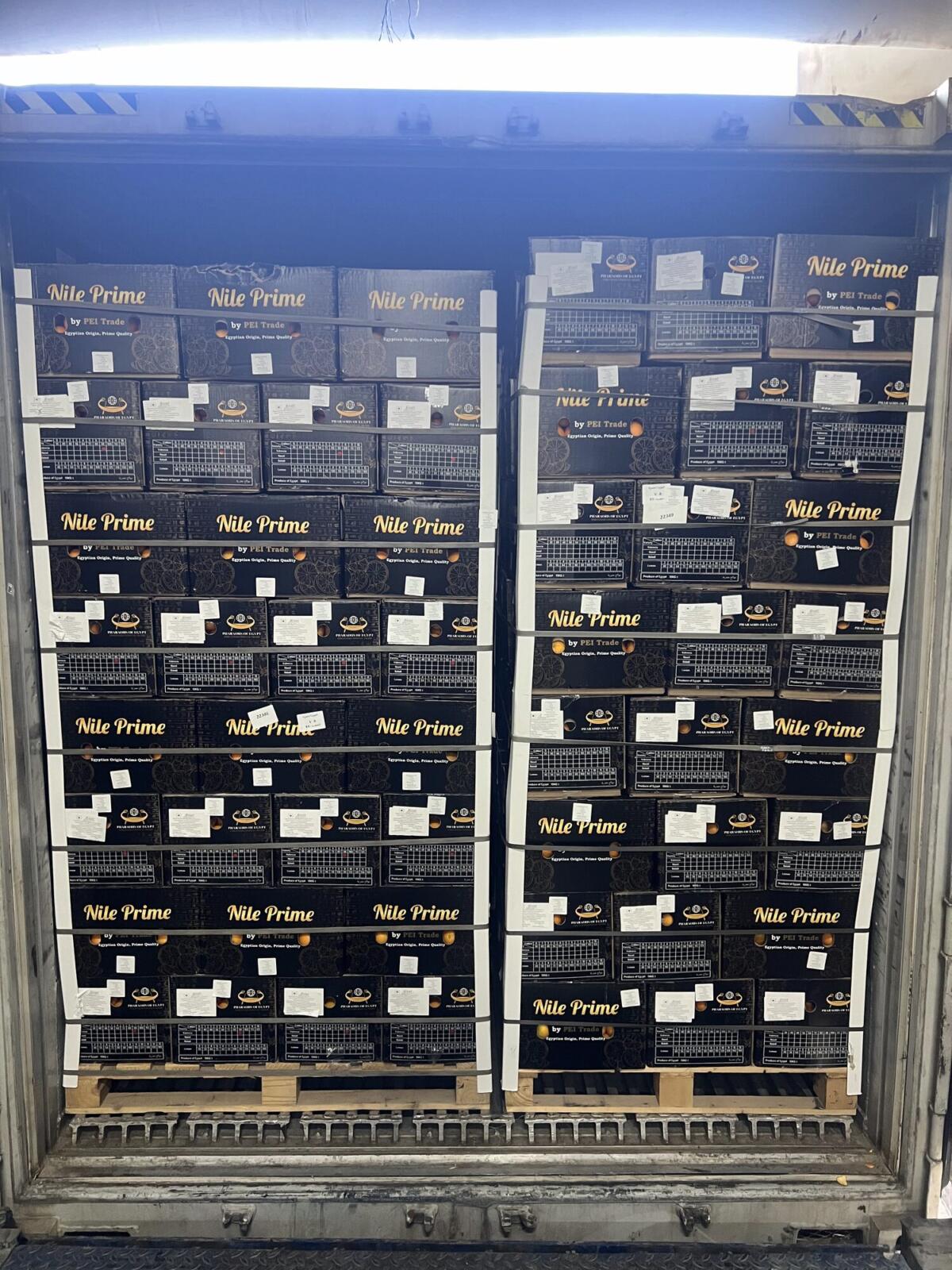
Demurrage and detention invoices usually arrive after the fruit has been sold. By then the container is long gone, nobody on the buying side remembers which day it was gated out, and the amount is presented as final. It rarely is. On Egyptian produce shipments these charges are among the most commonly overpaid line items in the whole cost stack, and most of the exposure is created before the container is even booked.
Demurrage is charged for time the container sits inside the terminal beyond the agreed free days. Detention is charged for time the container is outside the terminal, at your warehouse or on a truck, before it is returned empty. Some carriers merge them into a single combined free-time allowance, sometimes called merged demurrage and detention. Others run them as two separate clocks. Which model applies is stated in the booking confirmation, not in the bill of lading, so ask for it at booking rather than at invoice.
A third charge sits alongside both on refrigerated cargo. The reefer plug-in or monitoring charge covers power and temperature monitoring while the box waits at the terminal, and it is billed per day from day one in most destination ports. It is not covered by free time at all, which is why a reefer that waits four days can generate a bill even when the demurrage clock has not started.
Dry cargo commonly carries seven to fourteen free days at destination. Reefer free time is typically shorter, often three to five days, because carriers want the equipment back in rotation and do not want plug space occupied. On some Gulf and West African routings it is shorter still. Treat any quoted free time as contract specific, confirm it in writing per booking, and never assume the allowance on last season’s contract carried over.
Extended free time is negotiable, particularly on programme volume. It is normally bought, either as a rate premium or as a concession traded against committed weekly bookings. Asking for it once the container is already sitting at the terminal almost never works.
Under FOB and CFR the buyer carries destination demurrage and detention, because the buyer controls customs clearance and collection. Under CIF the position is the same at destination: insurance and freight are prepaid, the waiting is not. Under DAP the seller carries the cost to the named place, but detention after delivery normally reverts to the buyer, and this is where disputes concentrate. Our note on where cost and risk actually transfer under Incoterms 2020 sets out the split in more detail.
In practice four causes account for most of it. Documents arriving late, so the container cannot be cleared on arrival. Phytosanitary or border inspection holds. Congestion or a missed collection slot at the terminal. And a rolled sailing that lands the box in a week the buyer’s warehouse cannot receive it. Only the first is fully inside your control, and it is fixed by getting the document set right before departure. The timeline in our guide to reefer cut-offs and document deadlines shows where each document has to be in place.
Most successful challenges are arithmetic, not legal. Ask the carrier for the gate-in and gate-out timestamps, the discharge date, and the free-time terms applied. Then check three things: whether the free days match the booking confirmation, whether weekends and public holidays at that port are counted or excluded under the tariff, and whether any days fell inside a customs or veterinary hold. Holds caused by the authority rather than the consignee are frequently waived on request, but only if requested. Keep the claim window in mind, since most carriers require a challenge within thirty days of invoice.
Fix the free-time allowance in writing, confirm whether it is merged or split, ask what the daily rate steps to after the first tier, and confirm whether the reefer plug-in charge is included in the quoted freight. Build the answer into the landed-cost calculation instead of treating it as an exception.
For a quotation on Egyptian citrus, pomegranate, onion, potato or frozen product with the free-time terms confirmed at booking, message the PEI Trade export desk on WhatsApp at +20 10 9911 1918.
