Address
Work Hours
Monday to Friday: 7AM - 7PM
Weekend: 10AM - 5PM

Address
Work Hours
Monday to Friday: 7AM - 7PM
Weekend: 10AM - 5PM


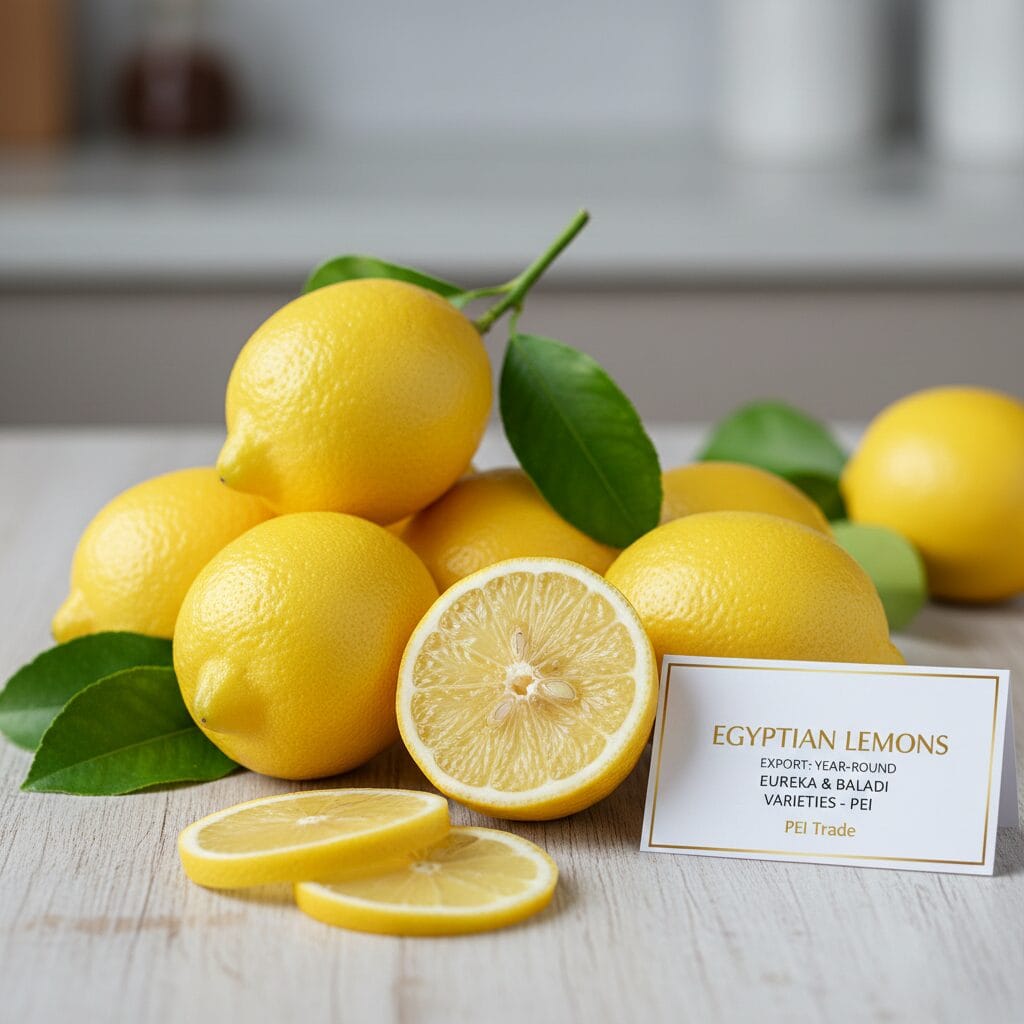
Egyptian lemons offer international buyers a unique advantage that few citrus origins can match: genuine 12-month availability. While competitors like Spain and Turkey have seasonal gaps, Egypt maintains continuous lemon production throughout the year, making it an ideal single-source solution for importers seeking supply stability.
This guide covers complete specifications for Egyptian lemon exports, including the two main varieties (Eureka and Baladi), seasonal quality variations, storage requirements, and market applications. For comprehensive information on all Egyptian citrus, see our Complete Egyptian Citrus Export Guide.
Whether you’re sourcing lemons for European retail, GCC foodservice, or industrial processing, understanding Egyptian lemon characteristics helps you optimize your procurement strategy.
Egypt’s ability to supply lemons every month of the year represents a significant competitive advantage in global citrus trade. This continuous availability stems from multiple production regions with staggered harvest cycles and varieties that produce across different seasons.
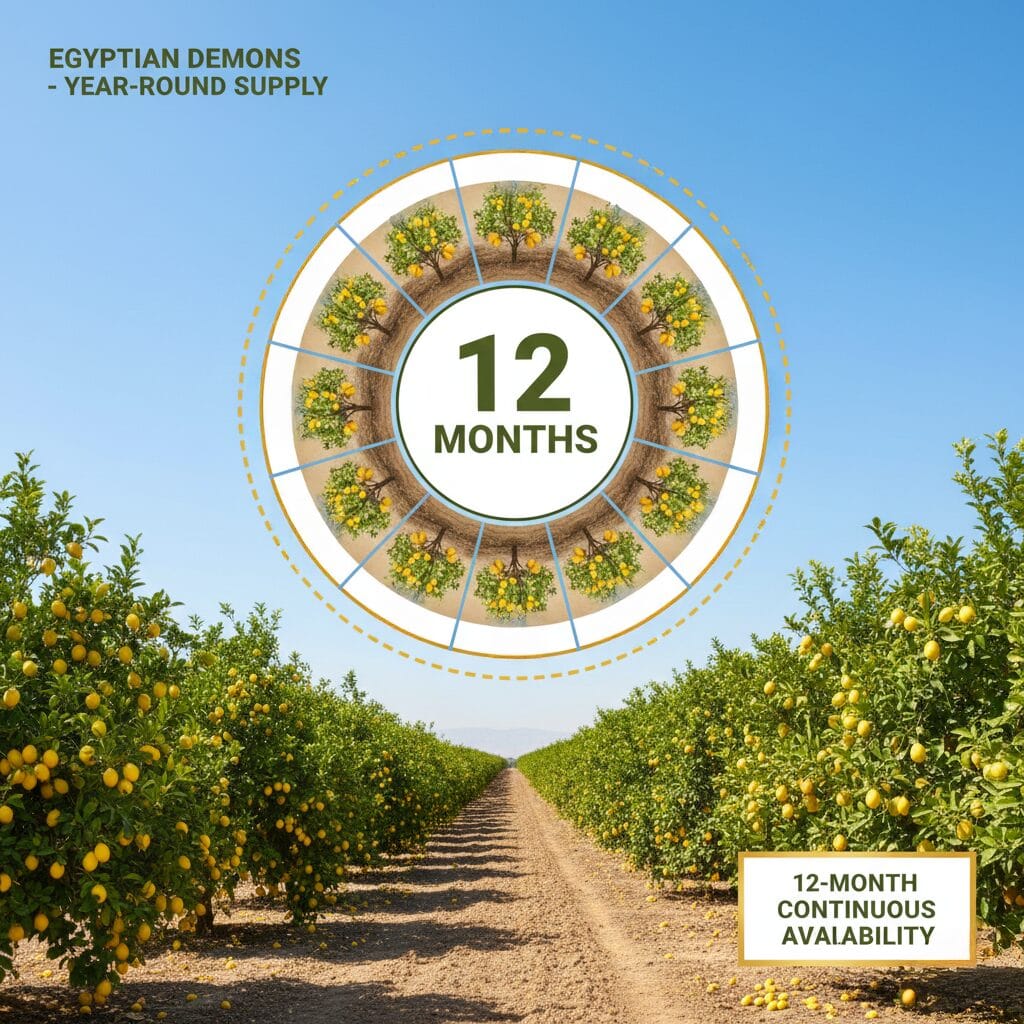
For importers and distributors, consistent lemon supply eliminates several challenges:
| Origin | Peak Season | Gap Period | Year-Round? |
|---|---|---|---|
| Egypt | Oct-Apr | None | ✅ Yes |
| Spain | Oct-Mar | Apr-Sep | ❌ No |
| Turkey | Nov-May | Jun-Oct | ❌ No |
| Argentina | Apr-Sep | Oct-Mar | ❌ No |
| South Africa | May-Oct | Nov-Apr | ❌ No |
Egypt’s year-round production means buyers can consolidate their lemon sourcing with a single origin, simplifying supply chain management significantly.
During summer months (June-August), when European production is minimal and Southern Hemisphere fruit faces long shipping times to reach Europe and GCC, Egyptian lemons command premium pricing. Buyers who establish year-round Egyptian lemon programs benefit from supply security during these high-demand periods.
Egypt produces two main lemon varieties, each suited to different market preferences and applications.
Eureka is the classic lemon variety recognized globally, originally from California and now widely cultivated in Egypt for export markets.
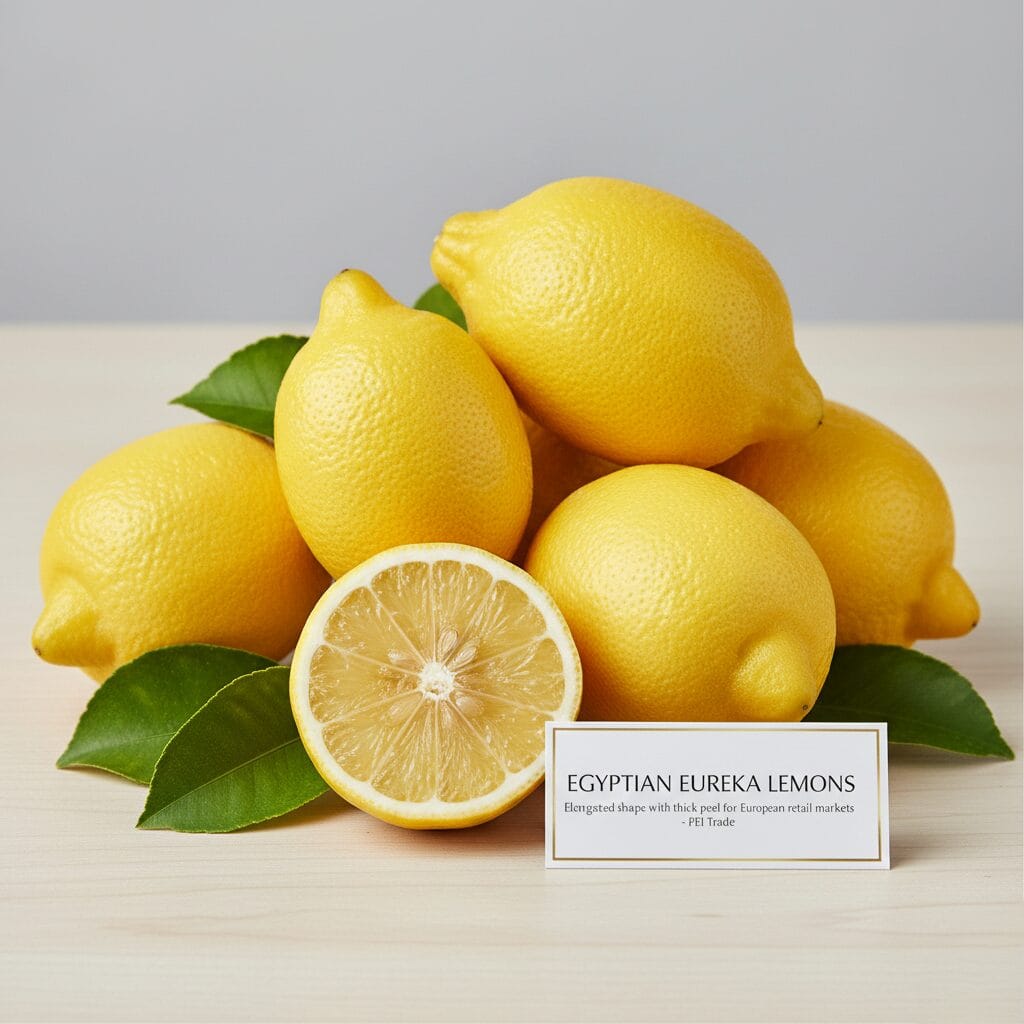
Characteristics:
Best Applications: European retail (matches consumer expectations), foodservice garnish, zesting for culinary use, premium positioning.
Best Markets: UK, Germany, Netherlands, France—markets where the Eureka appearance is the expected “lemon” standard.
Baladi lemons represent Egypt’s traditional lemon variety, favored throughout the Middle East and North Africa for their intense acidity and juice yield.
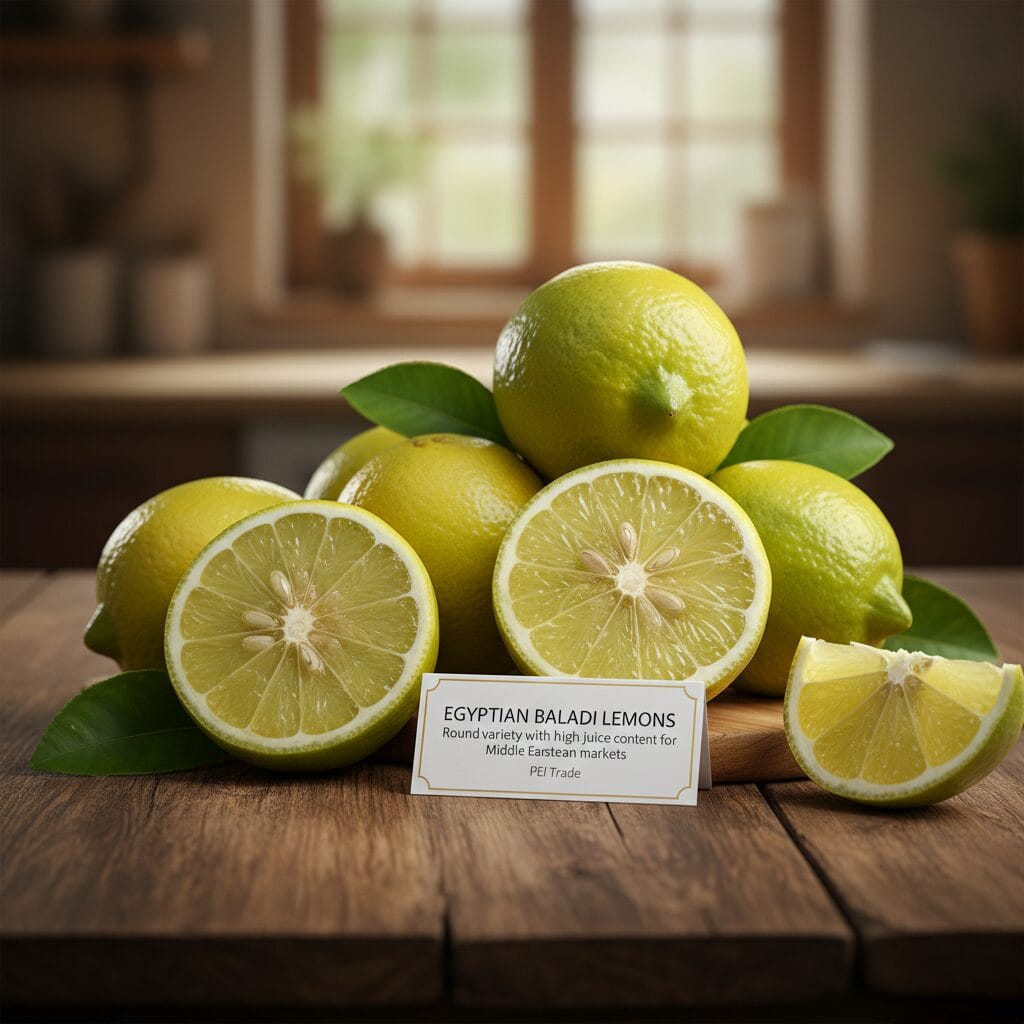
Characteristics:
Best Applications: Juice extraction, Middle Eastern cuisine, industrial processing, markets valuing juice yield over appearance.
Best Markets: Saudi Arabia, UAE, Kuwait, Egypt domestic, North Africa—markets where Baladi is the traditional preference.
| Characteristic | Eureka | Baladi |
|---|---|---|
| Size | 100-180g | 60-120g |
| Shape | Elongated, nipple | Round, smooth |
| Peel Thickness | 4-6mm | 2-4mm |
| Seeds | 0-4 | 5-10 |
| Acidity | 6-7% | 7-8% |
| Juice Content | 30-38% | 35-45% |
| Best For | Retail, garnish, zest | Juice, processing |
| Primary Markets | Europe | GCC, MENA |
Egyptian lemons follow international grading standards with specifications appropriate for each variety and end use.
Lemon sizes are expressed as count per 15kg carton (same as oranges):
| Count | Fruits per 15kg | Approx. Weight | Variety Typical |
|---|---|---|---|
| 75 | 75 | 190-210g | Large Eureka |
| 95 | 95 | 150-165g | Eureka |
| 110 | 110 | 130-145g | Eureka / Large Baladi |
| 125 | 125 | 115-125g | Eureka / Baladi |
| 140 | 140 | 100-110g | Baladi |
| 165 | 165 | 85-95g | Baladi |
| 200 | 200 | 70-80g | Small Baladi |
European Retail: Counts 95-125 most popular for Eureka variety. Uniform sizing expected.
GCC Markets: Wider size range acceptable for Baladi. Value often prioritized over size uniformity.
Processing: All sizes accepted—juice yield matters more than appearance.
Class I (Extra):
Class II (Standard):
Processing Grade:
| Parameter | Eureka | Baladi |
|---|---|---|
| Citric Acid | 6-7% | 7-8% |
| Juice Content | 30-38% | 35-45% |
| Brix | 7-9° | 7-8° |
| Peel Thickness | 4-6mm | 2-4mm |
| Oil Content (peel) | 0.4-0.6% | 0.3-0.4% |
While Egyptian lemons are available year-round, quality characteristics vary by season. Understanding these variations helps buyers set appropriate expectations and pricing.
The primary lemon harvest delivers optimal quality:
Buyers should maximize orders during this window for best quality and value.
Summer production maintains supply but with some quality differences:
Summer lemons are excellent quality and command higher prices due to reduced competition from other origins.
| Period | Quality Level | Color | Pricing |
|---|---|---|---|
| Oct-Dec | ⭐⭐⭐⭐⭐ Excellent | Full yellow | Standard |
| Jan-Apr | ⭐⭐⭐⭐⭐ Excellent | Full yellow | Standard |
| May-Jun | ⭐⭐⭐⭐ Very Good | Yellow-green | Premium |
| Jul-Aug | ⭐⭐⭐⭐ Very Good | More green | Premium |
| Sep | ⭐⭐⭐⭐ Very Good | Transitioning | Moderate |
For detailed planning across all citrus, see our citrus seasonality calendar.
Lemons have unique temperature requirements that differ significantly from oranges and mandarins. Incorrect storage temperature is the most common cause of lemon quality problems.
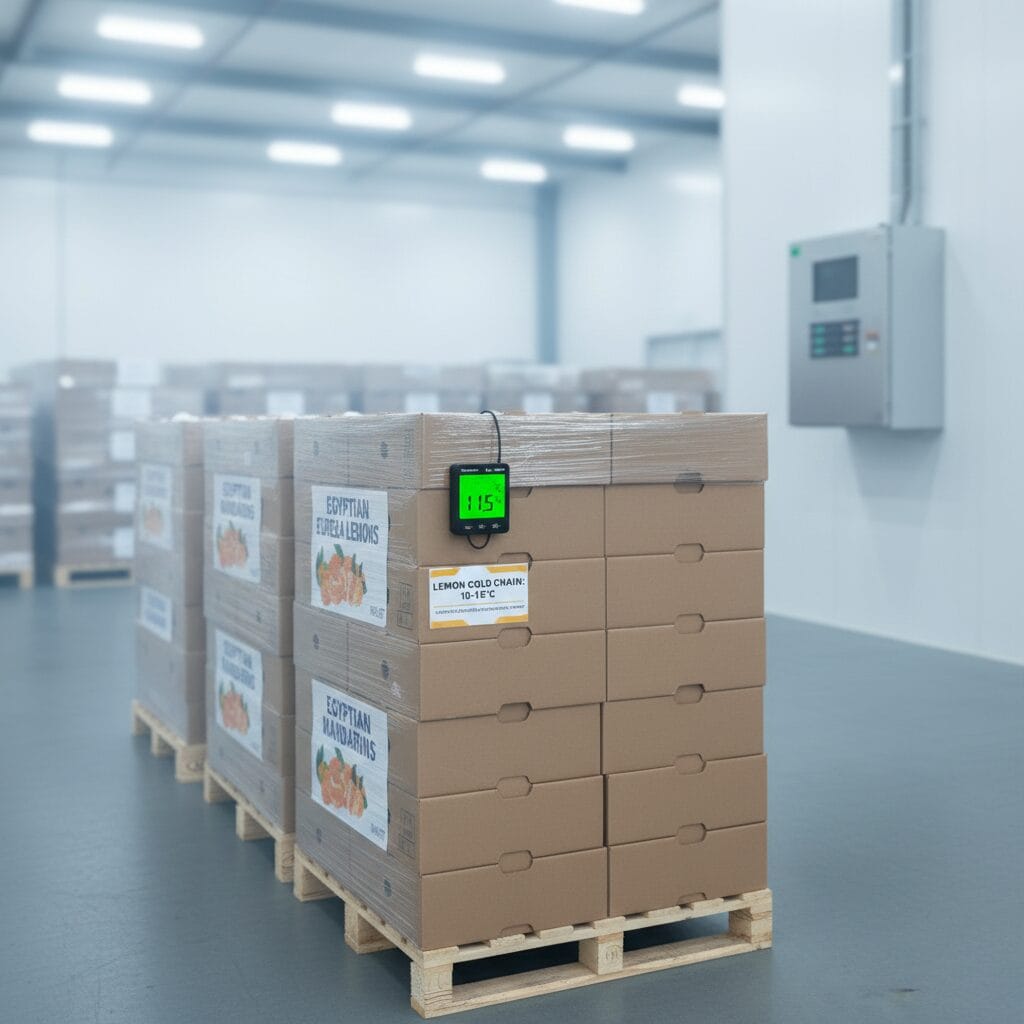
This is critically important: lemons require WARMER storage than oranges.
Warning: Common Mistake! Storing lemons at orange temperatures (5-7°C) causes chilling injury within days. Symptoms include peel pitting, brown staining, off-flavors, and accelerated decay after removal from cold storage. Always store lemons separately from oranges at the correct warmer temperature.
Lemons stored below 10°C develop:
Damage may not be visible immediately but develops within days of temperature abuse.
Maintain 85-90% relative humidity:
When stored correctly at 10-13°C, lemons achieve remarkable longevity:
This exceptional shelf life—the longest among citrus fruits—makes lemons ideal for storage programs and extended distribution chains.
For complete cold chain protocols, see our cold chain guide.
Lemon packaging follows similar standards to oranges, with options for different market channels.
15kg Telescopic Cartons:
10kg Cartons:
400kg Wooden Bins:
Mesh Bags: 500g-1kg bags for supermarket display
Flow-Wrap Trays: Counted lemons (4-6 pieces) for convenience
Bulk Display: Loose fruit for produce department bins
For detailed packaging specifications, see our packaging standards guide.
Egyptian lemons serve diverse global markets with variety selection based on regional preferences.
Europe primarily demands Eureka lemons matching consumer appearance expectations:
United Kingdom: Strong supermarket demand for Eureka. Year-round supply valued. GLOBALG.A.P mandatory. Counts 95-125 preferred.
Germany: Quality-focused with strict specifications. Both retail and foodservice channels active. Competitive with Spanish during overlap seasons.
Netherlands: Distribution hub role—imports for redistribution across EU. Both grades active depending on end channel.
Key Requirements: Eureka variety, Class I for retail, GLOBALG.A.P certification, consistent yellow color.
Gulf countries accept both varieties with Baladi having traditional preference:
Saudi Arabia: Largest GCC lemon market. Baladi preferred for juice and cooking. Foodservice sector significant. Year-round demand.
UAE: Diverse market—Eureka for premium retail/hospitality, Baladi for traditional trade. Dubai hub enables regional distribution.
Kuwait, Qatar, Bahrain: Similar pattern—both varieties active. Summer demand strong for beverages and hospitality.
Key Requirements: Competitive pricing, reliable summer supply, both varieties available.
Juice processors and industrial users source Egyptian lemons for:
Processing buyers prioritize juice content and acidity over appearance, accepting processing grade fruit at competitive pricing.
Egyptian lemon exports maintain standard citrus certifications.
Essential for European retail access:
Available upon request:
PEI Trade provides year-round Egyptian lemon supply with both Eureka and Baladi varieties to serve diverse market requirements.
Year-Round Production: Our farm network ensures continuous Egyptian lemon availability every month. No seasonal gaps mean reliable supply for your programs regardless of timing.
Both Varieties: We grow and pack both Eureka and Baladi lemons, allowing single-supplier convenience for buyers serving multiple markets or channels.
Temperature Expertise: We understand Egyptian lemons’ critical 10-13°C storage requirement. Separate cold rooms, trained staff, and monitoring systems ensure proper temperature management throughout our operations.
Quality Consistency: Optical sorting for size accuracy, manual inspection for quality verification, and testing for acidity and juice content deliver consistent product meeting your specifications.
Summer Supply Strength: Our production capability maintains supply during premium summer months when competitors face seasonal gaps. Secure your summer lemon requirements with confidence.
Ready to discuss your lemon requirements? View our Lemons product page for specifications and inquiry options.
Yes, Egypt maintains genuine 12-month lemon production through multiple growing regions with staggered harvest cycles. While peak quality comes October through April, summer production (May-September) continues from different orchards and later-maturing fruit. This year-round availability is a significant competitive advantage versus seasonal origins like Spain or Turkey.
Lemons are extremely sensitive to chilling injury below 10°C. Unlike oranges (which store at 5-7°C), lemons stored too cold develop peel pitting, brown staining, and internal damage within days. This damage often isn’t visible until fruit returns to room temperature, by which time quality is compromised. Always store lemons at 10-13°C in separate cold rooms from oranges.
Eureka lemons are the elongated, thick-skinned variety with few seeds—the standard “lemon” appearance for European markets. Baladi lemons are rounder, thinner-skinned, more acidic, with more seeds but higher juice content—preferred in Middle Eastern markets. Eureka excels for retail appearance and zesting; Baladi excels for juice extraction and intense lemon flavor.
Properly stored at 10-13°C with 85-90% humidity, lemons can last up to 6 months—far longer than any other citrus fruit. This exceptional shelf life makes lemons ideal for storage programs and extended supply chains. However, fruit held this long should be for processing rather than fresh retail, where consumers expect fresher appearance.
Egyptian Eureka lemons are available in counts from 75 (largest, 190-210g per fruit) to 140 (smaller, 100-110g). European retail typically requests counts 95-125 for optimal size-value perception. We can accommodate specific size requirements—communicate your preferred count range when ordering.
PEI Trade has limited organic lemon production available. Organic volumes are smaller than conventional and require advance booking. Contact our sales team for current organic availability, pricing, and certification documentation.
Whether you need year-round Eureka lemons for European retail or Baladi lemons for GCC distribution, PEI Trade delivers consistent supply with quality assurance.
For your quote, please specify:
Contact PEI Trade:
Email: sales@peitrade.com
WhatsApp: +201099111918
Office: +201099111918
Website: www.peitrade.com
Join buyers across Europe and the Middle East who rely on PEI Trade for consistent year-round Egyptian lemon supply. Our team is ready to support your lemon sourcing needs.