Address
Work Hours
Monday to Friday: 7AM - 7PM
Weekend: 10AM - 5PM

Address
Work Hours
Monday to Friday: 7AM - 7PM
Weekend: 10AM - 5PM


Egyptian mandarins deliver the easy-peel convenience and sweet flavor that consumers worldwide love, making them a premium citrus category with strong retail demand. Egypt produces two distinct mandarin varieties—traditional Baladi and modern Fremont—each serving different market preferences and positioning strategies.
This guide provides complete specifications for international buyers sourcing Egyptian mandarins, covering variety differences, size grades, seasonal availability, and handling requirements. For comprehensive information on all Egyptian citrus, see our Complete Egyptian Citrus Export Guide.
Whether you’re targeting European retail with seedless Fremont mandarins or serving traditional GCC markets with aromatic Baladi, understanding these varieties helps you select the right product for your customers.
Egypt’s two mandarin varieties offer distinct characteristics that suit different markets and consumer preferences. Choosing the right variety is essential for successful market positioning.
Baladi mandarins represent Egypt’s heritage citrus variety, cultivated for generations and beloved for their intense, aromatic flavor that modern varieties struggle to match.
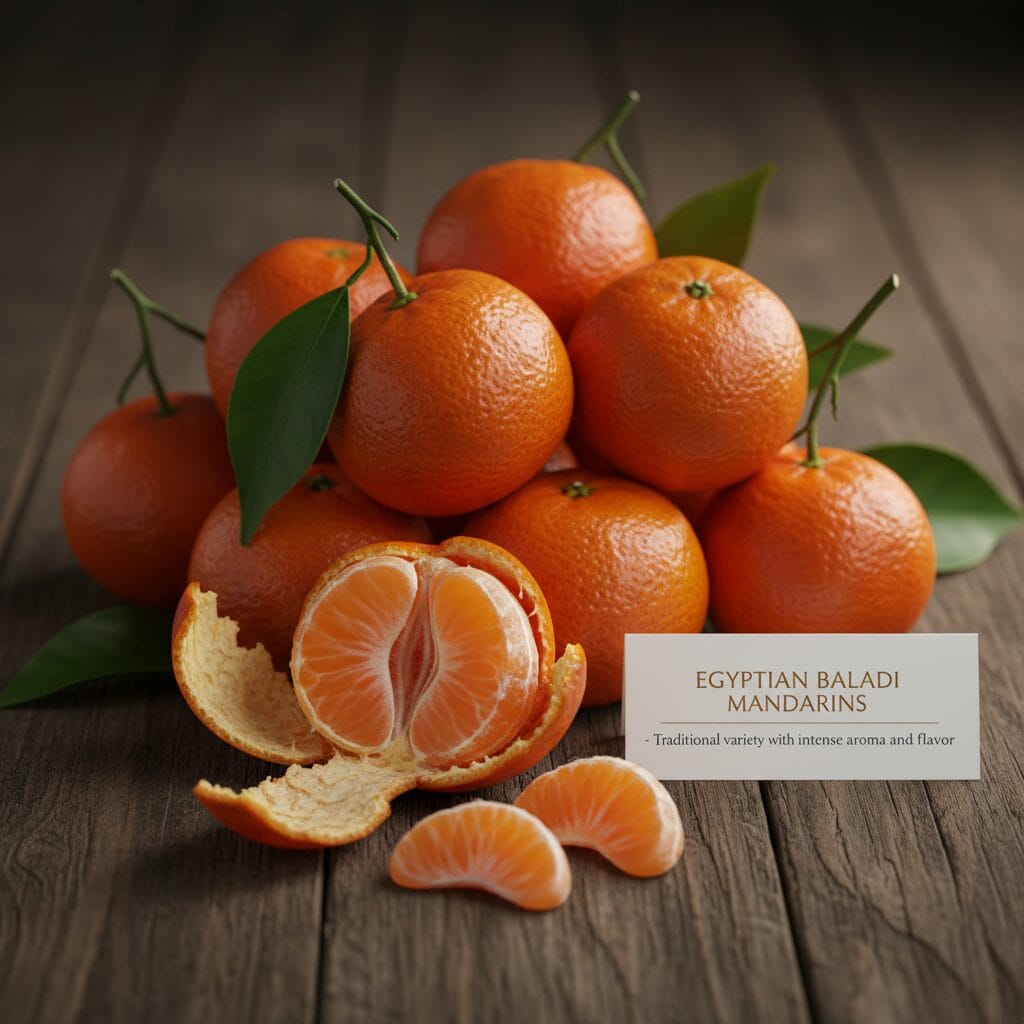
Characteristics:
Best Markets: GCC countries (Saudi Arabia, UAE, Kuwait) where traditional mandarin flavor is highly valued. Middle Eastern markets familiar with Baladi appreciate its authentic taste. Specialty retailers and ethnic markets in Europe seeking distinctive citrus.
Considerations: Shorter shelf life than Fremont (4-6 weeks). More delicate handling required due to thin skin. Seeds may limit appeal in markets preferring seedless fruit.
Fremont mandarins originated in California and have been successfully cultivated in Egypt to meet international demand for seedless, easy-peel citrus with excellent shelf life.
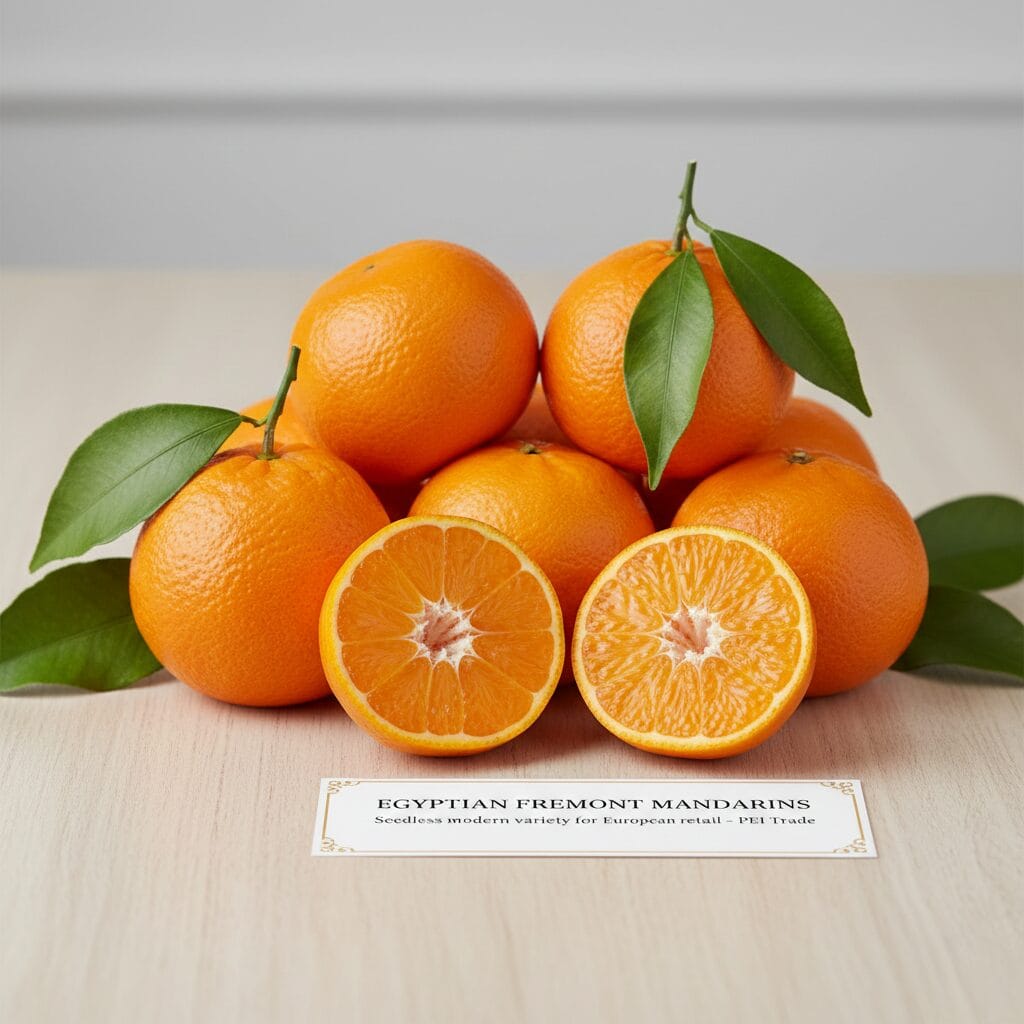
Characteristics:
Best Markets: European retail (UK, Germany, Netherlands) where seedless convenience is expected. Modern supermarket channels globally. Markets prioritizing shelf life and handling durability. Premium positioning alongside Spanish clementines.
Advantages: Extended shelf life (6-8 weeks). Better transport durability. Seedless appeal for retail. Consistent appearance for supermarket standards.
| Characteristic | Baladi Mandarin | Fremont Mandarin |
|---|---|---|
| Origin | Traditional Egyptian | California (grown in Egypt) |
| Size | 80-120g | 100-150g |
| Seeds | 2-4 | 0-2 (mostly seedless) |
| Peel | Very thin, loose | Medium, firmer |
| Flavor | Intense, aromatic | Sweet, balanced |
| Shelf Life | 4-6 weeks | 6-8 weeks |
| Brix | 11-13° | 10-12° |
| Best For | GCC, traditional markets | Europe, modern retail |
| Price Position | Value to mid-range | Mid-range to premium |
Egyptian mandarins follow international grading standards with size expressed as count per carton. Due to their smaller size and delicate nature, mandarins use different packaging specifications than oranges.
Mandarin sizes are expressed as fruits per 10kg carton (note: 10kg standard for mandarins, not 15kg like oranges):
| Count | Fruits per 10kg | Approx. Weight/Fruit | Variety Typical |
|---|---|---|---|
| 1X | 60-70 | 140-165g | Large Fremont |
| 1 | 70-80 | 125-140g | Fremont |
| 2 | 80-95 | 105-125g | Fremont / Large Baladi |
| 3 | 95-110 | 90-105g | Baladi / Small Fremont |
| 4 | 110-130 | 75-90g | Baladi |
| 5 | 130-150 | 65-75g | Small Baladi |
European Preferences: Sizes 1-2 (larger fruit) preferred for retail, particularly Fremont variety. Uniform sizing within cartons expected.
GCC Preferences: Sizes 2-4 acceptable, Baladi variety valued regardless of size. Family packs and bulk purchasing common.
Class I (Extra):
Class II (Standard):
| Parameter | Baladi | Fremont |
|---|---|---|
| Brix (Sugar) | 11-13° | 10-12° |
| Acidity | 0.7-1.0% | 0.6-0.9% |
| Juice Content | 40-50% | 35-45% |
| Peel Thickness | 1-2mm | 2-3mm |
| Seeds per Fruit | 2-4 | 0-2 |
Egyptian mandarins have a concentrated season compared to oranges, making timing critical for successful procurement.
The Egyptian mandarin season spans five months with distinct quality phases:
November (Early Season): First Baladi mandarins reach market. Color developing (60-70% orange). Brix building (9-10°). Limited volumes, premium early-season pricing. Fremont harvest begins late November.
December-January (Peak Season): Optimal quality window for both varieties. Full color development. Maximum sweetness (Baladi 12-13° Brix, Fremont 11-12° Brix). Highest volumes available. Best balance of quality and pricing.
February (Late Peak): Excellent quality continues. Baladi season winding down. Fremont remains strong. Good availability for both varieties.
March (Season End): Final mandarin harvest. Baladi largely finished. Late Fremont available. Quality acceptable but volumes limited. Last opportunity before 8-month gap until next season.
For planning across all citrus varieties, see our citrus seasonality calendar.
The three-month peak window delivers optimal mandarin quality:
Buyers seeking consistent mandarin supply should structure programs around this peak period, with advance booking recommended for large volumes.
| Month | Baladi | Fremont |
|---|---|---|
| November | ✅ Early harvest | ⚠️ Starting late month |
| December | ✅ Peak | ✅ Peak |
| January | ✅ Peak | ✅ Peak |
| February | ⚠️ Ending | ✅ Good |
| March | ❌ Finished | ⚠️ Late season |
Mandarins require specialized packaging due to their thin, delicate skin and sensitivity to pressure damage. Proper packaging is essential for maintaining quality during export.
Unlike oranges (15kg cartons), mandarins use 10kg cartons to reduce pressure on fruit:
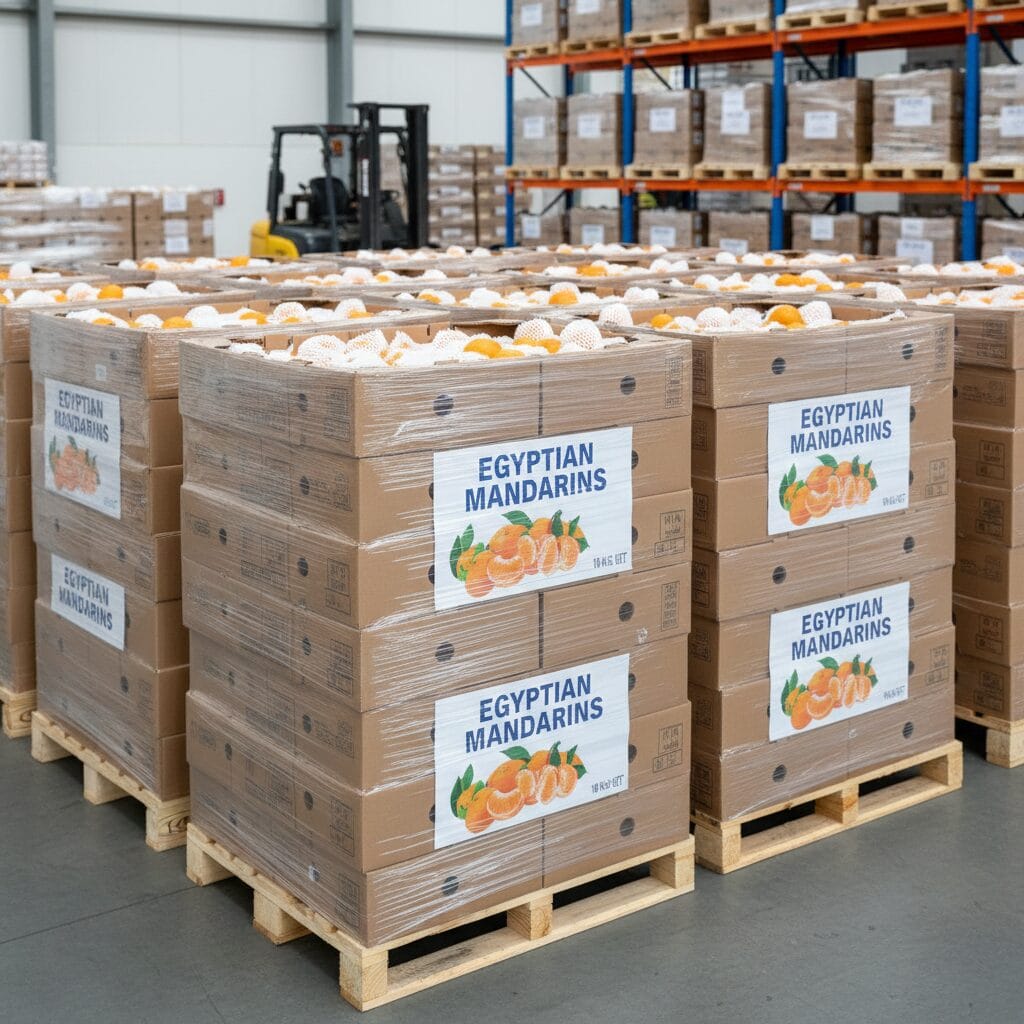
The reduced weight prevents lower layers from crushing under pressure—critical for thin-skinned mandarins.
Clamshell Punnets: 500g-1kg clear plastic containers for premium retail. Protects individual fruits, attractive display, portion-controlled.
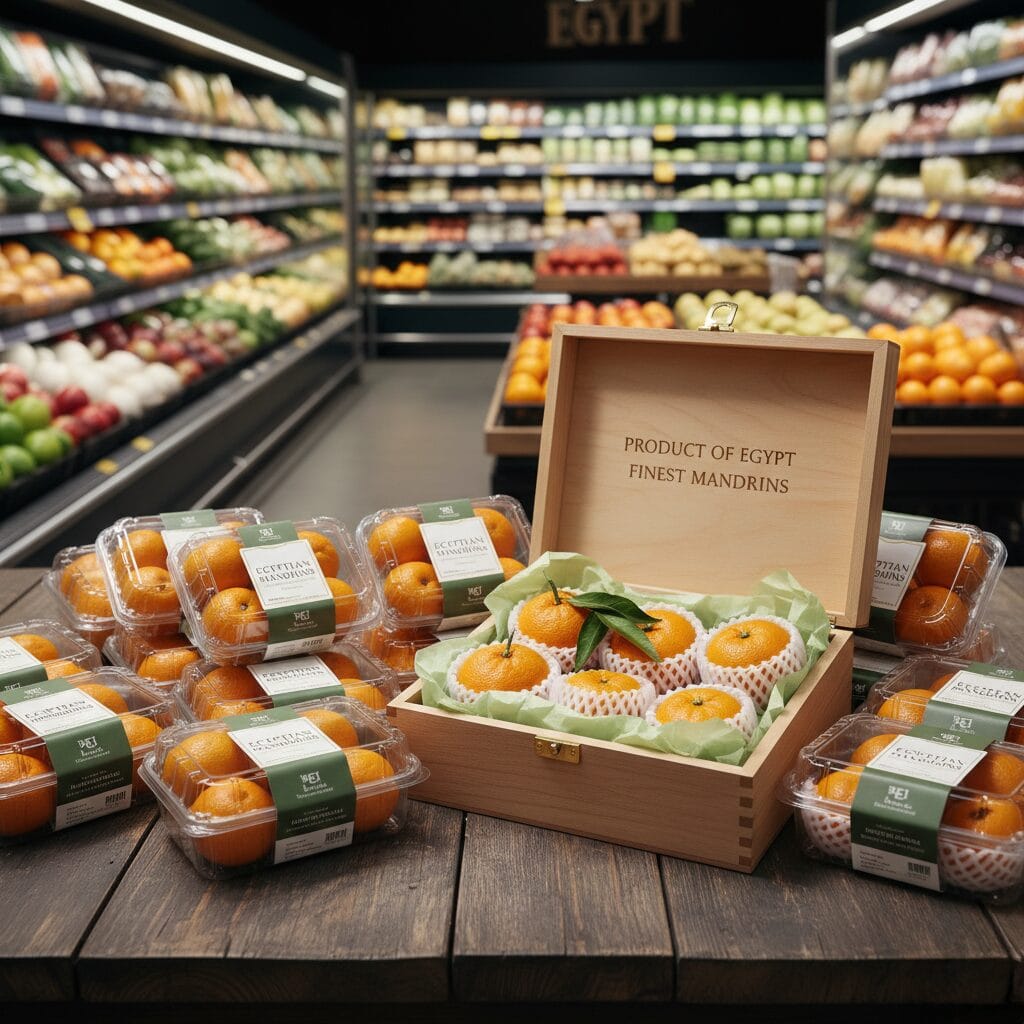
Flow-Wrap Trays: 750g-1kg trays wrapped in printed film. Retail-ready, branded presentation, protects during handling.
Gift Boxes: 2-5kg decorative cartons for holiday gifting, especially popular in GCC markets during Ramadan and national celebrations.
Mandarins require more careful handling than oranges:
For complete packaging specifications, see our packaging standards guide.
Proper temperature and humidity management is especially critical for mandarins due to their thin skin and shorter shelf life compared to oranges.
Mandarins require slightly cooler storage than oranges:
The cooler temperature slows respiration and decay development, extending the naturally shorter shelf life of mandarins.
Higher humidity than oranges is essential for mandarins:
| Stage | Baladi | Fremont |
|---|---|---|
| Cold Storage | 3-4 weeks | 5-6 weeks |
| Transit | 1-2 weeks | 2-3 weeks |
| Post-Arrival | 1-2 weeks | 2-3 weeks |
| Total Potential | 4-6 weeks | 6-8 weeks |
Baladi’s shorter shelf life requires faster distribution chains—prioritize GCC and nearby European markets over distant destinations.
For detailed cold chain protocols, refer to our cold chain guide.
Egyptian mandarins serve distinct market segments based on variety characteristics and consumer preferences.
European buyers predominantly prefer Fremont mandarins for their seedless convenience and longer shelf life:
United Kingdom: Strong supermarket demand for easy-peel citrus. Fremont competes with Spanish clementines. Class I quality essential. Sizes 1-2 preferred for retail.
Germany: Quality-focused market. Seedless expectation strong. Competitive pricing environment with Spanish suppliers. GLOBALG.A.P mandatory for major retailers.
Netherlands: Distribution hub for European mandarin trade. Both Fremont and some Baladi for specialty channels. Flexible on grades depending on end market.
Key Requirements: Seedless or near-seedless fruit, consistent sizing, excellent appearance, GLOBALG.A.P certification.
Gulf markets value traditional Baladi flavor that connects with regional taste preferences:
Saudi Arabia: Largest GCC mandarin market. Baladi variety highly valued for traditional flavor. Family-size packaging popular. Both Class I and II grades active.
UAE: Diverse market accepting both varieties. Premium retail prefers Fremont for appearance. Traditional markets and ethnic channels favor Baladi. Dubai redistribution reaches regional markets.
Kuwait, Qatar: Strong Baladi preference. Premium pricing for quality fruit. Shorter shipping distance preserves delicate Baladi quality.
Key Requirements: Authentic flavor (Baladi), competitive pricing, family-size options, faster delivery for shelf life optimization.
| Market | Preferred Variety | Key Factor | Grade |
|---|---|---|---|
| UK | Fremont | Seedless | Class I |
| Germany | Fremont | Quality + Price | Class I |
| Netherlands | Both | Distribution | Class I & II |
| Saudi Arabia | Baladi | Traditional flavor | Class I & II |
| UAE | Both | Market dependent | Class I |
| Kuwait | Baladi | Flavor preference | Class I |
Egyptian mandarin exports require standard citrus certifications with particular attention to handling and quality documentation.
Essential for European retail access:
Standard phytosanitary certification for each shipment:
Buyers may request additional quality documentation:
PEI Trade offers both Baladi and Fremont mandarins with the quality focus and handling expertise these delicate fruits require.
Both Varieties Available: We grow and pack both Baladi and Fremont mandarins, allowing buyers to source either variety or mix based on market needs—single supplier convenience with variety flexibility.
Specialized Handling: Our packhouse team understands mandarin sensitivity. Gentle handling protocols, appropriate packaging materials, and careful cold chain management protect quality throughout the export process.
Quality Selection: Optical sorting ensures consistent size grading. Manual inspection catches the subtle defects that affect thin-skinned mandarins. Only export-quality fruit proceeds to packing.
Fast Cold Chain: Pre-cooling within 12 hours of harvest. Temperature-controlled storage. Reefer transport to port. We understand that mandarin quality depends on unbroken cold chain from tree to container.
Market Knowledge: Years of serving both European and GCC markets means we understand what each requires—seedless Fremont for UK supermarkets, aromatic Baladi for Saudi traditional trade, appropriate packaging for each channel.
Ready to source Egyptian mandarins? View our Mandarins product page for specifications and inquiry options.
Baladi is Egypt’s traditional mandarin variety—smaller, intensely aromatic, with 2-4 seeds and exceptional flavor but shorter shelf life (4-6 weeks). Fremont is a modern California variety grown in Egypt—larger, nearly seedless (0-2 seeds), milder flavor but longer shelf life (6-8 weeks). Baladi suits traditional markets valuing flavor; Fremont suits European retail requiring seedless convenience.
Fremont mandarins are predominantly seedless, with most fruit containing zero seeds. Occasionally, individual fruits may contain 1-2 seeds due to cross-pollination. For marketing purposes, Fremont can be labeled “seedless” as the seed occurrence is minimal and random. This is comparable to other “seedless” mandarin varieties globally.
Mandarins have thin, delicate skin that bruises easily under pressure. The smaller 10kg carton weight reduces pressure on bottom-layer fruit, preventing crush damage during stacking and transport. This packaging standard is used industry-wide for easy-peel citrus varieties including clementines and satsumas.
Fremont mandarins have significantly better shelf life at 6-8 weeks compared to Baladi’s 4-6 weeks. Fremont’s slightly thicker, firmer peel provides better protection against moisture loss and handling damage. For distant markets or longer distribution chains, Fremont is the safer choice.
No, Egyptian mandarins are seasonal from November through March only. There is no Egyptian mandarin production from April through October. Buyers requiring year-round mandarin supply must source from other origins during the off-season (Southern Hemisphere suppliers May-October, Spanish production September-February overlaps partially).
Standard minimum order is one 40-foot reefer container, approximately 20-22 tons in 10kg cartons. Mixed containers combining mandarins with oranges or lemons are possible for buyers wanting variety within a single shipment—contact our sales team to discuss options.
Whether you need Baladi mandarins for GCC markets or Fremont for European retail, PEI Trade delivers the quality and variety selection you require.
For your quote, please specify:
Contact PEI Trade:
Email: sales@peitrade.com
WhatsApp: +201099111918
Office: +201099111918
Website: www.peitrade.com
Join buyers across Europe and the Middle East who source premium Egyptian mandarins from PEI Trade. Our team is ready to help you find the right variety for your market.