Address
Work Hours
Monday to Friday: 7AM - 7PM
Weekend: 10AM - 5PM
Address
Work Hours
Monday to Friday: 7AM - 7PM
Weekend: 10AM - 5PM


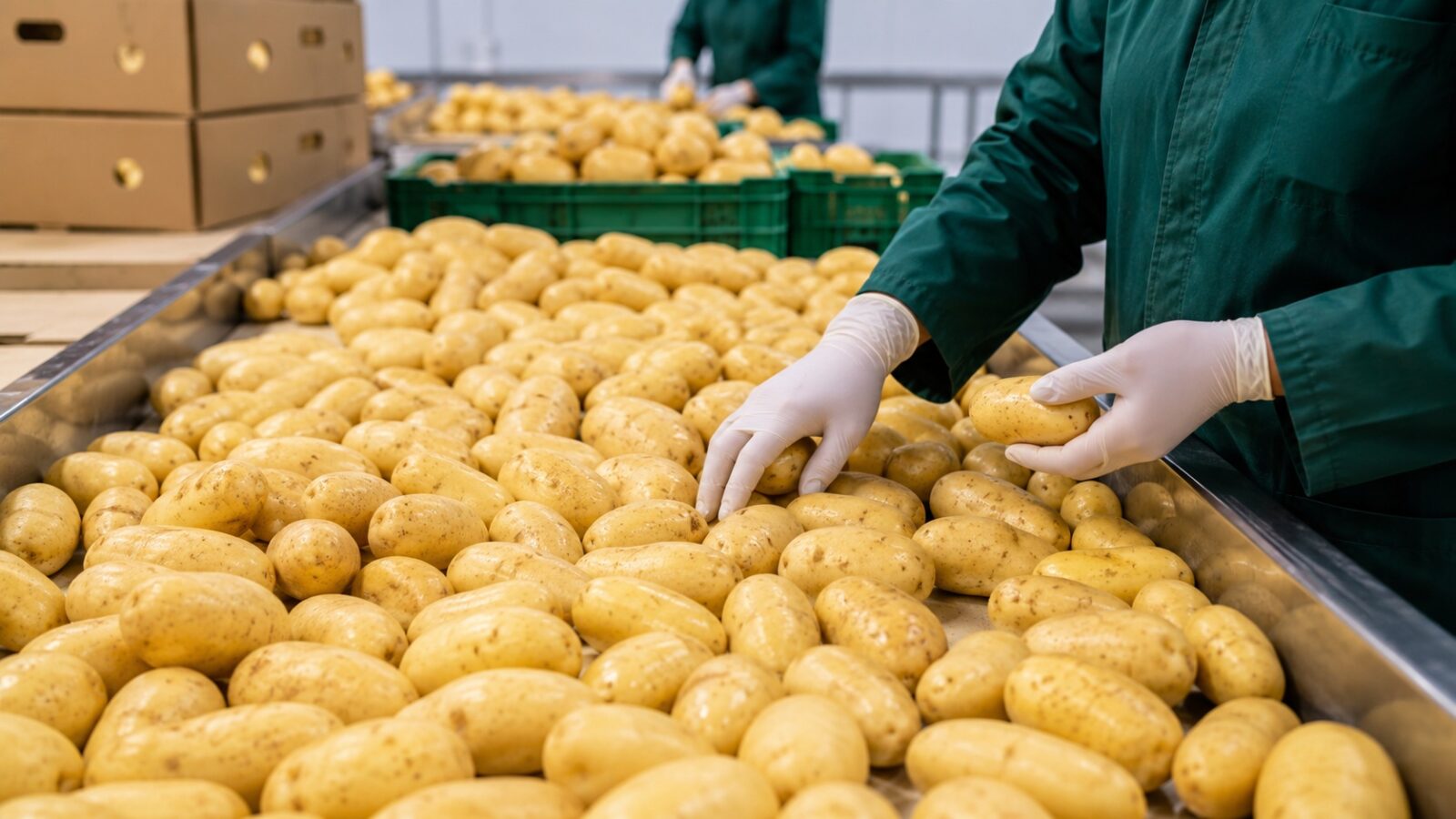
The Netherlands is the gateway for Egyptian ware potatoes into the European Union. There is a neat two-way logic to the relationship: Egypt is a major buyer of Dutch seed potatoes, and in return it ships early-season ware potatoes into the Netherlands from late winter to spring — landing before the European new crop and feeding Rotterdam’s importers and pan-EU re-export. Egypt is one of the largest non-EU suppliers of fresh potatoes to the bloc. This guide covers the best varieties, logistics, EU market requirements, the season calendar, and how to open a supply program. HS code 0701.90.
The Netherlands is Europe’s produce hub, and its importers value origins that can fill the gap before the EU’s own new-crop potatoes arrive. Egypt is ideally placed: its winter and spring harvests supply firm, fresh table potatoes from roughly February to May, ahead of northern-European lifting. Dutch buyers take Egyptian volume both for domestic packing and to re-distribute across the EU.
The link runs both ways — Egypt is a large importer of certified Dutch seed potatoes, which underpins the quality of the ware crop it later exports. As one of the largest non-EU fresh-potato suppliers to the bloc, Egypt offers the Netherlands reliable early-season volume and clean, calibre-graded product.
| Variety | Profile | EU fit |
|---|---|---|
| Spunta | Long oval, yellow flesh, versatile table potato | ★★★ Early-crop table workhorse |
| Diamant | Oval, firm, good keeping quality | ★★★ Table & retail pack |
| Cara | Round-oval, white skin, robust | ★★ Reliable table option |
| Lady Rosetta / Hermes | High dry matter | ★★ Crisping / processing |
For full variety detail see the Egyptian potato export guide and the Egyptian Potato Export Report.
| Period | Egyptian crop | Netherlands notes |
|---|---|---|
| Jan–Feb | Winter crop harvest | Early window opens ahead of EU new crop |
| Mar–May | Main spring crop | Peak export to Rotterdam & EU re-export |
| Jun onward | Season tapers | EU domestic new crop takes over |
Egypt’s winter and spring harvests supply fresh early-season ware potatoes from about February to May, ahead of the European new crop. Dutch importers take them for domestic packing and pan-EU re-export via Rotterdam, and Egypt is one of the largest non-EU fresh-potato suppliers to the bloc.
Yes — Egypt is a major buyer of certified Dutch seed potatoes, which underpin the quality of the ware crop it later exports back into the EU.
By reefer/ventilated sea freight from Alexandria or Damietta to Rotterdam, carried at about 4–8 °C in 25 kg mesh/jute bags, retail pre-pack or bulk bins.
A phytosanitary certificate meeting EU plant-health rules including the brown rot/ring rot protocol, EU MRL compliance with traceability, EU grading, and farm/packhouse food-safety certification.
Building a Netherlands potato program? PEI Trade supplies early-season Spunta, Diamant and Cara ware potatoes with calibre grading, EU plant-health compliance, traceable documentation and ventilated delivery to Rotterdam. Tell us your variety, calibre, pack format and delivery window for a compliant offer.
PEI Trade. “Egyptian Potato Exports to the Netherlands: EU Early-Crop Guide.” peitrade.com, 2026, https://peitrade.com/egyptian-potato-exports-to-netherlands/
Sources: OEC / WITS Egypt potatoes trade (EU early-season supply, HS 0701.90); Tridge Egypt fresh-potato market overview; EU plant-health import requirements for Egyptian potatoes (brown rot protocol). Country-level Netherlands volume qualitative. HS code 0701.90.
PEI Trade · New Cairo, Egypt · [email protected] · WhatsApp +20 109 911 1918 · www.peitrade.com · Brand: nile-prime.com · Ports: Alexandria, Damietta, Sokhna, Port Said (Incoterms 2020)