Address
Work Hours
Monday to Friday: 7AM - 7PM
Weekend: 10AM - 5PM

Address
Work Hours
Monday to Friday: 7AM - 7PM
Weekend: 10AM - 5PM


Egyptian Valencia oranges are the backbone of the global juice industry and a vital summer citrus option for fresh markets worldwide. When Navel orange season ends in April, Valencia oranges step in to maintain Egypt’s year-round citrus supply, offering exceptional juice content and versatility that processors and fresh market buyers depend on.
This comprehensive guide covers everything international buyers need to know about sourcing Egyptian Valencia oranges—from juice yield specifications and seasonal timing to quality standards and processing applications. For complete information on all Egyptian citrus varieties, refer to our Complete Egyptian Citrus Export Guide.
Whether you’re sourcing Valencia oranges for juice extraction, comparing them to Navel oranges for your product portfolio, or seeking summer fresh orange supply, this guide delivers the technical specifications and market insights you need.
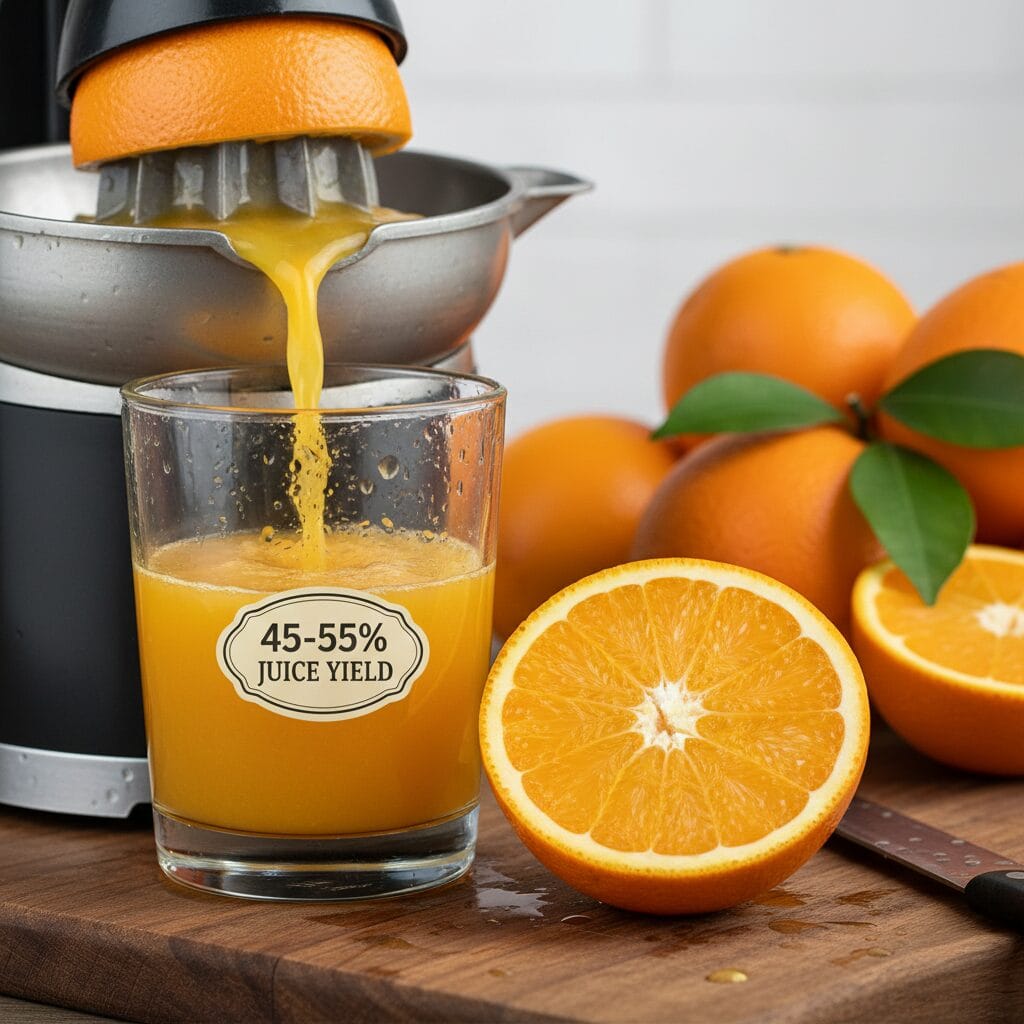
Valencia oranges have earned their reputation as the world’s premier juice orange through a combination of high juice yield, excellent flavor, and extended availability. Understanding these characteristics helps buyers select the right variety for their specific applications.
The defining advantage of Valencia oranges is their exceptional juice yield. While Navel oranges typically deliver 35-45% juice content, Valencia oranges consistently achieve 45-55% juice extraction rates. This 10-15% improvement in juice yield translates directly to processing efficiency and cost savings for juice manufacturers.
For a juice processor handling 1,000 tons of oranges, the difference between 40% and 50% juice yield represents an additional 100,000 liters of juice—a substantial economic advantage that makes Valencia the preferred variety for commercial juice production worldwide.
Valencia orange juice delivers the classic orange juice flavor consumers expect. The variety achieves optimal Brix levels of 12-14° during peak season, with balanced acidity of 0.9-1.3% creating the perfect sweet-tart ratio for both fresh-squeezed and processed juice applications.
The juice maintains excellent color stability—a critical factor for processors. Valencia juice retains its bright orange hue without the bitter compounds that can develop in Navel orange juice when exposed to air, making Valencia superior for any application where juice will be stored or processed.
Egyptian Valencia oranges fill a critical market gap by providing fresh Egyptian oranges from March through August—the months when Navel oranges are out of season. This extended availability makes Valencia essential for:
Egypt’s competitive advantage during summer months is particularly strong, as Northern Hemisphere competitors have finished their seasons while Southern Hemisphere fruit faces longer shipping distances to European and Middle Eastern markets.
Egyptian Valencia oranges feature a thinner, tighter-fitting peel measuring 2-4mm compared to Navel’s 4-6mm thickness. While this thinner skin requires more careful handling, it provides advantages for processing:
For fresh market applications, the thin peel is slightly more challenging to remove by hand, but many consumers prefer using Egyptian Valencia oranges for juicing at home precisely because of their superior juice yield.
Understanding Valencia orange specifications helps buyers communicate requirements clearly and ensures delivered fruit meets expectations for processing or fresh market use.
Valencia orange sizes follow the same count-per-carton system as other citrus, though size preferences differ between processing and fresh market applications:
| Count | Fruits per 15kg Carton | Approx. Weight/Fruit | Primary Application |
|---|---|---|---|
| 40 | 40 | 360-400g | Premium fresh market |
| 48 | 48 | 300-330g | Fresh market retail |
| 56 | 56 | 255-285g | Fresh market / Juice |
| 64 | 64 | 220-250g | Fresh market / Juice |
| 72 | 72 | 195-220g | Juice processing |
| 88 | 88 | 160-180g | Juice processing |
| 100 | 100 | 140-160g | Juice processing |
| 113+ | 113+ | Under 140g | Juice processing |
Processing Buyers: Juice processors typically accept all sizes, with smaller fruit often more economical per ton. Size uniformity is less critical when fruit will be juiced.
Fresh Market Buyers: Counts 48-64 serve retail applications, with 56 being particularly popular for summer fresh orange programs in Europe.
Egyptian Valencia oranges follow standard international grading aligned with Codex Alimentarius specifications:
Class I (Extra Grade):
Class II (Standard Grade):
Processing Grade:
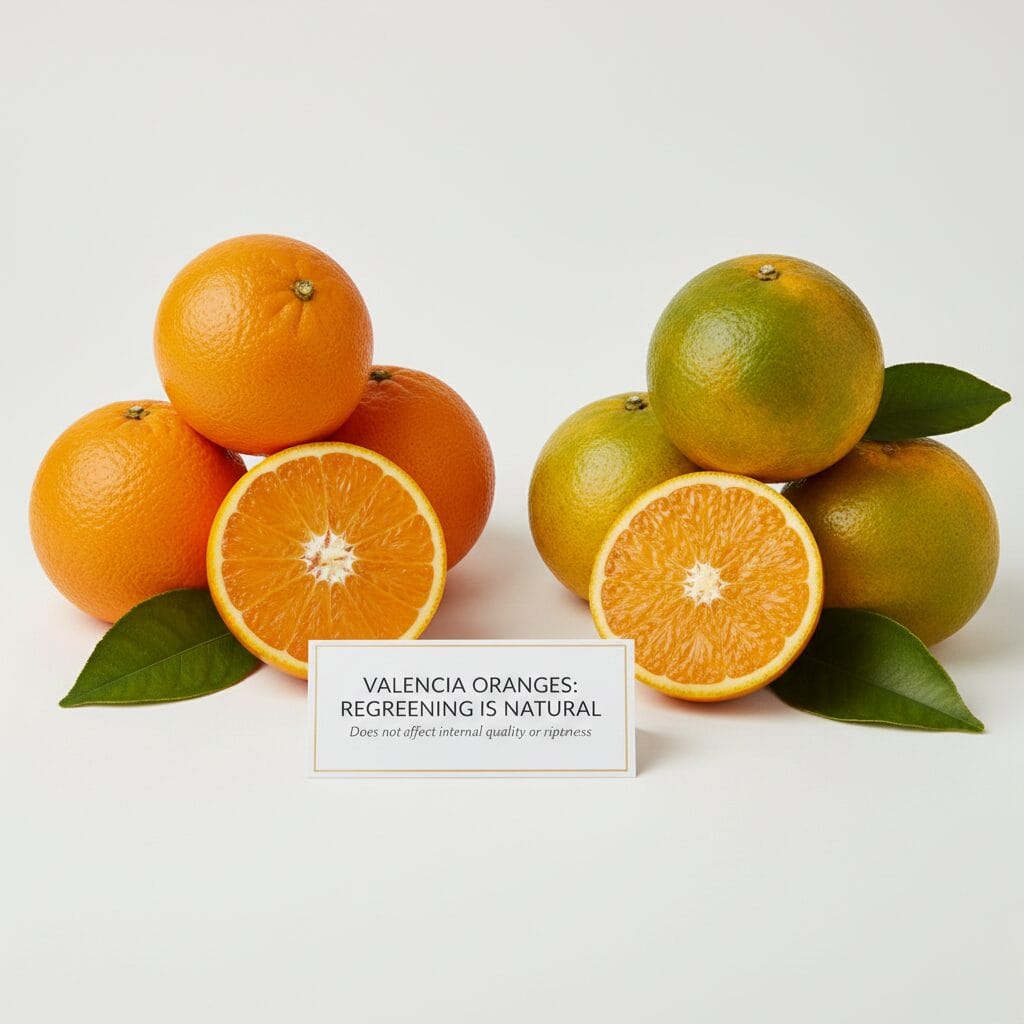
Late-season Egyptian Valencia oranges (May-August) may exhibit “regreening”—a natural phenomenon where mature, internally ripe fruit develops green patches on the peel. This occurs because warm temperatures trigger chlorophyll production in the peel even after the fruit has fully ripened internally.
Important: Regreening does NOT indicate immaturity or poor quality. Regreened Egyptian Valencia oranges have full sugar development, optimal juice content, and excellent flavor. The green coloration is purely cosmetic.
For juice processing, regreening is irrelevant—only internal quality matters. For fresh markets, some buyers accept regreened fruit at discounted pricing, while others require fully orange fruit. Communicate your color requirements clearly when ordering.
| Parameter | Minimum | Optimal Range | Peak Season |
|---|---|---|---|
| Brix (Sugar) | 10° | 11-13° | 13-14° |
| Acidity | 0.7% | 0.9-1.3% | 1.0-1.2% |
| Brix/Acid Ratio | 9:1 | 10-13:1 | 11-13:1 |
| Juice Content | 40% | 45-55% | 50-55% |
| Peel Thickness | 2mm | 2-4mm | 2-3mm |
| Seeds | – | 3-6 | 3-6 |
Note on Seeds: Unlike seedless Navel oranges, Egyptian Valencia oranges naturally contain 3-6 seeds. This is normal for the variety and does not affect juice quality—seeds are removed during extraction. For fresh eating, the seeds are a minor inconvenience that most consumers accept given Valencia’s superior juiciness.
Strategic timing of Valencia orders ensures access to optimal quality fruit and competitive pricing. The Valencia season complements Navel season, enabling year-round Egyptian orange supply.
Egyptian Valencia orange harvest spans six months with evolving quality characteristics:
March-April (Early Season): First Valencia harvest overlaps with late Navel season. Brix levels building (10-11°), juice content developing. Good option for buyers transitioning from Navel to Valencia without supply gaps. Color typically excellent (full orange).
May-June (Peak Season): Optimal quality window for Valencia oranges. Brix reaches peak levels (12-14°), juice content maximized (50-55%), perfect sugar-acid balance for processing. Some regreening may begin in June. Highest volumes available, competitive pricing.
July-August (Late Season): Final Valencia harvest. Quality remains strong internally but regreening more pronounced. Fruit may show 30-50% green coloration while maintaining excellent juice quality. Volumes declining, pricing may increase as season ends. Last opportunity before September-November citrus gap.
For detailed planning across all citrus varieties, consult our citrus seasonality calendar.
The two-month peak period (May-June) delivers optimal Valencia quality:
Juice processors should plan their Valencia procurement around this window, potentially booking annual contracts to secure allocation during peak harvest.
| Month | Navel Oranges | Valencia Oranges | Recommendation |
|---|---|---|---|
| December | ✅ Peak start | ❌ Not available | Navel only |
| January | ✅ Peak | ❌ Not available | Navel only |
| February | ✅ Peak | ❌ Not available | Navel only |
| March | ✅ Late season | ✅ Early season | Transition period |
| April | ⚠️ Season end | ✅ Building | Switch to Valencia |
| May | ❌ Finished | ✅ Peak | Valencia only |
| June | ❌ Finished | ✅ Peak | Valencia only |
| July | ❌ Finished | ✅ Late season | Valencia only |
| August | ❌ Finished | ⚠️ Season end | Last Valencia |
Combining Navel (December-April) with Valencia (March-August) provides 9 months of continuous Egyptian orange availability—a significant advantage for buyers seeking reliable year-round supply from a single origin.
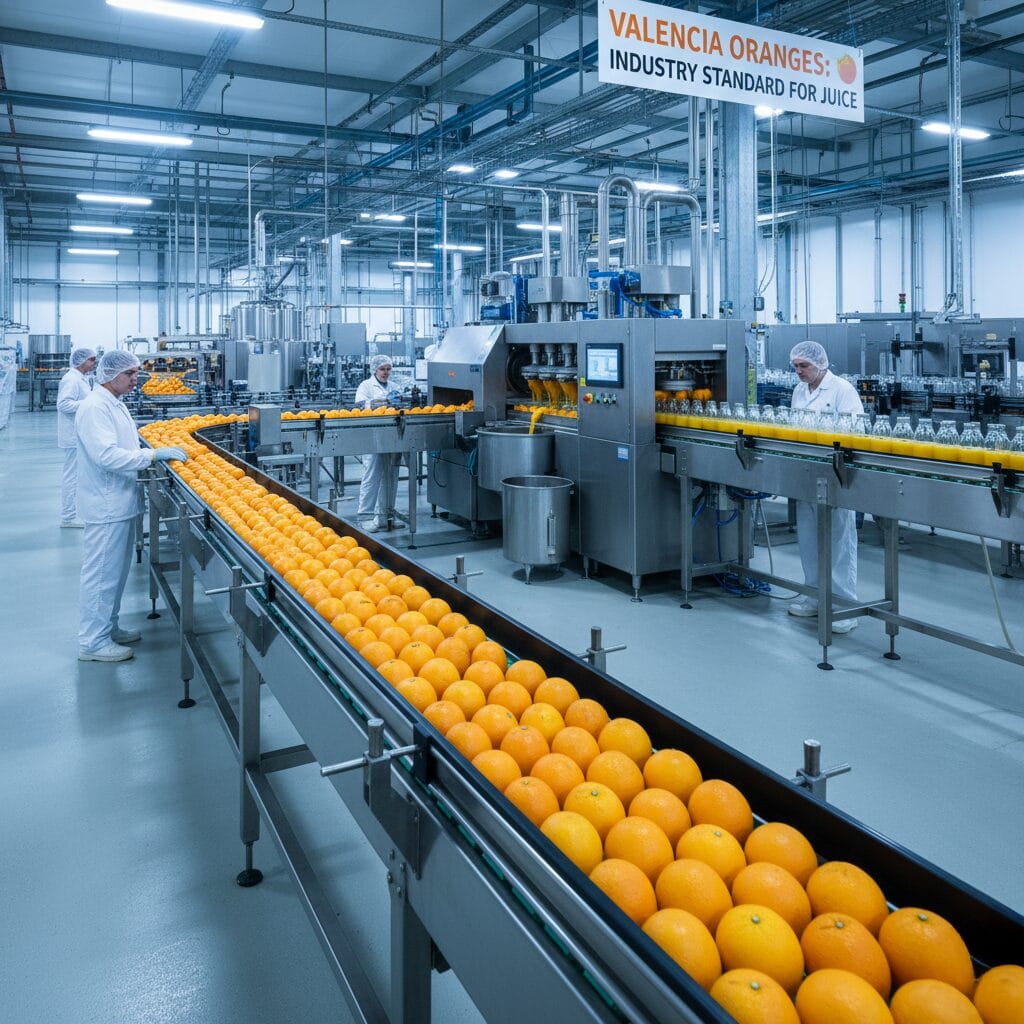
Egyptian Valencia oranges serve diverse processing applications beyond fresh consumption. Understanding these uses helps buyers specify requirements appropriately.
Premium NFC orange juice commands the highest prices and requires the highest quality Valencia oranges:
NFC juice is extracted, pasteurized, and packaged without concentration—preserving fresh-squeezed character. Egyptian Valencia oranges’ high natural Brix makes them excellent NFC candidates.
Frozen concentrated orange juice production accepts broader quality specifications:
FCOJ production concentrates juice to approximately 65° Brix for efficient storage and transport, later reconstituted with water for consumer products.
Hotels, restaurants, juice bars, and retailers with in-store juicing require fresh Egyptian Valencia oranges for immediate extraction:
GCC hospitality sectors represent significant demand for fresh-squeeze Valencia oranges, particularly during summer months when breakfast buffet juice consumption peaks.
Valencia orange processing generates valuable by-products:
Large-scale processors often have integrated by-product operations that add value to every component of the fruit.
While processing dominates Valencia demand, fresh market opportunities exist for buyers seeking summer orange supply.
Egyptian Valencia oranges fill the summer gap when Navel oranges are unavailable:
European retailers successfully market Egyptian Valencia oranges as the “juicing orange” for health-conscious consumers making fresh juice at home.
Valencia’s 3-6 seeds per fruit require appropriate market positioning:
Fresh market Valencia requires attention to color specifications:
Communicate color requirements clearly to avoid receiving fruit unsuitable for your retail standards.
Valencia orange packaging varies by application, with processing and fresh market requiring different approaches.
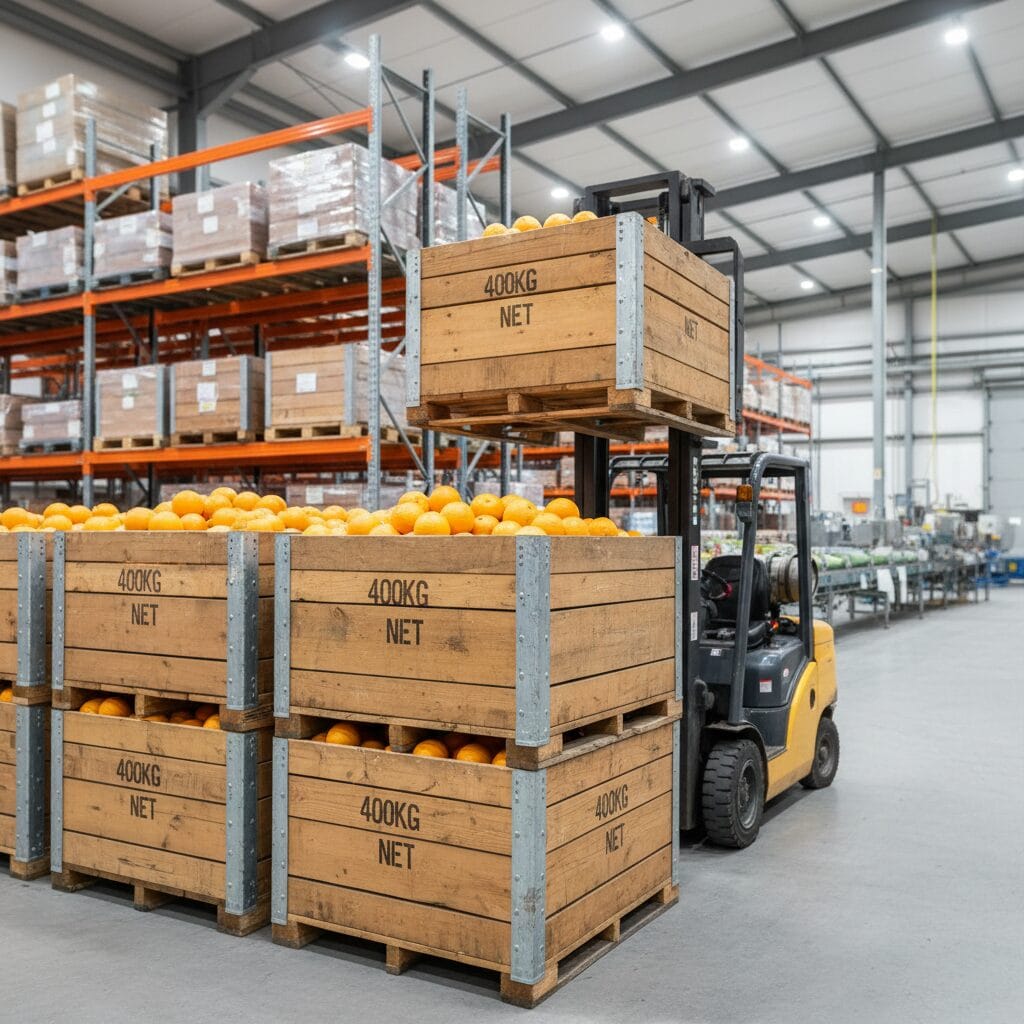
Juice processors typically receive Egyptian Valencia oranges in bulk bins for maximum efficiency:
Bulk bins eliminate the labor of opening individual cartons at the processing facility, reducing handling costs significantly.
Fresh market Valencia uses the same carton options as other citrus:
Valencia’s thinner peel makes proper ventilation especially important—inadequate airflow can cause moisture buildup and decay during transit.
For complete packaging specifications, refer to our packaging standards guide.
Proper temperature management preserves Valencia orange quality from harvest through delivery. Valencia shares similar cold chain requirements with Navel oranges but with some variety-specific considerations.
Egyptian Valencia oranges require the same temperature range as Navel oranges:
Temperature consistency is critical—fluctuations cause condensation that promotes decay on Valencia’s thinner skin.
Egyptian Valencia oranges are more susceptible to moisture loss than thick-skinned Navel oranges due to their thinner peel:
Under proper cold chain management:
Valencia’s thinner skin means slightly shorter total shelf life compared to Navel oranges. Plan distribution timelines accordingly.
For comprehensive temperature protocols and monitoring systems, see our cold chain guide.
Egyptian Valencia oranges serve both processing and fresh market channels across diverse international destinations.
Europe represents the largest market for Egyptian Valencia oranges destined for juice production:
Netherlands: Major juice processing hub with companies sourcing Egyptian Valencia for NFC and concentrate production. Rotterdam serves as primary entry point with efficient distribution to processors throughout Europe.
Germany: Significant juice consumption market with domestic processing capacity. Quality specifications often stricter than other markets.
Poland: Growing juice processing sector offering competitive processing costs. Increasing demand for Egyptian Valencia as raw material.
Requirements: GLOBALG.A.P certification, EU MRL compliance, consistent Brix levels, reliable volume commitments.
Gulf countries provide strong demand for both fresh Egyptian Valencia oranges and processed juice:
Saudi Arabia: Large fresh juice consumption culture. Hotels, restaurants, and juice bars require consistent Valencia supply through summer months. Fresh retail also active.
UAE: Premium hospitality sector demands high-quality Valencia for breakfast service and fresh juice bars. Dubai’s position as regional hub enables redistribution.
Requirements: GSO standards compliance, consistent quality, reliable summer supply when demand peaks.
Eastern European markets accept Egyptian Valencia for both processing and fresh channels:
| Market | Primary Use | Grade | Key Requirement |
|---|---|---|---|
| Netherlands | Processing | All grades | Consistent Brix |
| Germany | Processing + Fresh | Class I/II | GLOBALG.A.P |
| Poland | Processing | Processing grade | Competitive pricing |
| Saudi Arabia | Fresh + Juice bars | Class I | Summer reliability |
| UAE | Hospitality | Class I | Premium quality |
| Russia | Processing + Fresh | Class I/II | Price competitiveness |
Valencia orange exports require the same certification framework as other Egyptian citrus, with processing buyers sometimes having additional requirements.
GLOBALG.A.P certification remains essential for European market access:
Juice processors often require suppliers to demonstrate HACCP compliance in packhouse operations:
Growing demand exists for organic Valencia oranges in juice processing:
PEI Trade delivers reliable Valencia orange supply for both processing and fresh market applications through integrated farm-to-export operations.
Owned Valencia Orchards: Our directly managed farms include dedicated Valencia acreage ensuring consistent quality and supply. Harvest timing optimized for maximum Brix and juice content.
Processing Relationships: Years of supplying European juice processors means we understand processor requirements—consistent Brix, reliable volumes, appropriate packaging, and documentation accuracy.
Flexible Packaging: Whether you need bulk bins for processing or cartons for fresh market, our packhouse accommodates diverse requirements with quick changeover capability.
Quality Testing: Regular Brix testing during harvest ensures fruit meets specifications. Test certificates available with shipments for processor quality verification.
Summer Reliability: Our Valencia production ensures supply continuity through August, supporting buyers who need consistent summer orange supply.
Ready to discuss your Valencia orange requirements? View our Oranges product page for specifications and inquiry options.
Valencia oranges typically yield 45-55% juice content compared to 35-45% for Navel oranges. This 10-15% improvement in extraction rate makes Valencia significantly more efficient for juice processing—the primary reason Valencia dominates the global juice industry despite being less convenient for fresh eating due to seeds.
Green coloration on late-season Valencia oranges is called “regreening”—a natural phenomenon where warm temperatures trigger chlorophyll production in the peel of already-mature fruit. Regreening is purely cosmetic and does not affect internal quality. Regreened fruit has full sugar development and excellent juice content. For processing, regreening is completely irrelevant.
Yes, Valencia oranges are excellent for fresh consumption despite containing 3-6 seeds. Their superior juiciness makes them preferred by consumers who juice oranges at home. For eating as segments, the seeds are a minor inconvenience but the exceptional juice content compensates. Many markets successfully retail Valencia oranges positioned as “juicing oranges.”
Standard minimum order is one 40-foot reefer container. For bulk bin packaging (processing), this equals approximately 20 bins or 8,000kg per container. Larger processors typically order multiple containers per shipment, often on weekly or bi-weekly schedules during peak season. Annual contracts available for volume commitments.
PEI Trade is developing organic Valencia production to meet growing market demand. Contact our sales team for current organic availability and pricing. Organic Valencia commands premium pricing and requires advance booking as supply is limited compared to conventional production.
Egyptian Valencia oranges achieve 11-14° Brix depending on harvest timing. Early season (March-April) typically delivers 10-11° Brix, peak season (May-June) reaches 12-14° Brix, and late season (July-August) maintains 11-13° Brix. We can provide Brix testing certificates with shipments to verify sugar content meets your specifications.
Whether you’re sourcing Valencia oranges for juice processing or summer fresh market supply, PEI Trade delivers consistent quality with reliable service.
For your quote, please specify:
Contact PEI Trade:
Email: sales@peitrade.com
WhatsApp: +201099111918
Office: +201099111918
Website: www.peitrade.com
Join juice processors and fresh market buyers across Europe and GCC who rely on PEI Trade for premium Egyptian Valencia oranges. Our export team is ready to support your summer citrus requirements.