Address
Work Hours
Monday to Friday: 7AM - 7PM
Weekend: 10AM - 5PM

Address
Work Hours
Monday to Friday: 7AM - 7PM
Weekend: 10AM - 5PM


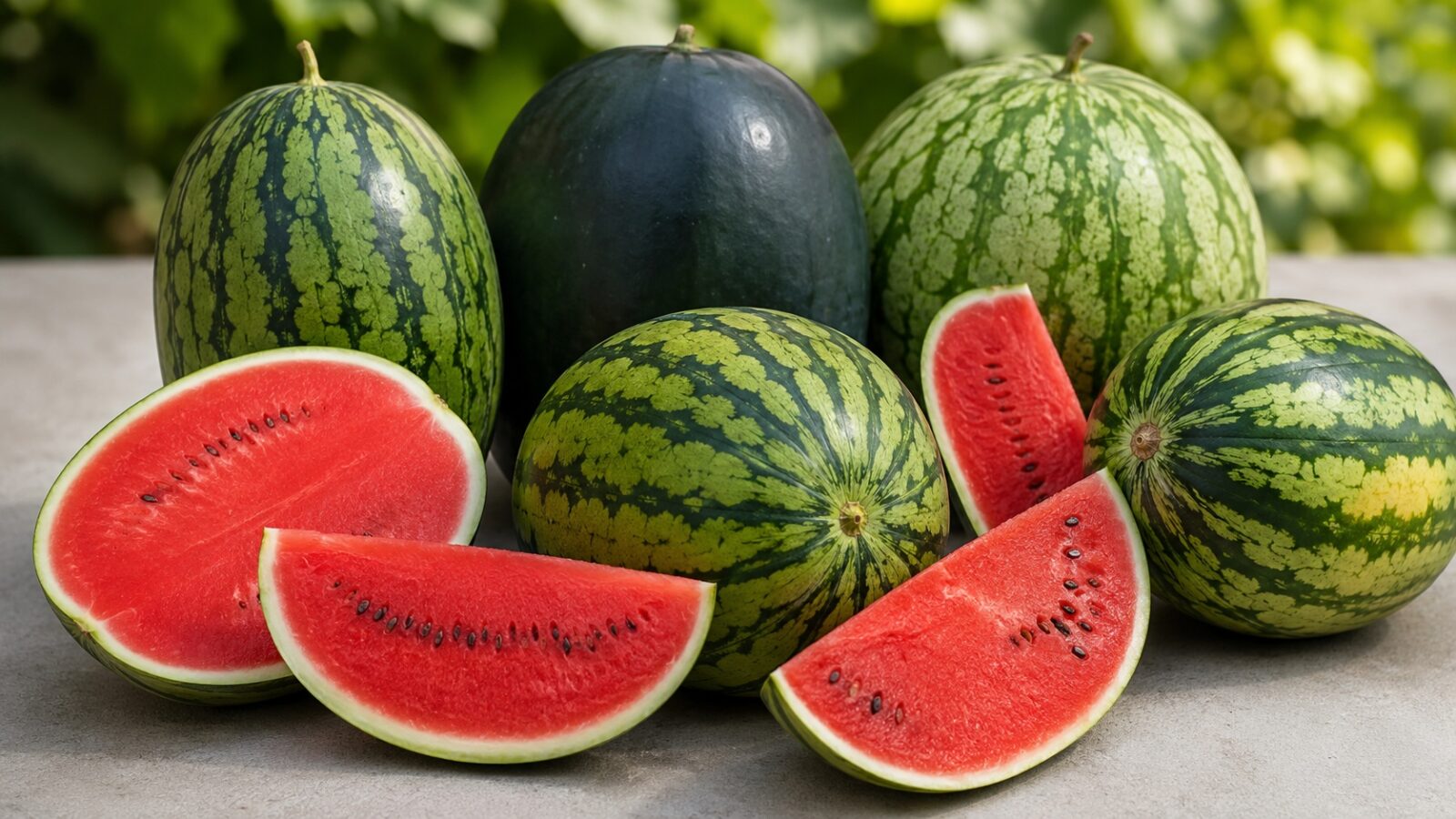
Watermelon buyers choose by format and flesh: a large seedless melon for mainstream retail, a personal-size melon for convenience, a classic seeded melon for regional markets, or a specialty yellow-flesh type. Egypt grows across the range, with seedless red-flesh leading exports. This guide breaks down the main Egyptian watermelon types and how to match them to your buyers.
Quick answer: The Egyptian export leader is the seedless red-flesh watermelon (~4–8 kg), followed by mini / personal melons (~2–4 kg) and traditional seeded types; yellow-flesh is a specialty. Common varieties include Crimson Sweet and Sugar Baby plus modern seedless hybrids. The key quality measures are sweetness (Brix), rind strength and size uniformity. Watermelon trades under HS code 0807.11.
| Type | Weight | Best for |
|---|---|---|
| Seedless (red flesh) | ~4–8 kg | Mainstream EU & Gulf retail |
| Mini / personal | ~2–4 kg | Premium convenience retail |
| Seeded (traditional) | Large (8 kg+) | Gulf, regional & Eastern Europe |
| Yellow flesh (specialty) | Varies | Specialty retail |
Seedless red-flesh watermelons dominate Egyptian exports. Buyers value the convenience of no seeds, deep-red sweet flesh and a manageable ~4–8 kg size. They are graded by weight and Brix, with rind strength important for shipping. Most mainstream EU and Gulf retail programs centre on this type.
Mini or personal watermelons (~2–4 kg) are a premium convenience format, sized for a single household and easy to carry. They command good value in EU retail and are often a differentiator in a pepper-to-melon export program. Sweetness and uniform shape are key.
Traditional seeded watermelons remain popular in the Gulf, regional and Eastern European markets, often as large melons. Yellow-flesh watermelons are a specialty with bright, sweet flesh for niche retail. Both add range to a program beyond the mainstream seedless line.
Egyptian growers select hybrids for sweetness, rind strength and shipping performance. Recognisable types include Crimson Sweet (classic striped, red flesh) and Sugar Baby (small, dark-skinned, sweet), alongside modern seedless hybrids and personal-size cultivars. The variety follows the format the buyer needs.
For mainstream EU and Gulf retail, specify large seedless; for premium convenience, mini; for the Gulf and regional trade, seeded; for niche, yellow flesh. Then agree weight grade, Brix minimum and pack. A good supplier will match type and grade to your destination’s retail standard.
The seedless red-flesh watermelon (~4-8 kg) is the export leader.
Small personal-size melons (~2-4 kg) for single-household convenience, a premium retail format.
Hybrids including Crimson Sweet and Sugar Baby, plus modern seedless and personal-size types.
Sweetness, measured as Brix, along with rind strength and size uniformity.
Fresh watermelon falls under HS code 0807.11.
How to cite this page
PEI Trade. “Egyptian Watermelon Varieties: Seedless, Mini & More.” peitrade.com, 2026. https://peitrade.com/egyptian-watermelon-varieties/
This page is part of our Egyptian Watermelon Export Guide hub.
Source the right Egyptian watermelon with PEI Trade. Seedless, mini, seeded and specialty melons, graded to your weight and Brix, with GLOBALG.A.P. handling and full documentation. Contact: [email protected] · WhatsApp +20 109 911 1918 · www.peitrade.com