Address
Work Hours
Monday to Friday: 7AM - 7PM
Weekend: 10AM - 5PM
Address
Work Hours
Monday to Friday: 7AM - 7PM
Weekend: 10AM - 5PM


Egyptian mango export requirements are the technical backbone of every successful shipment, and they are exactly where most supplier pages go quiet. For a serious B2B buyer, understanding phytosanitary treatment, the fruit fly quarantine challenge, and the documentation stack is the difference between fruit that clears customs cleanly and a container that gets held, rejected, or destroyed. This guide walks through everything an importer should know — and should ask their exporter — before committing to a program.
Last Updated: May 2026
Requirements vary by destination and can change from season to season, so treat this as a working framework and always confirm the current protocol for your specific market with your exporter before loading.
Mango is a host for fruit flies, which lay their eggs just beneath the skin where they are invisible at inspection. If a shipment carrying live larvae reaches a country where the pest is not established, it threatens local agriculture — so importing nations enforce strict, non-negotiable quarantine rules. A non-compliant container can be refused entry or destroyed at the buyer’s cost, and a single rejection can cost far more than the cargo itself once demurrage, re-export, and lost program continuity are counted.
Meeting Egyptian mango export requirements is therefore not paperwork for its own sake; it directly protects your investment in every load. Just as important, a buyer who understands these requirements can qualify suppliers properly — separating exporters who treat compliance as routine from those who improvise it shipment by shipment.
The two pests that drive mango quarantine rules are the Oriental fruit fly (Bactrocera dorsalis) and the Mediterranean fruit fly (Ceratitis capitata). Both lay eggs under the skin of the fruit, where the larvae develop out of sight. Because the infestation is internal, visual inspection alone cannot guarantee a clean shipment — a box can look perfect and still carry live larvae.
Importing authorities therefore require one of two things: fruit grown in a recognized pest-free or low-prevalence area, or fruit that has undergone an approved disinfestation treatment. In practice, most export programs rely on treatment, supported by field monitoring and trapping. The stricter the destination’s own agriculture-protection regime, the more rigorous the treatment and paperwork it demands — which is why the same fruit can move freely to one market and require an extra step for another.
There are three accepted treatment routes, plus the “systems approach.” All physical treatments are chemical-free and, applied correctly, do not cook the fruit or alter its taste. The right choice depends on the destination market and the agreed protocol.
| Treatment | How It Works | Typical Use |
|---|---|---|
| Hot Water Treatment (HWT) | Immersion at roughly 46–48°C for about 60–75 minutes; kills fly eggs and larvae below the skin | Most cost-effective; required by the United States for mango. The EU does not require it. |
| Vapour Heat Treatment (VHT) | Heated, humidified air raises fruit core temperature to disinfest | Required by the strictest markets (e.g. Japan, South Korea) |
| Irradiation | Low-dose irradiation neutralizes pests without heat | Accepted under specific protocols by some markets |
| Systems approach | Field trapping, monitoring, and pest-free / low-prevalence area certification | Used alone or to complement treatment |
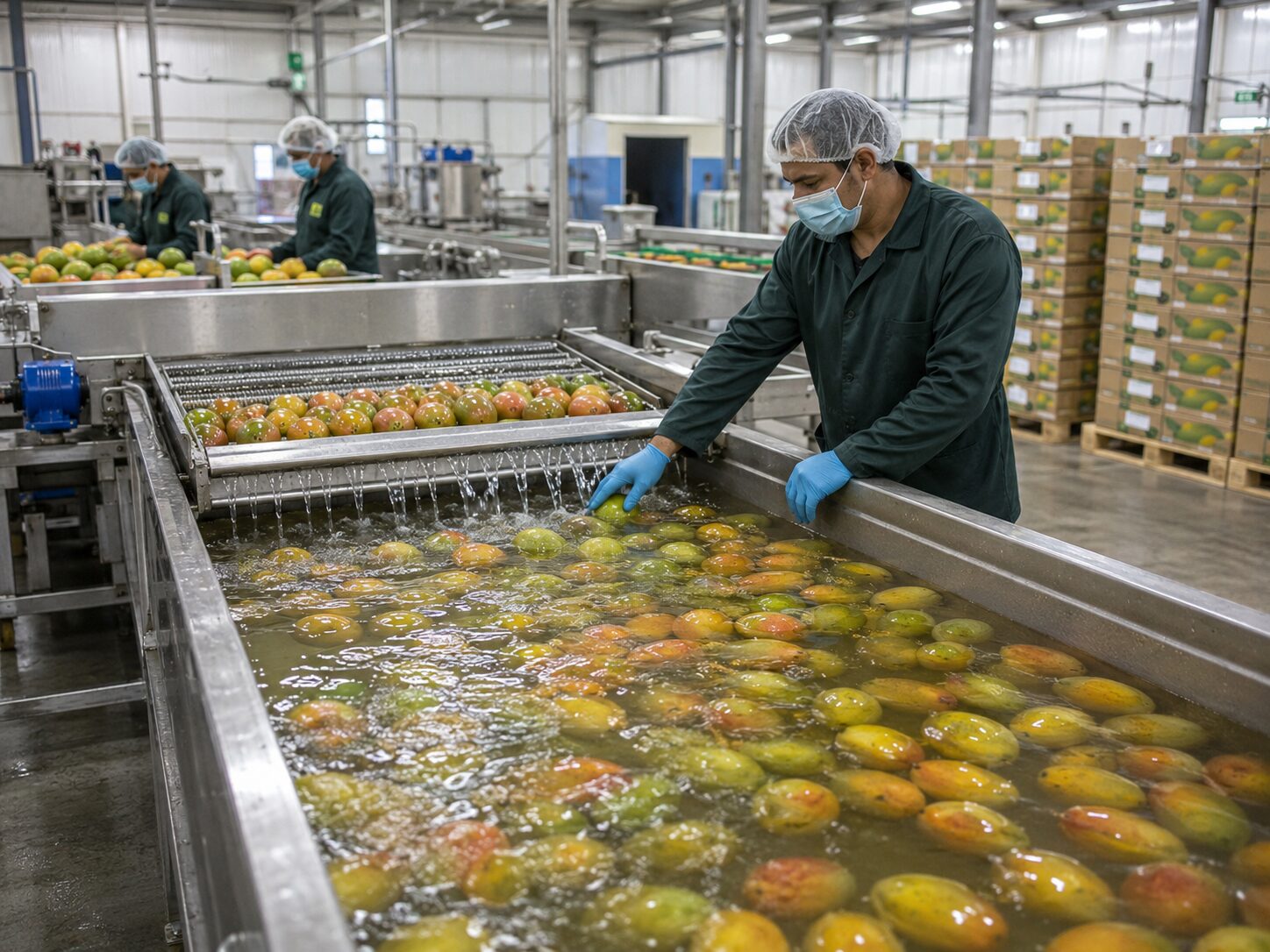
Hot water treatment is the workhorse of the industry. Fruit is immersed in water held at around 46–48°C for roughly 60–75 minutes, which raises the temperature just beneath the skin enough to kill fly eggs and larvae without damaging the flesh. Applied to the correct schedule, it reaches the quarantine security standard known as “probit 9” — a 99.9968% kill rate — which satisfies the requirements of most importing countries.
HWT is favored for two practical reasons: it is the most cost-effective method, and it is gentle. Because it uses only heat and water, it uses no chemicals and preserves the fruit’s natural flavor. In a typical flow, fruit is graded, immersed for the required time and temperature, cooled, then moved straight into the cold chain and packed — so the treatment is built into the packhouse sequence rather than bolted on afterwards.
Vapour heat treatment uses heated, humidified air to raise the fruit’s core temperature and disinfest it. It is more capital-intensive than HWT and is generally reserved for the strictest markets, such as Japan and South Korea, which require treatment in approved, audited facilities under a bilateral protocol. Buyers targeting these markets should confirm facility approval and protocol status well before the season.
Low-dose irradiation neutralizes pests without heat and is accepted under specific protocols by some markets (for example, certain US and Australian programs — see US market access for Egyptian mango). Separately, the “systems approach” combines field trapping, monitoring, and certification of pest-free or low-prevalence growing areas — used either on its own where a market allows it, or as a complement that strengthens a treatment-based program. Many robust export operations layer monitoring on top of treatment for extra assurance.
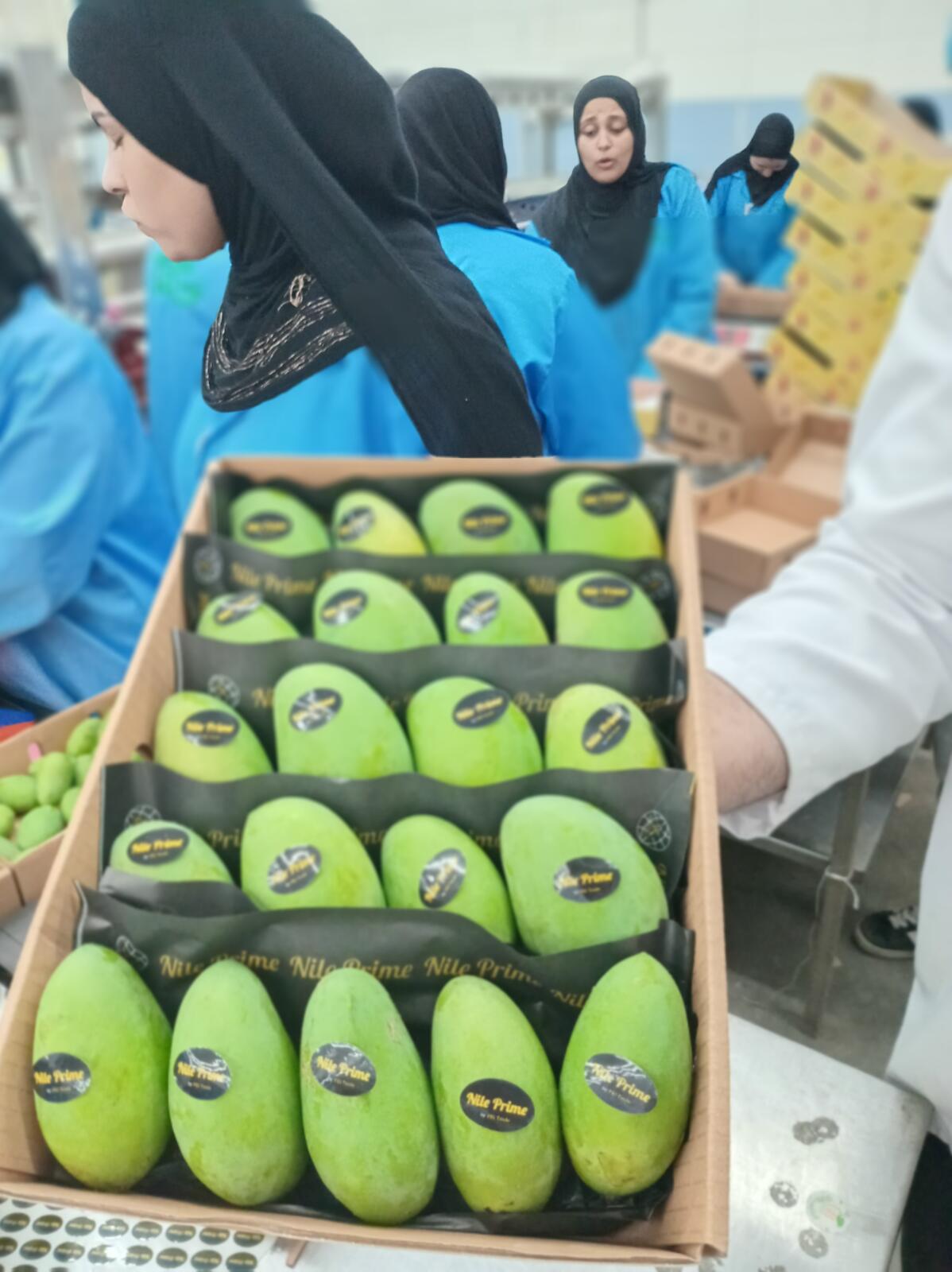
A complete, compliant shipment travels with a documentation stack. Each document answers a different question for the importing authority and the buyer — from plant health to food safety to origin — each explained in full in our export certifications guide. Buyers should expect to see each of these:
| Document / Certification | What It Confirms |
|---|---|
| Phytosanitary Certificate | Issued by Egypt’s plant protection authority; confirms the consignment meets the importing country’s plant-health rules |
| GLOBALG.A.P | Good agricultural practice at farm level |
| HACCP / ISO 22000 | Food-safety management in the packhouse |
| Certificate of Origin | Confirms Egyptian origin for customs and tariff purposes |
| ISPM-15 pallets | Heat-treated, stamped wood packaging to prevent pest transfer |
| EU MRL & labelling compliance | Maximum residue levels and labelling rules for European programs |
Beyond the certificates themselves, what separates a reliable exporter is the ability to provide these documents up front, correctly completed, and matched to the destination market. Missing or mismatched paperwork is one of the most common — and most avoidable — causes of delay at the port of entry.
Most rejections trace back to a short list of avoidable issues. Knowing them helps a buyer ask the right questions before shipping:
Every item on this list is preventable with disciplined treatment, documentation, and cold-chain management — which is precisely what a buyer is paying for when they choose an experienced exporter.
Exact protocols vary by destination and can change season to season, so always confirm the current rule with your exporter. As a general guide:
Because these rules move, the practical takeaway is to work with an exporter who manages treatment and documentation as a routine part of the program — not as an afterthought. See the wider sourcing picture in the Egyptian mango export guide.
Use this short checklist when qualifying an Egyptian mango supplier:
PEI Trade arranges treatment and documentation, and sources from packing houses that hold the required certifications. To see the full sourcing picture, read the Egyptian mango export guide, compare Egyptian mango varieties, and check the season calendar. For our wider certified range, see the Egyptian citrus export guide.
Most markets require a phytosanitary disinfestation treatment against fruit fly. Hot water treatment is the most common and cost-effective; vapour heat treatment and irradiation serve stricter markets.
HWT immerses fruit at roughly 46–48°C for about 60–75 minutes to kill fruit fly eggs and larvae beneath the skin. It is chemical-free and, applied correctly, achieves a 99.9968% (probit 9) kill rate without cooking the fruit.
Look for GLOBALG.A.P at farm level, HACCP or ISO 22000 in the packhouse, and a phytosanitary certificate and certificate of origin on every shipment.
Egyptian mangoes ship to the EU under phytosanitary certification with disinfestation or recognized pest-free sourcing, plus MRL and labelling compliance. Confirm the current protocol for your program with your exporter.
The most common reason is the detection of live fruit fly, followed by documentation errors, MRL exceedance, or cold-chain breaks. A non-compliant load can be refused or destroyed.
Treatment is built into the packhouse sequence and typically adds a short, planned step rather than a major delay, but the exact lead time depends on the method and facility. Confirm it with your exporter when scheduling.
Want a supplier who manages treatment, certification, and cold chain end to end? Let’s talk through your market’s requirements and build a compliant program.
Request a quote or start with the Egyptian mango export guide.