Address
Work Hours
Monday to Friday: 7AM - 7PM
Weekend: 10AM - 5PM

Address
Work Hours
Monday to Friday: 7AM - 7PM
Weekend: 10AM - 5PM


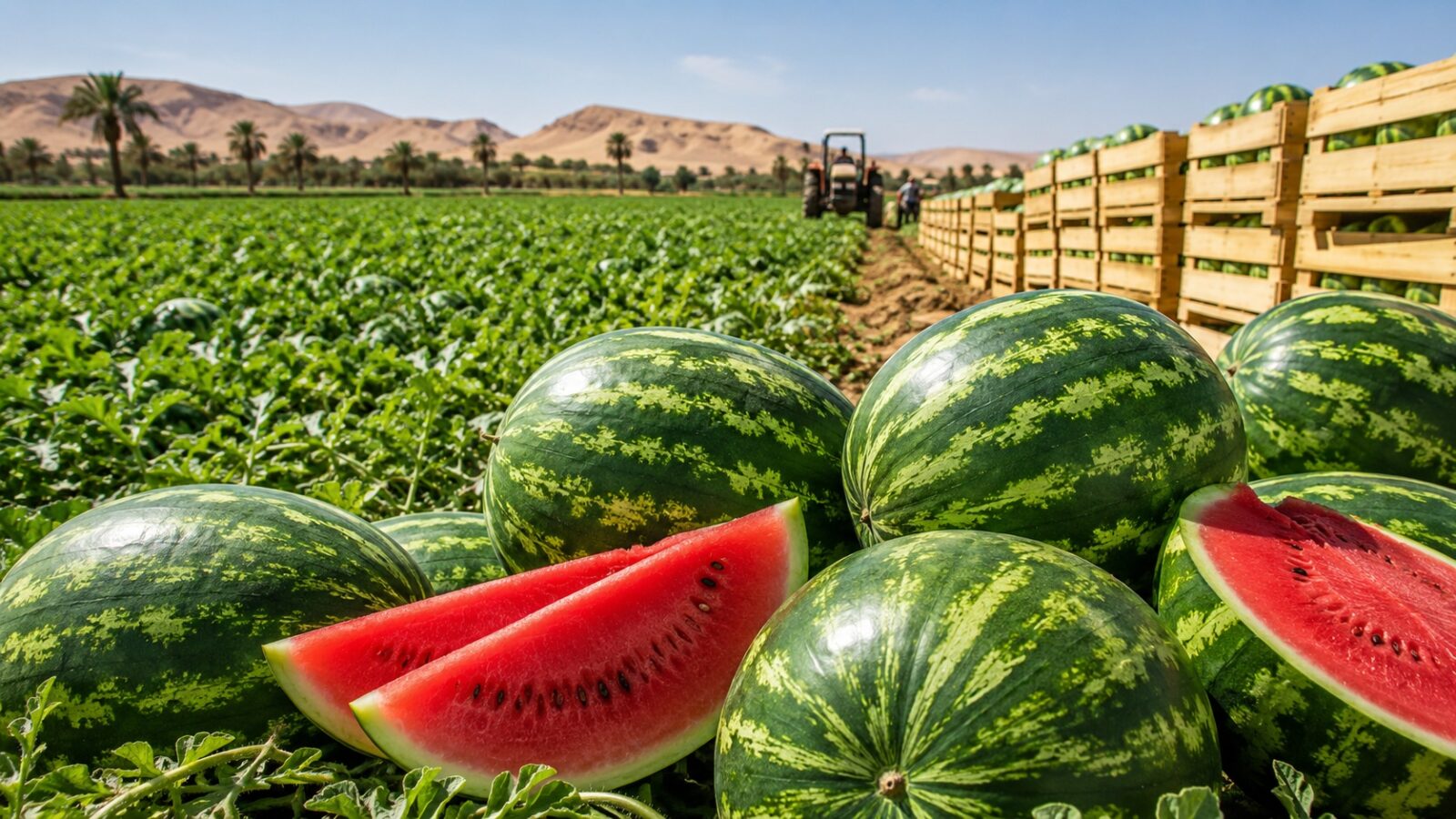
Egypt is one of the world’s larger watermelon producers, growing a substantial crop that is mostly consumed domestically. Its fresh-watermelon exports are a smaller, early-season niche — serving mainly Gulf and regional markets, with some early fruit reaching Europe ahead of the main Mediterranean crop. A warm climate and staggered planting let Egypt open the season early. This guide is the hub for importers: what Egypt grows, when it ships, the markets it serves, the specifications buyers ask for and the compliance behind every consignment.
Quick answer: Egypt is a major watermelon producer (around 1 million tonnes a year), but the crop is overwhelmingly domestic: fresh-watermelon exports are modest and have declined in recent years — on the order of 10,000 tonnes in 2025 — going mainly to Gulf and regional markets, with some early fruit to Europe. The export season runs roughly April to July (early fruit from March under protection), and Egypt’s edge is early-season timing. The main exported type is the seedless red-flesh watermelon, with mini / personal and traditional seeded types. Watermelon trades under HS code 0807.11 and is chilling-sensitive (stored warm, around 10–15°C). (Sources: FAO, 2023; ITC Trade Map, 2025.)
| Type | Character | Main market |
|---|---|---|
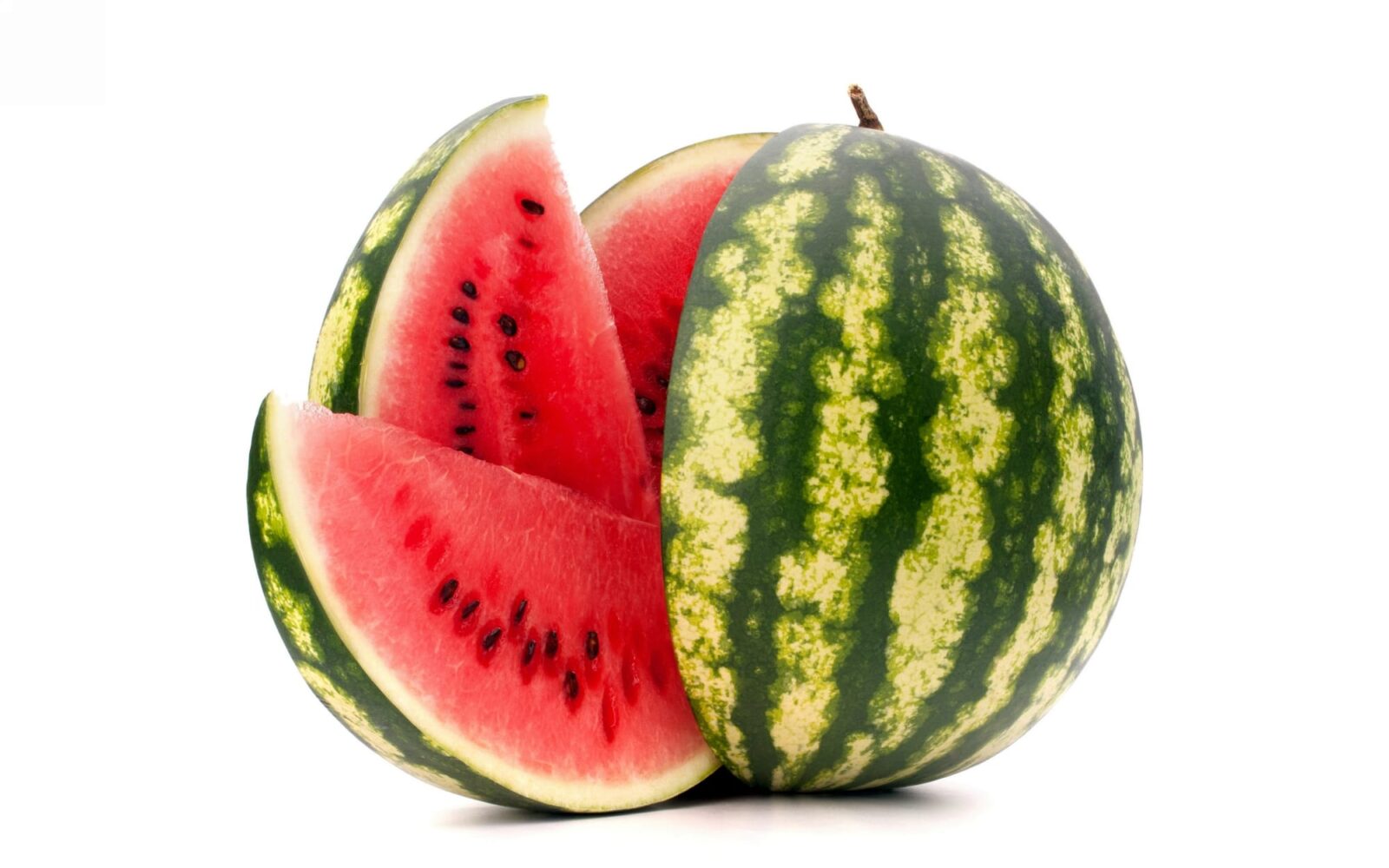
| Seedless (red flesh) | Sweet, deep red, no seeds; ~4–8 kg | Gulf & EU retail (the main exported type) |
| Mini / personal | Small, ~2–4 kg, single-serve | EU retail (premium convenience) |
| Seeded (traditional) | Classic large melon with seeds | Gulf, regional & Eastern Europe |
| Specialty (e.g. yellow flesh) | Yellow/orange flesh, niche | Specialty retail |
Egyptian growers use a mix of hybrids selected for sweetness, rind strength and shipping. Familiar types include Crimson Sweet (classic striped, red-fleshed) and Sugar Baby (small, dark-skinned), alongside modern seedless hybrids and personal-size types. The variety is matched to the target format — large seedless for mainstream retail, mini types for convenience packs.
The main export window runs from about April to July, with early fruit from March under tunnels and in warm regions — giving Europe an early-season supply before the main Spanish and southern-European crop. The broader domestic harvest runs from around May through August. Production spans Upper Egypt, the Delta and reclaimed-desert zones such as Nubaria. Exact windows shift year to year with planting and weather.
Export volumes are modest and led by nearby markets:
Watermelon is traded under HS code 0807.11.
Fresh watermelon requires a phytosanitary certificate, compliance with destination MRLs (EU: Regulation (EC) No 396/2005), and increasingly GLOBALG.A.P. certification with ISPM 15 wood packaging and traceability. Watermelon generally faces fewer residue red-flags than crops like peppers or beans, and Egyptian watermelon is not on the EU’s enhanced official-controls list (Regulation (EU) 2019/1793) — but full MRL and plant-health compliance still applies. Cut/processed melon would add food-safety (HACCP) requirements.
The export window runs roughly April to July, with early fruit from March under protection – an early-season supply for Europe; the broader domestic harvest runs May to August.
Seedless red-flesh watermelons, plus mini/personal watermelons and traditional seeded types.
Mainly the Gulf and regional markets, with smaller early-season volumes to the EU, Eastern Europe and Russia.
Fresh watermelon falls under HS code 0807.11.
Warm – around 10-15 degrees C – because watermelon is chilling-sensitive and damaged by cold storage.
How to cite this page. Reusing a figure from this guide? Please cite it and link to this page as the source.
PEI Trade. “Egyptian Watermelon Export: The Complete Guide.” peitrade.com, 2026. https://peitrade.com/egyptian-watermelon-export-guide/
Source Egyptian watermelon with PEI Trade. We supply seedless, mini and seeded watermelons to Gulf, EU, Eastern European and Russian buyers, with GLOBALG.A.P. handling, phytosanitary documentation and correct chilling-sensitive cold-chain handling. Contact: [email protected] · WhatsApp +20 109 911 1918 · www.peitrade.com