Address
Work Hours
Monday to Friday: 7AM - 7PM
Weekend: 10AM - 5PM
Address
Work Hours
Monday to Friday: 7AM - 7PM
Weekend: 10AM - 5PM



Key definition: A phytosanitary certificate is an official document issued by the exporting country’s plant-protection authority, certifying that a consignment of plants or plant products has been inspected and is considered free from quarantine pests and meets the importing country’s phytosanitary requirements. It is required for most fresh-produce exports.
Before fruit or vegetables can cross most borders, the importing country wants proof they will not carry pests or diseases. The phytosanitary certificate is that proof. This page explains what it confirms, who issues it, and how it works for Egyptian produce.
A phytosanitary certificate is an internationally recognised document that travels with a plant consignment to confirm its plant-health status. It is governed by the International Plant Protection Convention (IPPC) and its standards (ISPM 12), so the format is broadly the same worldwide. It is separate from a certificate of origin, which certifies the country of production rather than plant health.
The certificate confirms that the consignment:
It can also carry additional declarations — for example, that a required treatment such as hot water or vapour heat treatment was applied.
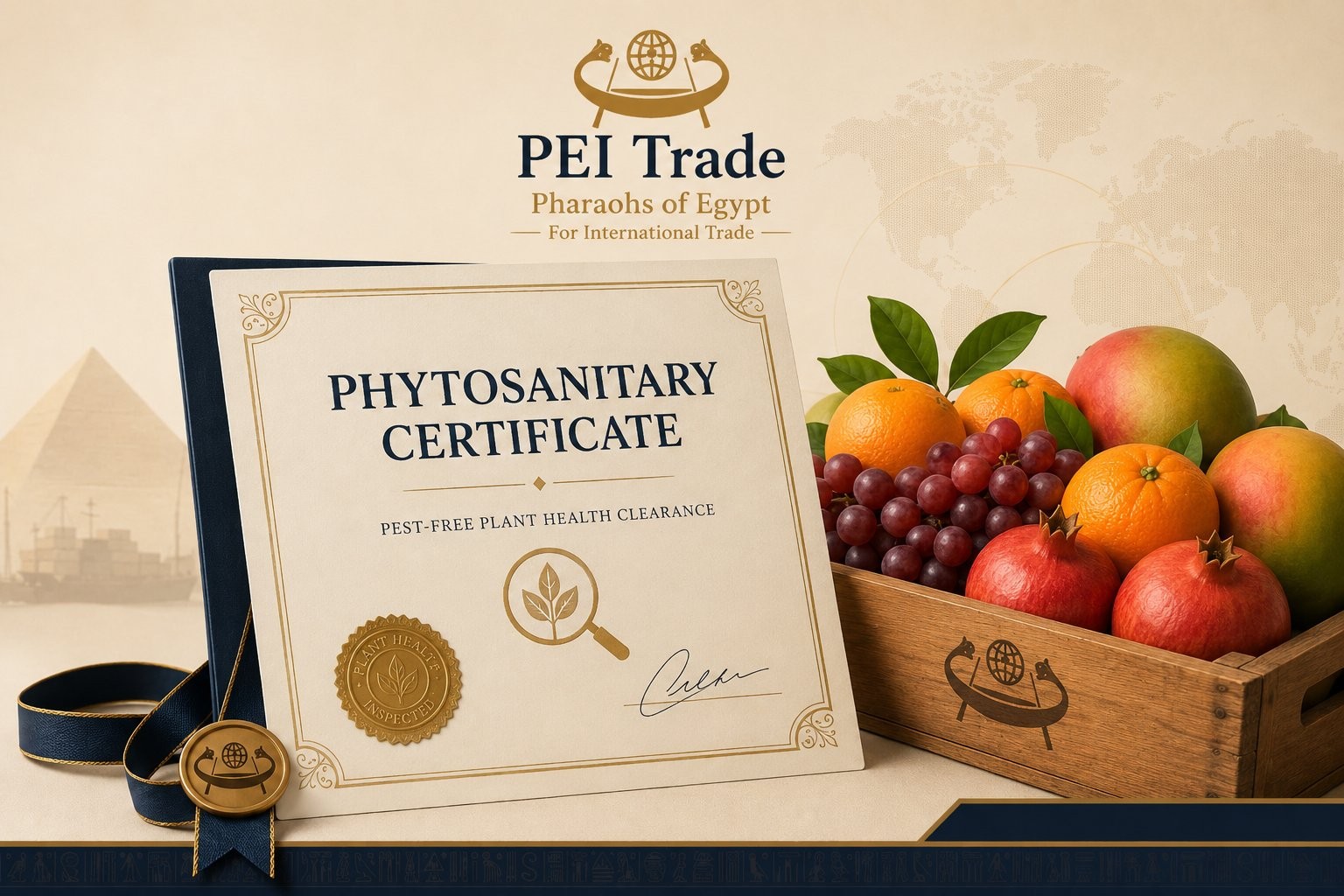
A phytosanitary certificate is issued only by the exporting country’s National Plant Protection Organization (NPPO) — a government body. In Egypt, this is the Central Administration for Plant Quarantine (CAPQ), under the Ministry of Agriculture, which inspects consignments and issues the certificate.
Every Egyptian fresh-produce shipment that needs one is inspected and certified by CAPQ before export, with any required treatment recorded on the certificate. For the full mango export requirements — including treatments and documentation — see our Egyptian mango export requirements guide, or browse all export certifications.
PEI Trade. “Phytosanitary Certificate Explained.” PEI Trade Export Knowledge Base. https://peitrade.com/knowledge-base/certifications/phytosanitary-certificate/
A phytosanitary certificate is an official document confirming that a plant consignment was inspected and is considered free from quarantine pests, and that it meets the importing country’s phytosanitary requirements.
It is issued only by the exporting country’s National Plant Protection Organization. In Egypt this is the Central Administration for Plant Quarantine (CAPQ), under the Ministry of Agriculture.
It confirms the consignment was inspected, is considered free of quarantine pests, and meets the importing country’s phytosanitary import requirements, sometimes with additional declarations about treatments applied.
Yes. Most countries require a phytosanitary certificate for fresh plant products such as fruit and vegetables before they can be imported.
A phytosanitary certificate confirms plant health and freedom from pests, while a certificate of origin certifies the country in which the goods were produced.