Address
Work Hours
Monday to Friday: 7AM - 7PM
Weekend: 10AM - 5PM

Address
Work Hours
Monday to Friday: 7AM - 7PM
Weekend: 10AM - 5PM


We understand the importance of approaching each work integrally and believe in the power of simple and easy communication. Our purpose is to build solutions that remove barriers preventing people from doing their best work, and this is at the heart.
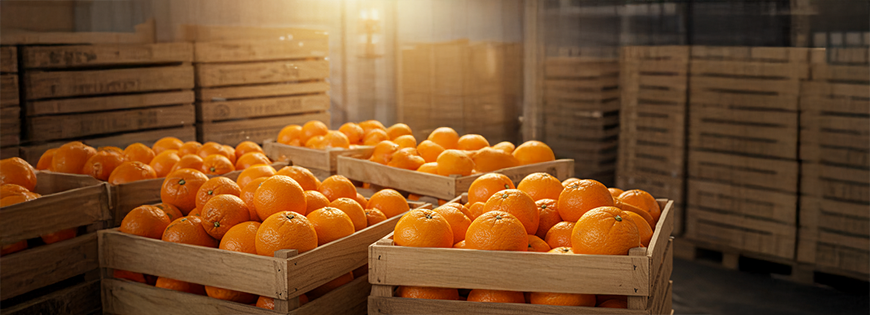
Egypt is the world’s largest orange exporter by volume, and the reason importers keep coming back to the origin is a combination that is hard to find elsewhere: two harvest windows inside one country, a fruit that travels, and documentation that clears. This page sets out ten specific reasons buyers source Egyptian oranges from PEI Trade, with the numbers you can check rather than adjectives.
Before the reasons, two things worth having in front of you: which variety runs when, and exactly what goes into a container. Both decide more about a programme than any claim about quality.
| Variety | Season | Eating profile | Best use | Guide |
|---|---|---|---|---|
| Navel | December to April, peak January to March | Sweet, slightly tangy, seedless, easy to peel | Fresh retail and table fruit | Navel export guide |
| Valencia | March to August | High juice content, slightly tart, few seeds | Juicing, beverages, summer fresh supply | Valencia export guide |
That overlap is the commercial point of the origin: a buyer who programmes both varieties runs an orange line from December into August from one supplier and one set of documents, instead of re-sourcing in spring.
Most suppliers give a container figure and leave you to trust it. Here is ours with the working shown, so every line multiplies out:
| Step | Figure | How it is reached |
|---|---|---|
| Carton | 15 kg net / 16 kg gross | 40 x 30 cm telescopic corrugated, ventilated on four sides, count-layered. 1 kg tare. |
| Standard pallet | 100 x 120 cm | 10 cartons per layer: 1.20 m2 divided by the carton’s 0.12 m2. |
| Layers | 8 | Corner-boarded and strapped. |
| Cartons per standard pallet | 80 | 10 x 8. Net 1,200 kg. |
| Euro pallet | 80 x 120 cm | 8 cartons per layer: 0.96 m2 divided by 0.12 m2. |
| Cartons per Euro pallet | 64 | 8 x 8. Net 960 kg. |
| Pallets per 40 ft high-cube reefer | 21 | 20 standard plus 1 Euro, which takes the remaining floor. |
| Cartons per container | 1,664 | (20 x 80) + (1 x 64). |
| Net fruit per container | 24,960 kg | 1,664 x 15. |
| Gross with cartons | 26,624 kg | 1,664 x 16. |
The full packing and labelling standards, including pallet patterns for other markets, are in the packing standards guide.
We source from certified conventional farms across Egypt operating to GLOBALG.A.P, with residues managed to the maximum residue limits of the destination market. Certificate details and residue reports go to buyers on request rather than being published here.
Phytosanitary certificate, certificate of origin and the market’s own paperwork are prepared against the destination requirement before loading, which is where most clearance delays are actually created. Shipping dates are confirmed per booking rather than promised in advance.
Navel through the winter and Valencia from spring into late summer, from the same supplier. That is roughly nine months of supply without changing origin, paperwork or specification language mid-season.
Egyptian oranges carry firm rind and good sugar-acid balance, which is why the origin ships as far as East Asia rather than only to nearby markets. Condition on arrival is a function of the cold chain as much as the fruit, and the set points we work to are in the cold chain guide.
Navel for the retail shelf where appearance drives the sale, Valencia for juicing where yield does. If your business needs both, they come off the same programme rather than two.
Every lot traces back to the orchard it came from and the day it was picked. That is what lets you answer a retailer’s question about one pallet weeks after arrival, instead of about a container.
Branded cartons, private label and labelling built to the destination market’s rules, so the pack arrives compliant rather than needing re-labelling at the port.
You deal with the people arranging your loading, not a ticket queue. Questions on counts, loading weeks and documentation are answered by the person who can change them.
From part-load quantities up to repeat full containers. Loading frequency in any given week depends on the harvest and how much of the crop is committed, so it is agreed per programme rather than promised on a page.
| Buyer | Variety that usually fits | What to specify first |
|---|---|---|
| Supermarkets and retailers | Navel | Count range and pack format |
| Juice manufacturers | Valencia | Juice yield target and acid range |
| Wholesale distributors | Both, in sequence | Volume per month across the two windows |
| Hotels, restaurants and catering | Navel | Consistency between deliveries |
Alongside oranges we supply strawberries, guava, mango and other Egyptian fruit, on seasonal programmes and longer-term import contracts.
Navel runs December to April with the peak from January to March, so winter is the import window. Valencia follows from March to August for juicing and summer fresh supply.
1,664 cartons of 15 kg in a 40 ft high-cube reefer on our standard stow, which is 24,960 kg net and 26,624 kg gross with the cartons. That is 20 standard pallets of 80 cartons plus one Euro pallet of 64.
We supply conventional fruit from farms operating to GLOBALG.A.P, with a phytosanitary certificate and certificate of origin on every shipment. Certificate numbers, issuing bodies and validity dates are provided to buyers on request rather than published.
Yes. Branded cartons, private label and labelling built to the destination market’s rules, so the pack arrives compliant rather than needing re-labelling at the port.
We normally work in full container loads, and part-load quantities can be arranged depending on destination and the season position. Send the requirement and we will say what is possible for your weeks.
Pre-cooling, temperature-controlled containers with the set point recorded for the lane, and cold chain monitoring from packing to delivery. Set points differ by market and by whether the fruit is going to a shelf or a juicing line, so they are confirmed per shipment.
Valencia. It carries higher juice content and runs from March to August, which is also when northern-hemisphere juicing supply is thinnest. Navel is the fresh-retail variety.
Send the destination port, the volume, the variety and count, and the shipping weeks. We will quote against the current season position and say plainly what is and is not available for those weeks.