Address
Work Hours
Monday to Friday: 7AM - 7PM
Weekend: 10AM - 5PM

Address
Work Hours
Monday to Friday: 7AM - 7PM
Weekend: 10AM - 5PM


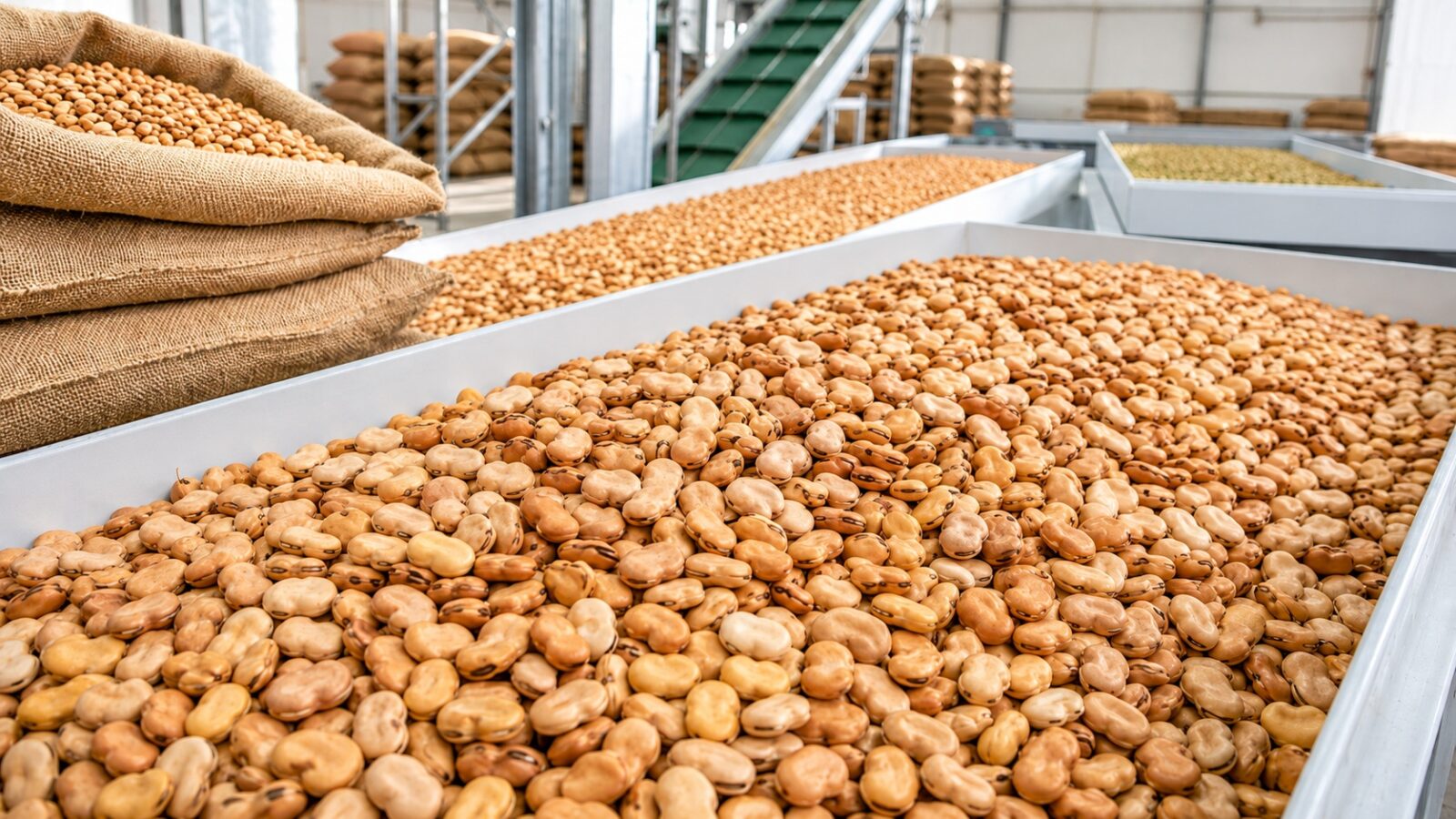
Italy is a traditional broad-bean market and a channel into the wider EU for Egyptian faba beans (dried broad beans, HS 0713.50). Faba features in classic Italian dishes — fave e cicoria, purees and soups — and supports both canning and a substantial North-African and Middle-Eastern diaspora. Egypt is a recognised top-five global exporter of dried broad beans, supplying EU-compliant, food-grade faba. This guide covers grades, logistics, EU requirements and crop calendar.
Italy buys faba for traditional dishes, canning and diaspora retail. Egypt is a recognised top-five exporter of dried broad beans (HS 0713.50). Grades: large-seeded whole, small-seeded, split/decorticated. Ships in 25/50 kg bags (or big bags) in dry containers to Genoa/Gioia Tauro, ~9–13 days. Imports must meet EU MRLs and plant-health rules; buyers require HACCP/ISO 22000 or BRCGS and traceability.
Faba is woven into Italian regional cooking, especially in the south, and Italy also serves a large immigrant population that cooks ful and Maghreb dishes. Domestic faba supply is limited and variable, so importing stabilises availability for canners, packers and ethnic-food distributors. Egypt offers EU-compliant, consistently graded faba at competitive prices, shipped economically as a dry commodity into Italy’s main ports.
| Market snapshot | Detail |
|---|---|
| Use in market | Traditional dishes, canning, diaspora retail |
| HS code | 0713.50 (dried broad & horse beans) |
| Main entry ports | Genoa, Gioia Tauro |
| Transit time | 9–13 days by sea (dry container) |
| Packaging | 25 / 50 kg bags; big bags for processors |
| Grades | Large whole, small-seeded, split/decorticated |
Large-seeded whole faba: for canning and whole-bean dishes. Small-seeded faba: for purees and soups (e.g. fave puree). Split/decorticated: for quick-cook and processed lines. Specifications cover moisture, purity/admixture, sizing and defect tolerance. Italian processors specify size bands, low defects and clean colour; product is machine-cleaned, calibrated and colour-sorted.
Dried faba is shelf-stable and ships in standard dry containers — 25/50 kg bags for retail/canning or big bags for processors — shipped CFR / CIF to your port, or FOB Egypt. Transit to Genoa or Gioia Tauro is roughly 9–13 days. No cold chain is needed. Product must be kept dry and ventilated to hold moisture spec; fumigation certificates are commonly required.
EU imports require a phytosanitary certificate and compliance with EU plant-health entry rules. Pesticide residues must meet EU MRLs — among the strictest globally — verified by border and buyer testing. Italian importers require HACCP/ISO 22000 or BRCGS at the packing facility, EU-compliant labelling (product, origin, packer, net weight, lot) and full lot traceability. A fumigation certificate is commonly requested.
| Period | Availability |
|---|---|
| April–June | Main harvest — new-crop faba |
| July–December | Peak shipping from stored new crop |
| January–March | Continuity supply from storage |
As a dried pulse, faba stores well, so Egypt ships to Italy year-round from the spring harvest, letting processors and packers contract across the calendar.
Traditional dishes such as fave e cicoria and purees, industrial canning, and diaspora retail serving North-African and Middle-Eastern communities.
Yes — EU-compliant faba meets EU MRLs and plant-health rules, with HACCP/ISO 22000 or BRCGS at the packing facility.
In 25/50 kg bags for retail and canning, or big bags for processors, in standard dry containers.
Roughly 9–13 days by sea to Genoa or Gioia Tauro; no refrigeration is required.
Source & data: Egypt is recognised among the world’s top-five exporters of dried broad beans. Source: Tridge broad-bean trade overview, 2024. HS code 0713.50 (dried broad & horse beans, shelled). Per-market volumes vary seasonally and are confirmed at contracting; no per-market figure is asserted here.
PEI Trade — New Cairo, Egypt. Request a quote or faba bean spec sheet →