Address
Work Hours
Monday to Friday: 7AM - 7PM
Weekend: 10AM - 5PM

Address
Work Hours
Monday to Friday: 7AM - 7PM
Weekend: 10AM - 5PM


How PEI Trade protects Egyptian mango quality from packhouse to port in 2026, covering pre-cooling, reefer settings, pre-shipment inspection, and the specs importers should confirm before loading.
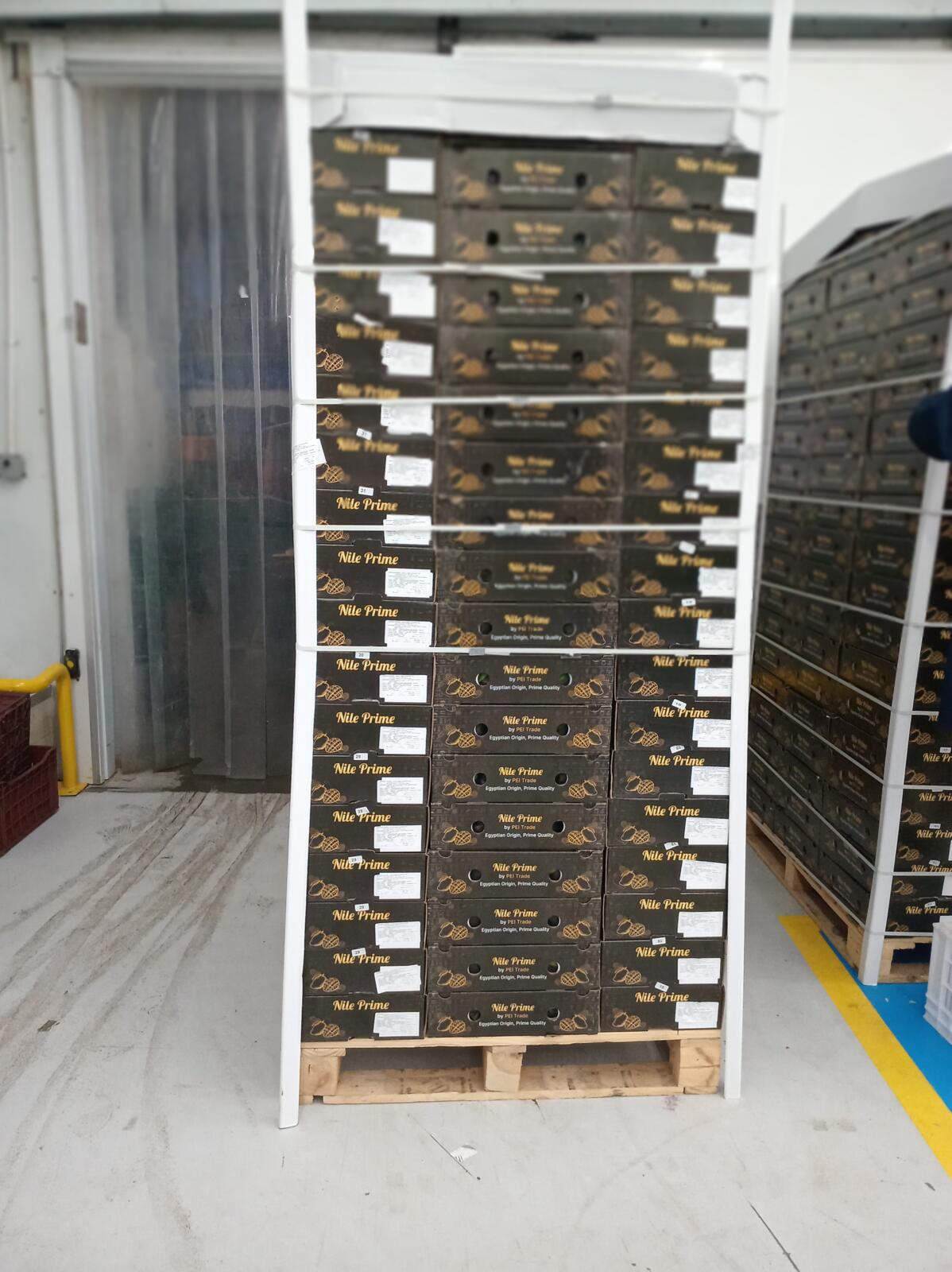
Mango rewards buyers who pay attention to the cold chain and penalizes those who do not. A carton that leaves the packhouse at the wrong pulp temperature can arrive soft, uneven, or short on shelf life even when the fruit was picked at the right maturity. For the 2026 season, this guide sets out how PEI Trade manages Egyptian mango from harvest to loading, and the checks an importer should insist on before a container sails.
Green-skinned varieties like Keitt do not show their eating quality on the skin, so maturity is judged by internal indicators rather than appearance alone. Our packhouse teams check dry matter and flesh firmness at picking, and fruit destined for sea freight is selected at a maturity stage that can travel without ripening in transit. This is the single most important decision in the chain, because a mango picked too early never develops full flavor and one picked too late will not survive the voyage.
Once graded and packed, cartons are pre-cooled to pull field heat out of the fruit before it enters the container. Loading warm fruit into a reefer and expecting the unit to cool it down is a common and costly mistake, since container refrigeration is designed to hold temperature, not to remove large amounts of heat. For Keitt and Kent moving by sea, a carrying temperature in the range of 10 to 13 degrees Celsius is typical, with the exact set point confirmed per destination and transit time. Air exchange and stacking are set to keep airflow even across the load.
Fruit is single-layer packed in telescopic cartons, foam-netted, and separated so pieces do not bruise against each other in transit. Cartons are ventilated and stacked to a pallet pattern that keeps the cold air moving rather than trapping heat in the core of the pallet. Standard export packing is the 4 kg carton, with 264 cartons to a pallet as a common configuration, and we confirm the full-container count per booking.
When a buyer or their bank wants third-party verification, we arrange pre-shipment inspection through SGS or Intertek at the point of loading. An inspector can verify count, grade, sizing, carton condition, pulp temperature, and container hygiene before the doors are sealed. Buyers new to a supplier often use inspection on the first few loads and then relax it once trust is established. Independent inspection is also how PEI Trade backs the same quality promise across its other lines, including the citrus program described in our Egyptian orange export guide for Saudi Arabia and the pomegranate program in our pomegranate export guide.
Before a mango container leaves, confirm five things in writing: variety and count, grade and packing format, carrying temperature and vent setting, pallet configuration and total carton count, and the inspection and documentation package. Getting these agreed up front removes almost every dispute that arises on arrival.
To set your specifications for the 2026 mango season or to arrange a first inspected load, contact the PEI Trade export team on WhatsApp at +20 10 9911 1918.
