Address
Work Hours
Monday to Friday: 7AM - 7PM
Weekend: 10AM - 5PM

Address
Work Hours
Monday to Friday: 7AM - 7PM
Weekend: 10AM - 5PM


Protected-cropping vegetables from Egypt run from October to May. Grades, carton formats, temperature set points and programme planning for bell pepper, cherry tomato and cucumber buyers in the EU, UK and Gulf.
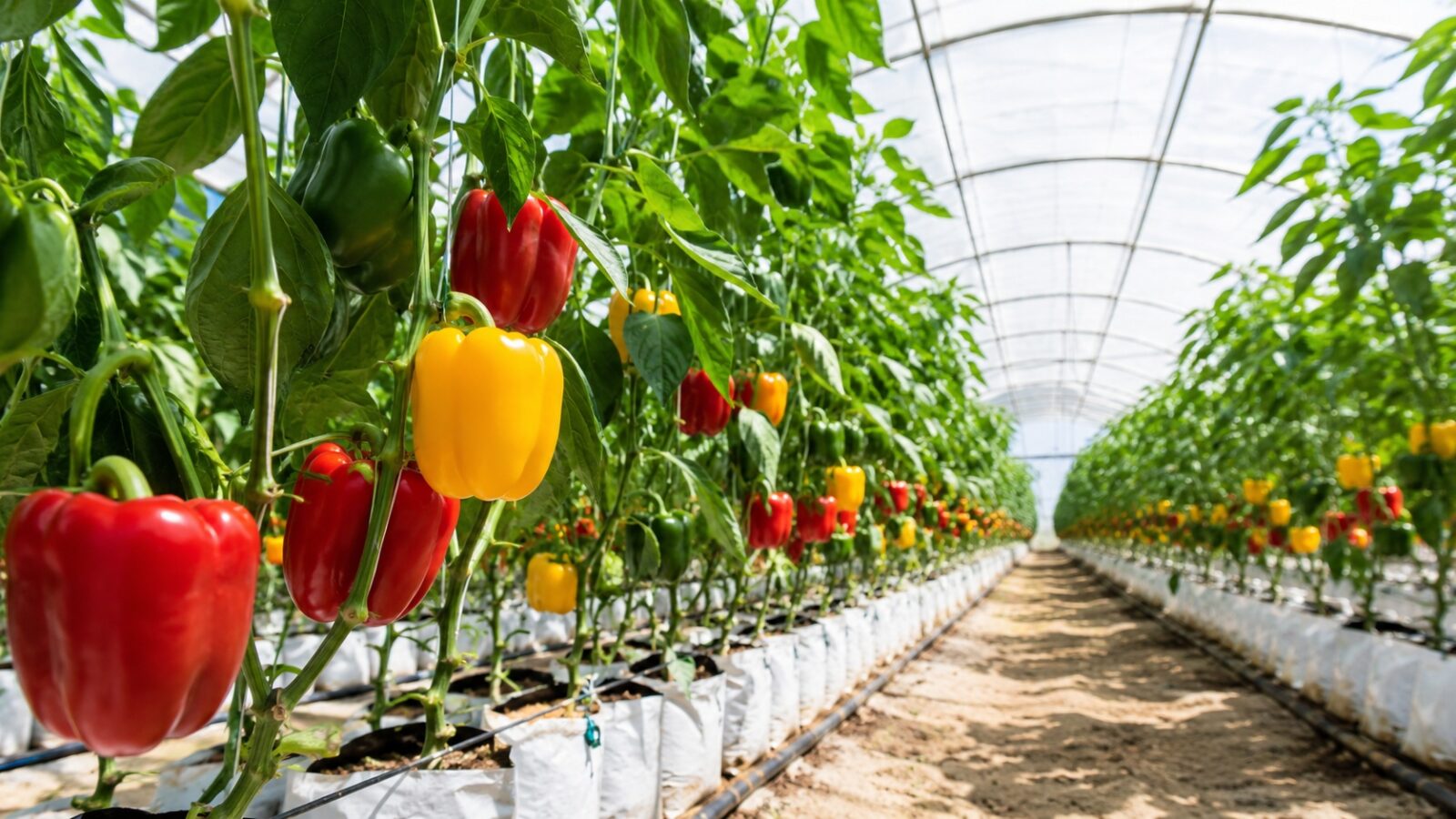
Most of what Egypt exports in winter comes off open field. Greenhouse vegetables are the exception, and they behave differently in every respect: shorter shelf life, tighter temperature tolerance, higher value per carton and a buyer base that expects retail-ready presentation. Enquiries for the 2026/2027 winter window are opening now, so this is the practical brief on what is available and how it packs.
Protected cropping is concentrated in Nubaria, Wadi El Natrun, Ismailia and the reclaimed desert belt west of the Delta. Plastic tunnels and low-tech greenhouses dominate, with a smaller area of high-specification glass and polycarbonate houses serving retail programmes. Planting runs from August to October and harvest starts in October, builds through December and holds volume until late April. The commercial window most buyers plan around is December to March, when European and Turkish supply is thin and Gulf demand is at its highest.
Red, yellow and green blocky types are the volume lines, with a smaller quantity of orange. Export grading is by weight: 100 to 150 grams, 150 to 200 grams and 200 grams and above. Fruit is packed loose in 5 kg single-layer cartons for wholesale, or in mixed-colour trays of three or four fruit under flow wrap for retail. Wall thickness of 5 to 7 millimetres and a firm, glossy skin are the two things a receiver looks at first. Peppers travel at 7 to 8 degrees Celsius. Below 6 degrees they develop pitting and calyx browning that appears three or four days after the doors open, which is why complaints often arrive after the fruit has already been sold on.
Round cherry, cocktail and plum cherry types are packed in 250 gram punnets, twelve punnets to a 3 kg carton, or loose in 5 kg cartons for markets that sell by weight. Brix of 7 and above and a Brix to acid balance that survives twelve to fifteen days at sea are what separate an export lot from a domestic one. Vine-attached fruit costs more to pack and is more fragile in transit, so it usually justifies air freight rather than a reefer container. Set point is 8 to 10 degrees Celsius. Cold below 7 degrees kills the flavour before it damages the appearance, which is the harder failure to detect on arrival.
Beit Alpha and mini cucumber of 12 to 15 centimetres is the main export type, packed in 5 kg cartons or 500 gram flow-wrapped sleeves. Cucumber is the most chilling-sensitive of the three. It must not go below 10 degrees Celsius, and it should not share a reefer with any product that needs a lower set point. Our reference on temperature, humidity and ventilation by crop sets out where the conflicts sit.
Greenhouse lines work best as a weekly commitment rather than spot buying. Yield per house is predictable once the crop is set, so a packhouse can hold a fixed quantity for a buyer who confirms early, and will not hold anything for a buyer who calls the week before. Many distributors combine greenhouse lines with open-field winter vegetables to fill a container, and our note on green bean and snap pea winter programmes covers the crops that pair well on temperature.
PEI Trade sources from GLOBALG.A.P certified growers, with residue testing before loading and SGS or Intertek pre-shipment inspection available on request. To discuss 2026/2027 greenhouse volumes, grade specifications or a weekly programme, contact our export desk on WhatsApp at +20 10 9911 1918.
