Address
Work Hours
Monday to Friday: 7AM - 7PM
Weekend: 10AM - 5PM

Address
Work Hours
Monday to Friday: 7AM - 7PM
Weekend: 10AM - 5PM


Degreening citrus turns mature but green-skinned Egyptian oranges into fruit a buyer accepts. Room conditions, ethylene dose, which varieties need it and the shelf life it costs.
Degreening citrus is the post-harvest step that turns a fully mature but green-skinned orange into fruit an importer will accept on the shelf. Egyptian early Navel oranges reach eating maturity from mid-October while the peel is still partly green, because autumn night temperatures in the Nile Delta rarely fall low enough for chlorophyll to break down on the tree.
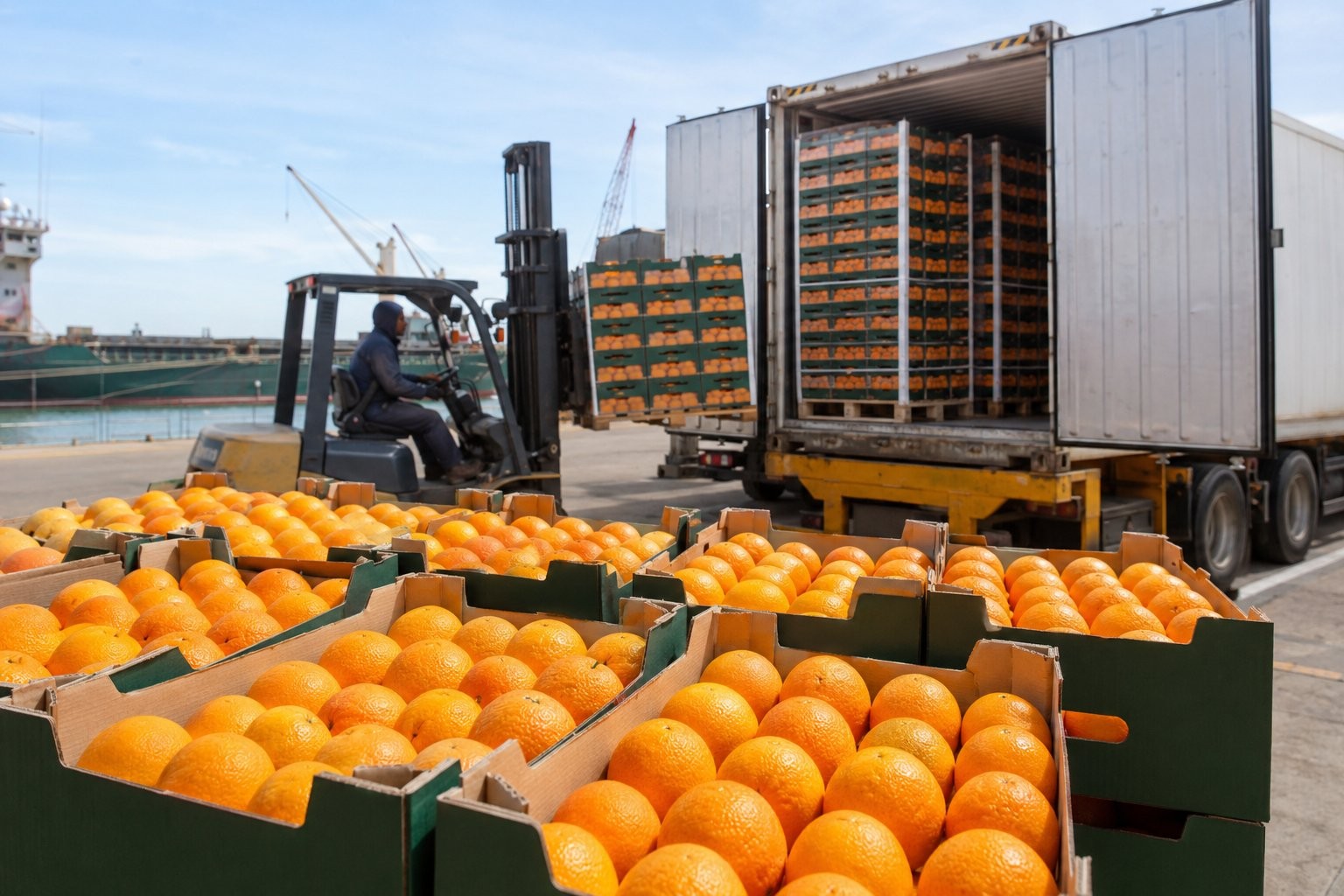
Ethylene destroys chlorophyll in the flavedo and reveals the carotenoid pigments already present underneath. It changes peel colour only. Degreening adds no sugar, lowers no acid and does not advance internal maturity. An orange that fails a Brix or juice content test before degreening will fail it afterwards as well.
| Parameter | Working range | Why it matters |
|---|---|---|
| Ethylene concentration | 1 to 5 ppm | Above 5 ppm gives no faster colour break and raises decay |
| Room temperature | 20 to 25 C | Below 18 C colour break stalls, above 27 C rot accelerates |
| Relative humidity | 90 to 95 per cent | Dry air causes peel shrivel and weight loss |
| Carbon dioxide | Below 0.1 per cent | CO2 build-up blocks the ethylene response, so rooms need air exchange |
| Exposure time | 24 to 72 hours | Depends on starting colour and variety |
Early Navel loaded in October and early November is the main candidate. By late November, night temperatures usually drop far enough that Navel colours on the tree and degreening is unnecessary. Valencia harvested from February onward almost never needs it. Baladi and early Murcott mandarin are sometimes degreened for Gulf retail, where a green shoulder is rejected at the shelf even though the fruit eats well. Full sizing and carton detail for each variety sits in our Egyptian orange specifications for 2026/2027.
Degreened fruit is more fragile than fruit that coloured on the tree. Ethylene softens the button and the stem end, which is where Alternaria and stem-end rot enter. Expect to lose several days of storage life against non-degreened fruit of the same variety, more if the room ran long or hot. Two practical consequences follow. Degreened lots should be first in the loading order and first sold at destination, and they should be pre-cooled promptly after the room, not left on the packhouse floor.
For long transits, many buyers prefer to skip degreening entirely and take the later, naturally coloured fruit. That is a scheduling decision more than a quality one, and it needs to be made before space is booked. Lead times and allocation for the season are covered in our note on booking reefer space for the 2026/2027 Egyptian citrus season.
Write the requirement into the purchase contract rather than leaving it to the packhouse. State whether degreening is permitted or prohibited, the minimum acceptable peel colour on arrival, and the maximum green area tolerated per fruit as a percentage. Ask for the room log, which records temperature, ethylene concentration and hours, alongside the pre-shipment inspection report. A lot with no room log cannot be assessed later if colour or decay becomes a dispute.
PEI Trade exports Navel, Valencia and mandarin from Alexandria and Damietta, and can quote degreened or naturally coloured fruit against your specification. SGS or Intertek inspection is available on request. Send your variety, size range, carton format and destination port to +20 10 9911 1918 on WhatsApp for a same-week quote.
PEI Trade is the exporter, not a neutral reviewer. Figures reflect standard Egyptian packhouse practice for the 2026/2027 season and should be confirmed against your supplier’s own room records.
