Address
Work Hours
Monday to Friday: 7AM - 7PM
Weekend: 10AM - 5PM

Address
Work Hours
Monday to Friday: 7AM - 7PM
Weekend: 10AM - 5PM


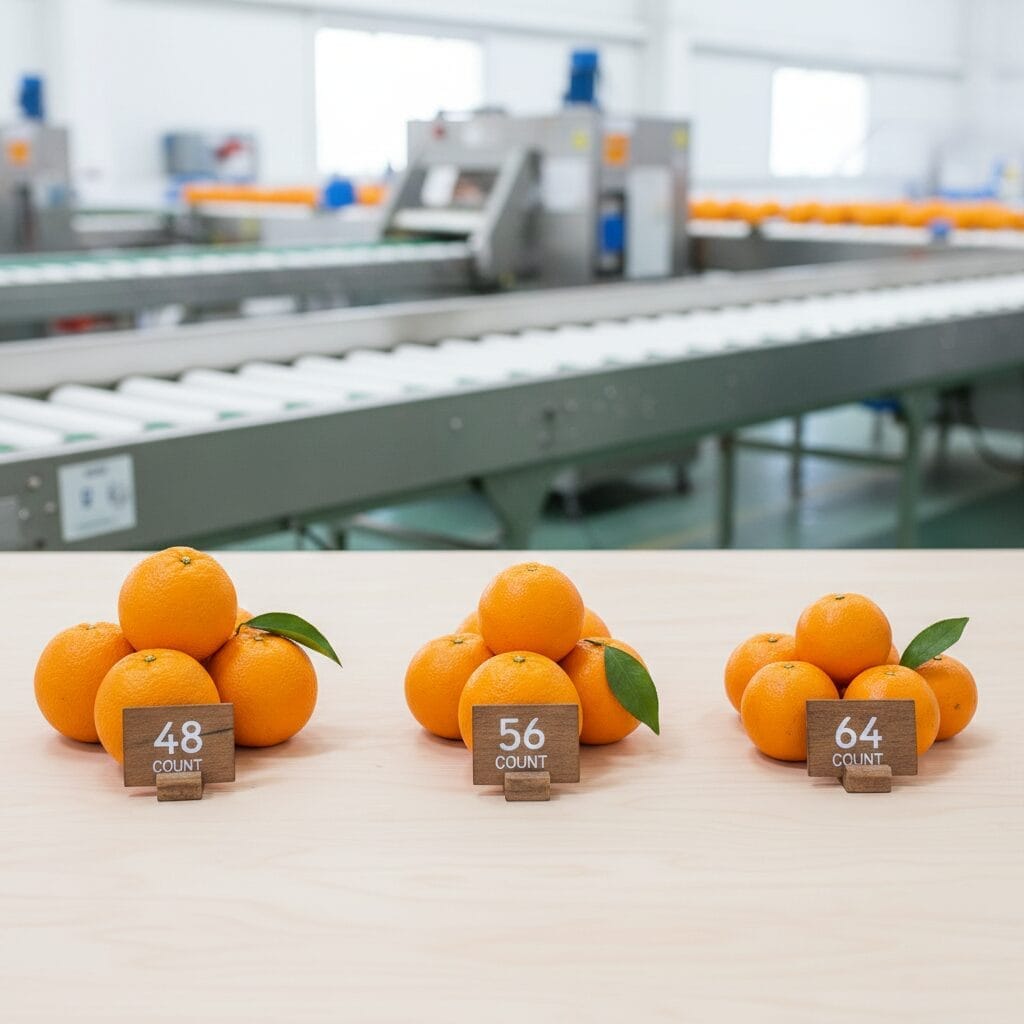
A working specification sheet for Egyptian Navel and Valencia oranges in the 2026/2027 season: size counts, carton formats, pallet build, reefer set points and port options for importers contracting now.
Buyers who plan Egyptian citrus properly start the conversation in August, not in December. Contracts for the 2026/2027 season are already being discussed, and the specification is where most of those discussions stall. What follows is the working spec we use with importers, wholesalers and food distributors so that a quotation, a packing list and an arrival inspection all describe the same fruit: variety windows, size counts and the weight behind each count, carton and pallet builds, what actually fits in a 40 foot reefer, and reefer set points.
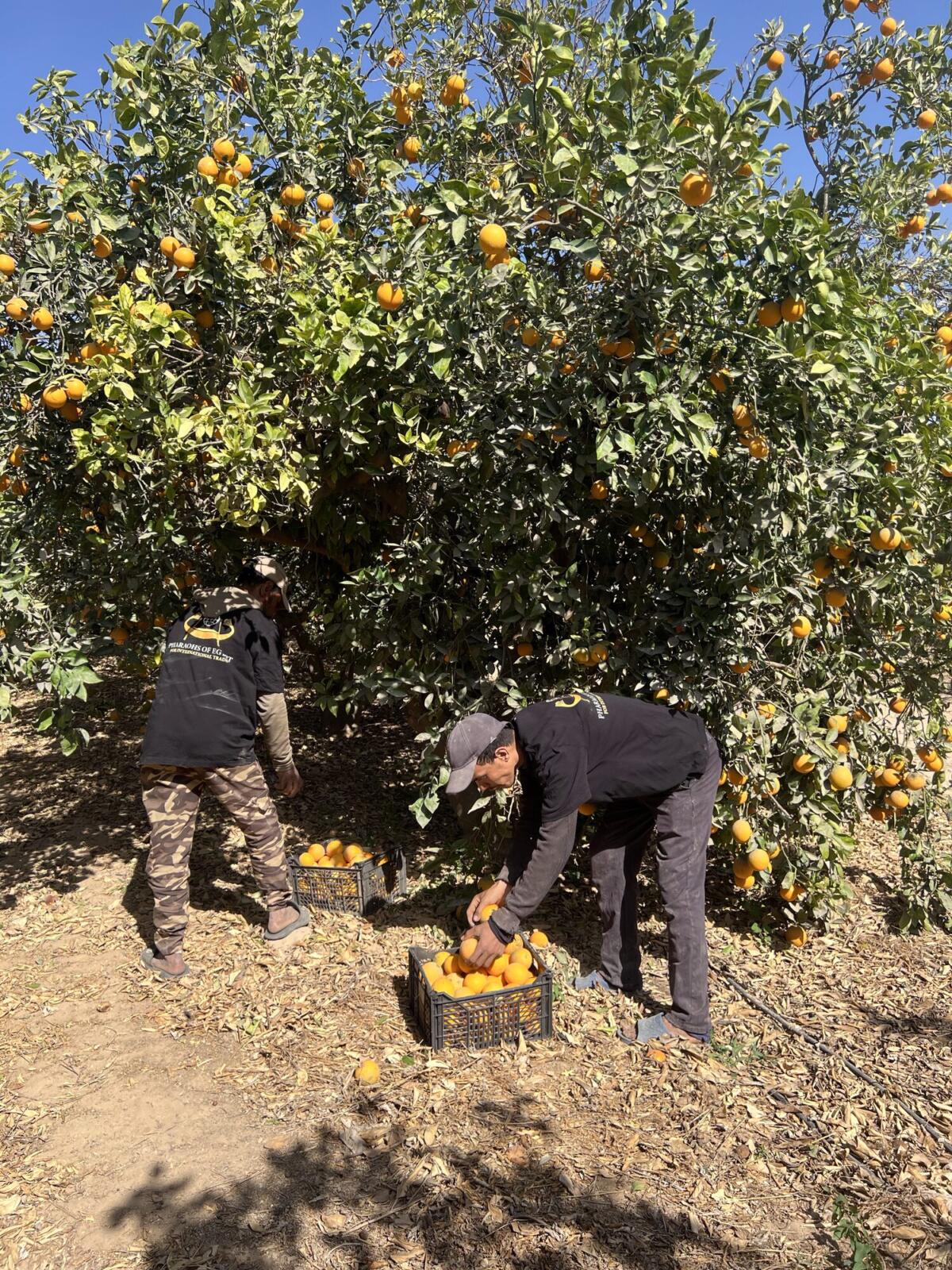
Navel varieties, mainly Washington and Newhall, harvest from early December into February. The fruit is seedless, peels easily and is sold almost entirely into the fresh channel. Brix on export lots is typically 10 to 12 with a Brix to acid ratio above 8 to 1. Navel juice turns bitter within hours of extraction, so it is not a juicing orange.
Valencia, including Valencia Late and Midknight selections, runs from late February through May and in some years into early June. Juice content is higher, the rind is thinner and the fruit holds on the tree longer. Late Valencia can show regreening on the rind while the flesh is fully mature. That is a physiological response to heat, not a defect, but it needs to be agreed in the specification before shipment so it does not become a claim on arrival.
| Specification point | Navel | Valencia |
|---|---|---|
| Harvest window | Early December to February | Late February to May, some years into early June |
| Seeds | Seedless | Few seeds present |
| Brix on export lots | 10 to 12 | Higher juice content; Brix builds later in the window |
| Rind | Thicker, peels easily | Thinner, holds on the tree longer |
| Primary channel | Fresh, retail and wholesale | Fresh and juice processing |
| Juice suitability | Not suitable — turns bitter within hours of extraction | Suitable |
| Point to settle in the spec | Count range and colour break | Whether regreening on the rind is accepted |
Egyptian oranges are sold by count per 15 kg carton — the count is the number of fruit in the carton, so a lower count means larger fruit. The common export range is 48, 56, 64, 72, 80, 88, 100, 113 and 125. Counts 56 to 72 are the ones Gulf retail asks for most often. Counts 88 to 125 move in volume to Russia, Eastern Europe and the open wholesale markets, where price per carton matters more than fruit diameter.
| Count per 15 kg carton | Approximate weight per fruit | Where it usually goes |
|---|---|---|
| 48 | ~312 g | Large-fruit retail and gift-format packs |
| 56 | ~268 g | Gulf retail |
| 64 | ~234 g | Gulf retail, EU wholesale |
| 72 | ~208 g | Gulf retail, EU wholesale |
| 80 | ~188 g | Wholesale, mixed programmes |
| 88 | ~170 g | Russia, Eastern Europe |
| 100 | ~150 g | Russia, Eastern Europe, open markets |
| 113 | ~133 g | Open markets, value format |
| 125 | ~120 g | Open markets, processing and catering |
On grade, Class I under the applicable marketing standard allows minor shape and colour variation with no defect affecting keeping quality (see our Extra, Class I and Class II tolerances reference). Class II accepts rind blemish and healed scarring, and it is the honest choice for processing, catering and value-format retail. A specification that names a count range but not a class is incomplete, and it is the most common reason two quotations cannot be compared.
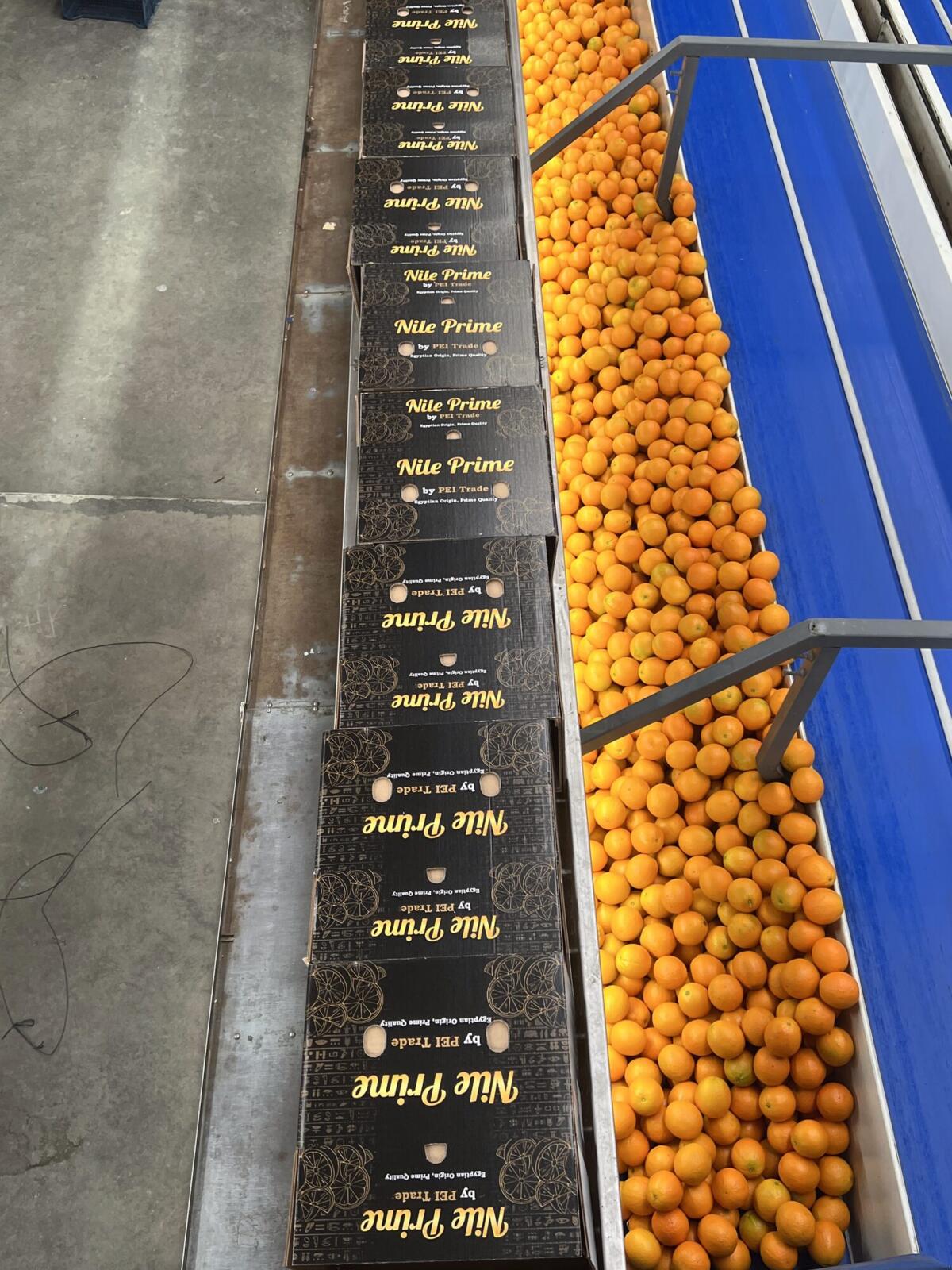
The default is a 15 kg telescopic corrugated carton with a printed or plain top. Mesh bag formats of 4 kg, 5 kg and 10 kg are packed inside 20 kg master cartons for buyers who sell in bags. Corner boards and four-way strapping are standard on citrus, because the top layers carry the strap load during the sea leg.
The pallet build follows from the carton footprint. A 15 kg carton measures 40 × 30 cm, so it occupies 0.12 m². A standard pallet at 100 × 120 cm gives 1.20 m² of deck, which takes 10 cartons per layer; a Euro pallet at 80 × 120 cm gives 0.96 m², which takes 8.
| Build | Standard pallet 100 × 120 cm | Euro pallet 80 × 120 cm |
|---|---|---|
| Cartons per layer | 10 | 8 |
| Layers | 8 | 8 |
| Cartons per pallet | 80 | 64 |
| Net weight per pallet | 1,200 kg | 960 kg |
A 40 foot high-cube reefer takes 21 pallets on our standard stow — 20 standard pallets plus one Euro pallet to use the remaining floor. That is 1,664 cartons, 24,960 kg net and 26,624 kg gross with the cartons. If a quotation gives you a round tonnage instead of a carton count, ask which stow it assumes; the difference between a 20-pallet and a 21-pallet load is a full pallet of fruit.
Oranges travel at 4 to 6 degrees Celsius with relative humidity between 90 and 95 percent and fresh air exchange of 15 to 25 cubic metres per hour. Precooling to set point before the doors close is the single largest factor in arrival condition — more than the carton, more than the vessel. A container that leaves the packhouse warm does not recover at sea, because a reefer unit is built to hold a temperature rather than to pull one down.
Oranges and mandarins share a set point closely enough to travel together. Lemons do not: they suffer chilling injury below about 10 degrees, so a mixed citrus container that includes lemons is a compromise on one of the two. Our citrus cold chain guide covers set points, loggers and what the evidence looks like if a temperature dispute arises, and citrus export packaging standards covers the carton and pallet detail across varieties.
For port selection, see our guide to choosing between Alexandria, Damietta, Port Said and Sokhna. Gulf-bound citrus generally loads at Sokhna for a shorter Red Sea leg, while European and Russian volume moves through Alexandria and Damietta. Transit times are quoted per lane and per service rather than published here, because they change with routing.
Weekly volume, size mix and price mechanism are the three points to fix early. On the price mechanism, our note on what sits inside an Egyptian orange FOB offer and the nine fields a complete quote states sets out the structure without publishing a number. Buyers who want a specific count range in December need it committed in writing before the packhouse allocates the harvest — a count range is a claim on a part of the crop, and the large counts run out first. Our note on how importers lock Valencia and Navel volume before the season opens covers the contracting side in detail.
Counts 56 to 72 are the range Gulf retail asks for most often, which is roughly 208 to 268 g per fruit in a 15 kg carton. If your programme is wholesale rather than retail, counts 88 to 125 are the volume range and price per carton usually decides.
1,664 cartons on our standard stow of 21 pallets — 20 standard pallets at 80 cartons each plus one Euro pallet at 64 — which is 24,960 kg net and 26,624 kg gross. A stow of 20 standard pallets only is 1,600 cartons and 24,000 kg net, so the carton count is the figure to compare, not the tonnage.
On temperature, yes — both travel at 4 to 6 degrees. The real constraint is the calendar: Navel finishes around February and Valencia starts late February, so the two overlap for a short window rather than all season. What usually prevents a mixed load is the size mix and the shipping week, not the set point.
No. Regreening is a physiological response to heat in fruit whose flesh is already mature, and it does not affect eating quality or juice content. It has to be written into the specification before shipment, though, because a buyer who expected a uniform orange rind can otherwise raise it as a claim on arrival.
Class I allows minor variation in shape and colour with no defect that affects keeping quality. Class II accepts rind blemish and healed scarring on fruit that is sound and properly graded, and for processing, catering and value-format retail it is the specification that matches the use.
No, because a published price is wrong within the week. What we publish instead is the structure: how an Egyptian orange FOB offer is built, and the nine fields a complete quote has to state before two offers can honestly be compared. Send a destination port, a count range and a shipping week and a current figure comes back against that spec.
For December Navel, the conversation belongs in August to October. The packhouse allocates the harvest against committed orders, so a buyer asking for a specific count range late in the season is competing for fruit that is already assigned.
Still shortlisting suppliers? Our ranked guide to orange export companies in Egypt sets out the five criteria worth qualifying any Egyptian exporter on.
PEI Trade supplies 35 crops for export, sourced from GLOBALG.A.P certified farms and third party pre-shipment inspection by SGS or Intertek on request. To request the 2026/2027 citrus specification sheet, a size-mix proposal or an FOB and CFR quotation, message our export desk on WhatsApp, email [email protected], or send your specification here.
